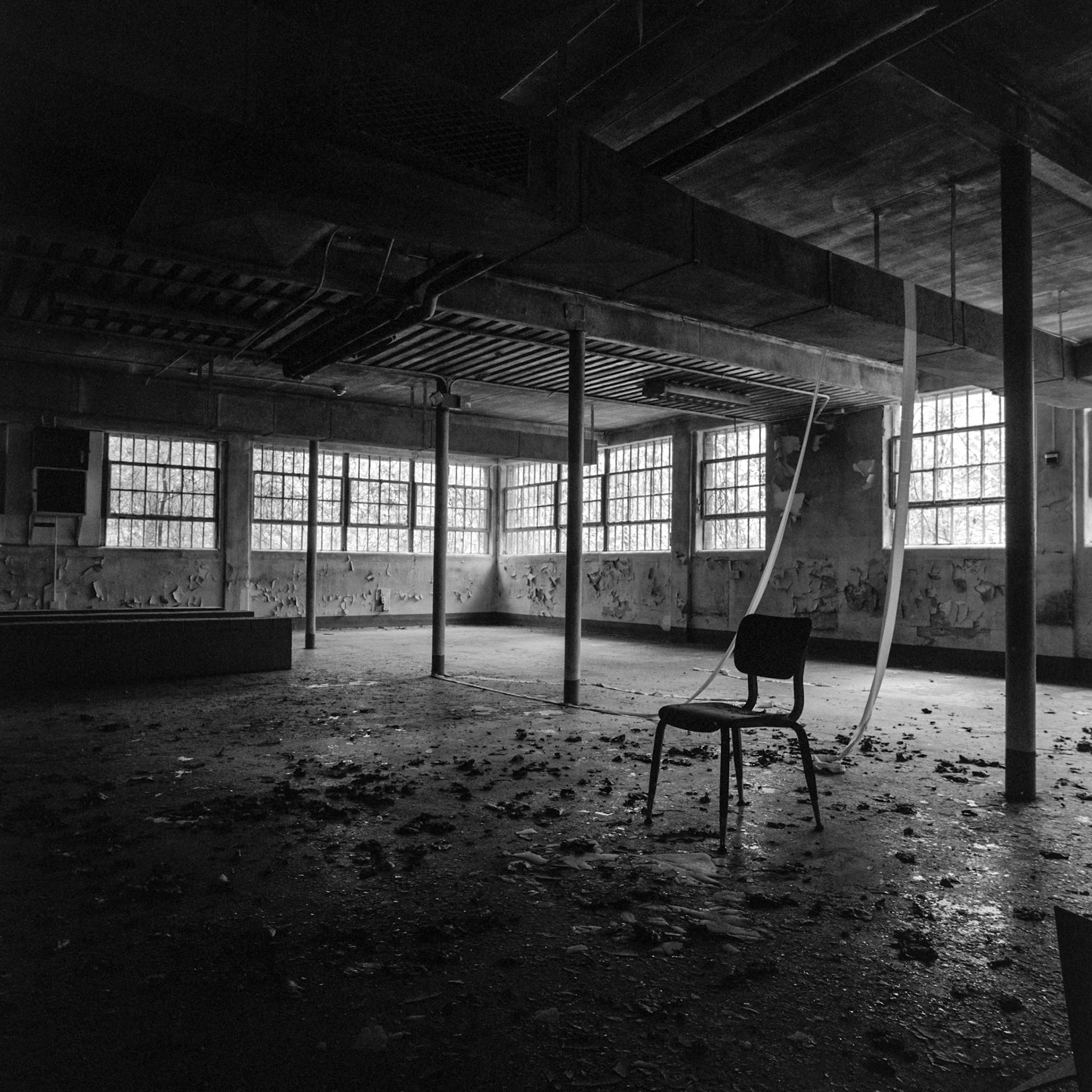
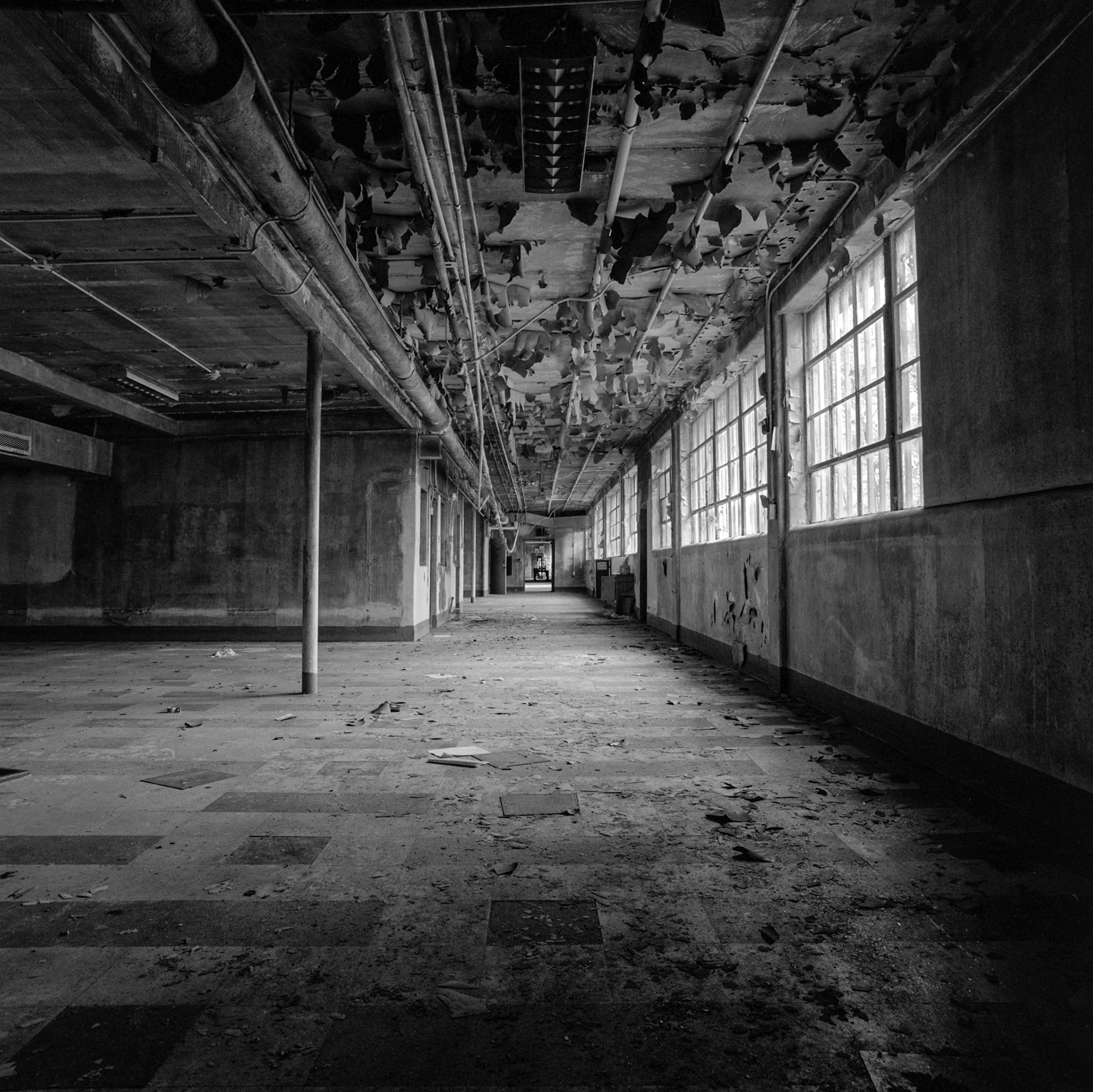
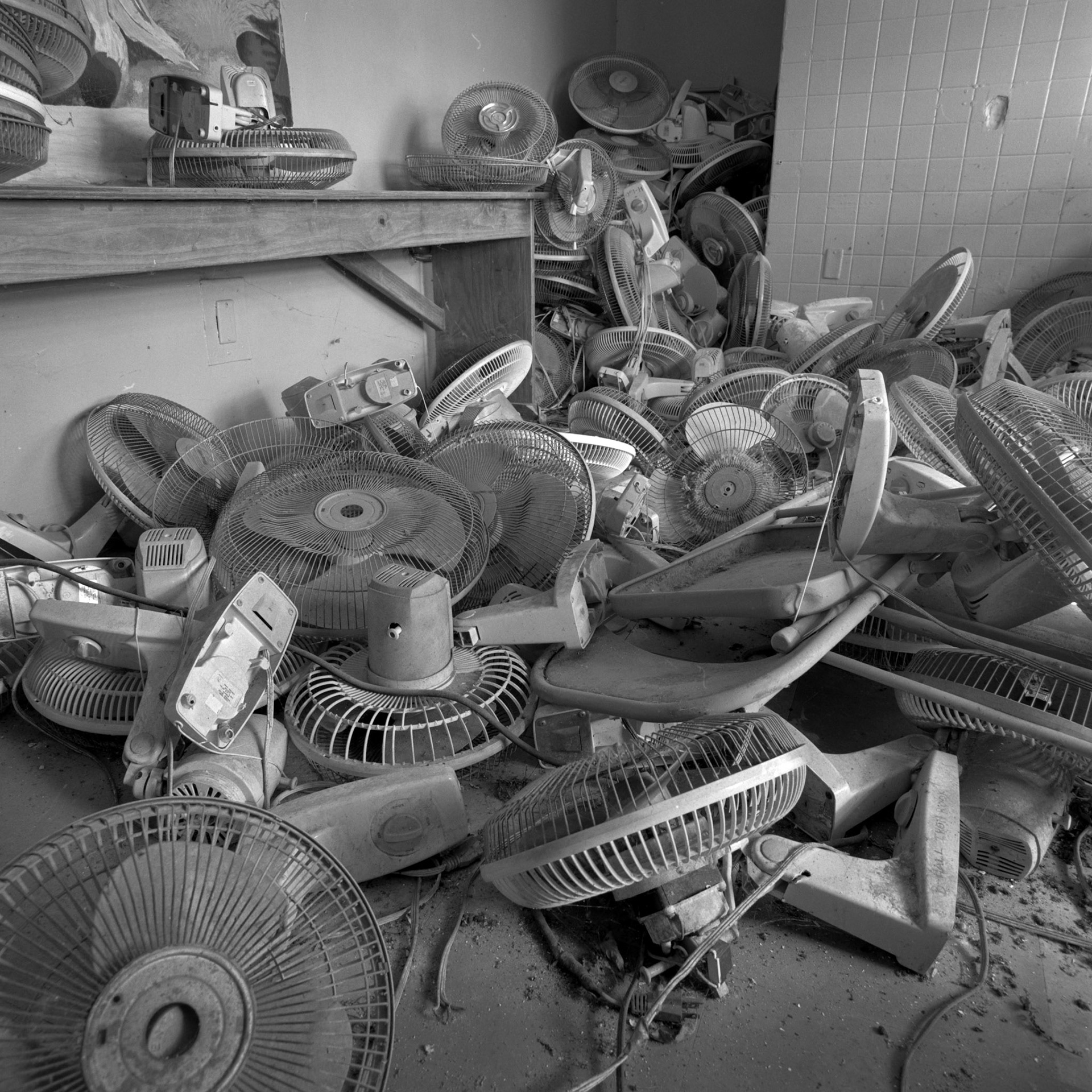
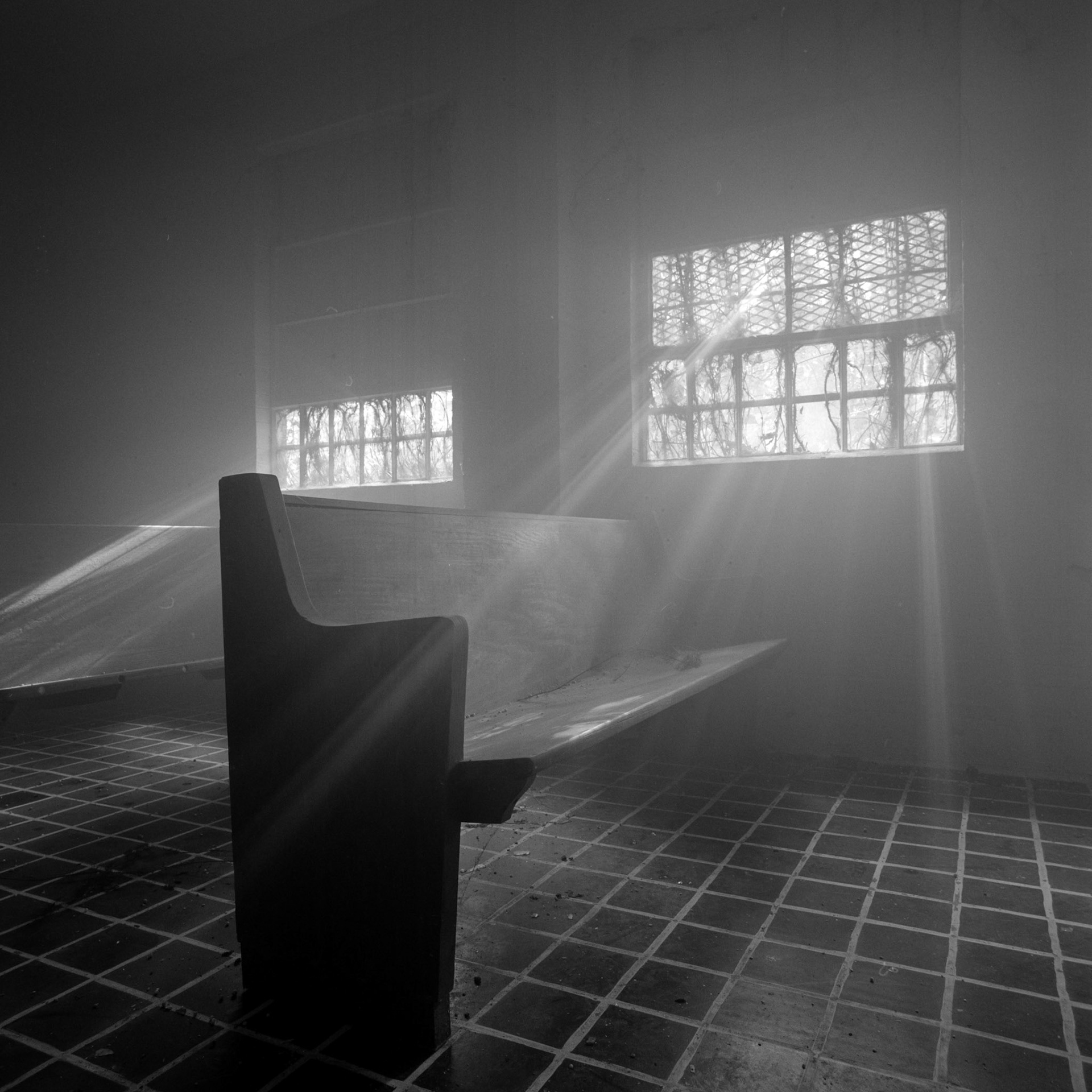
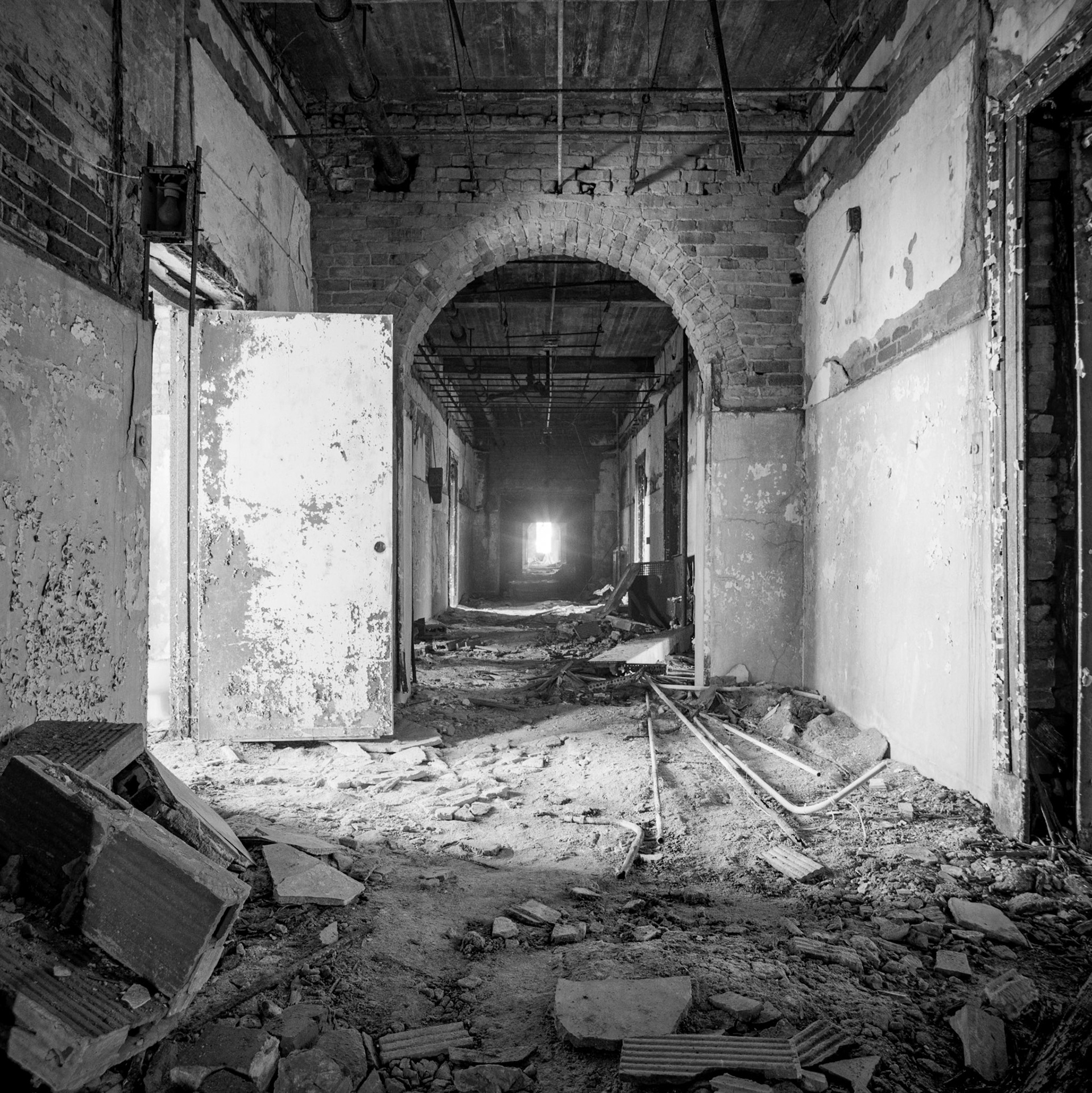
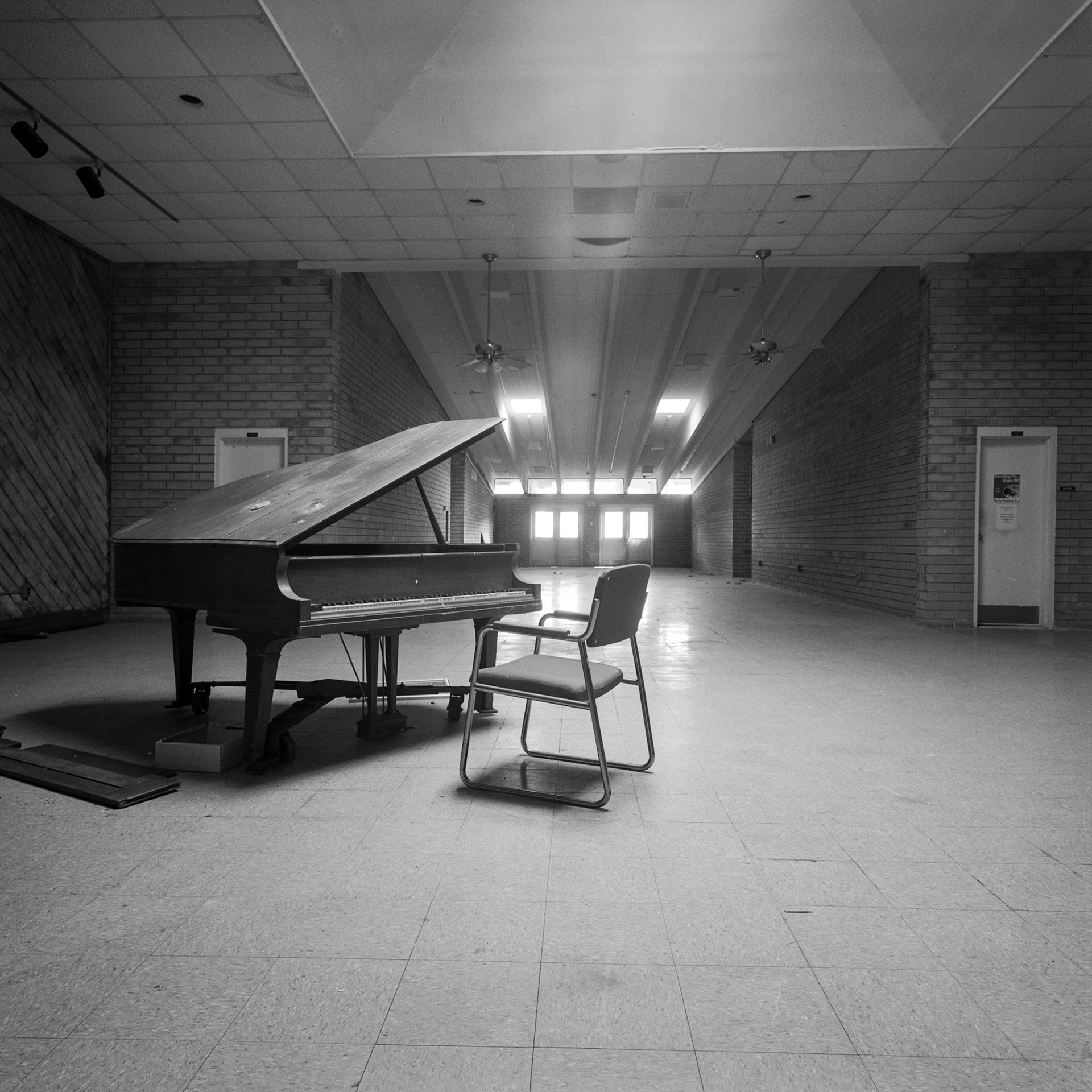
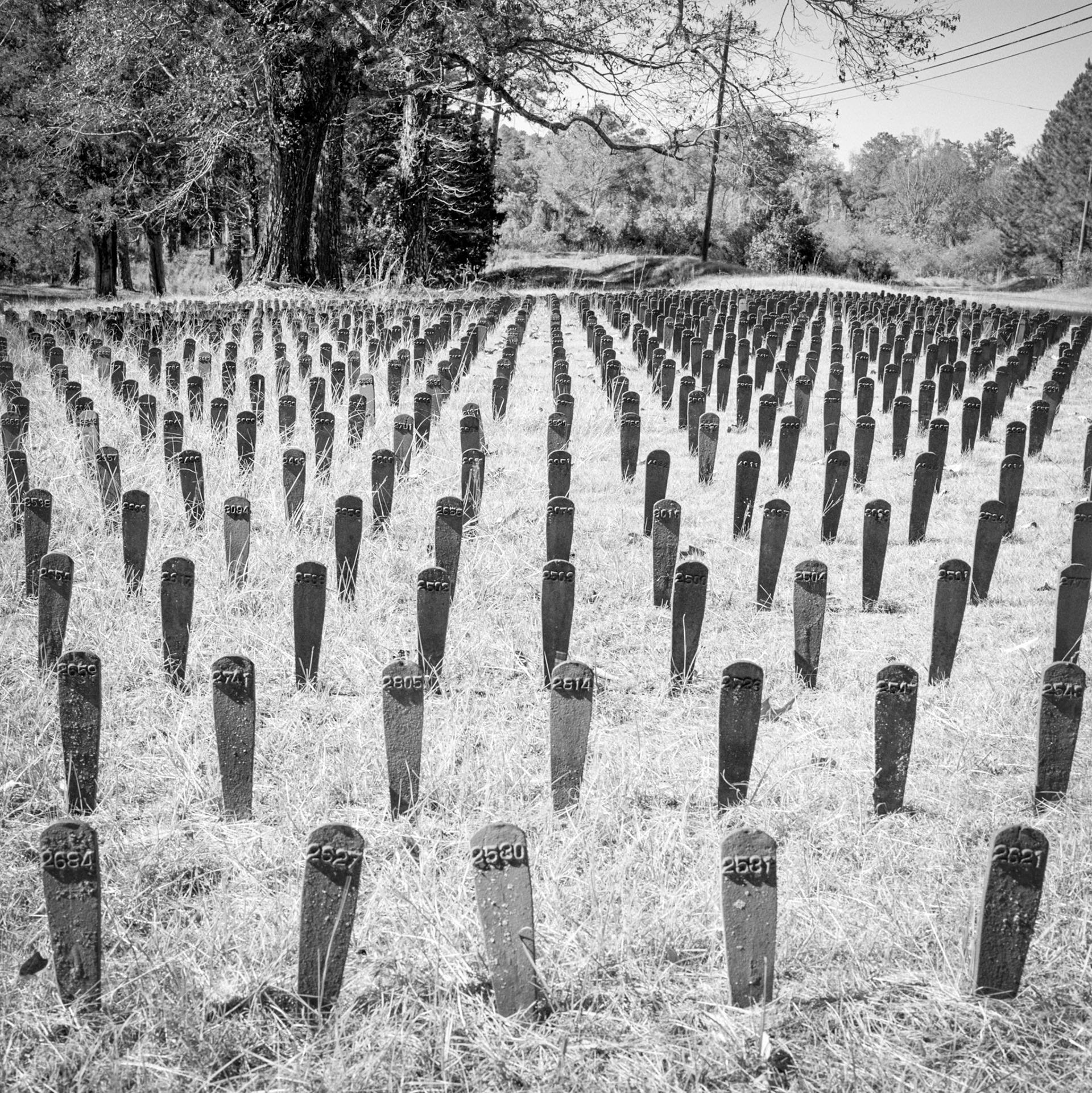
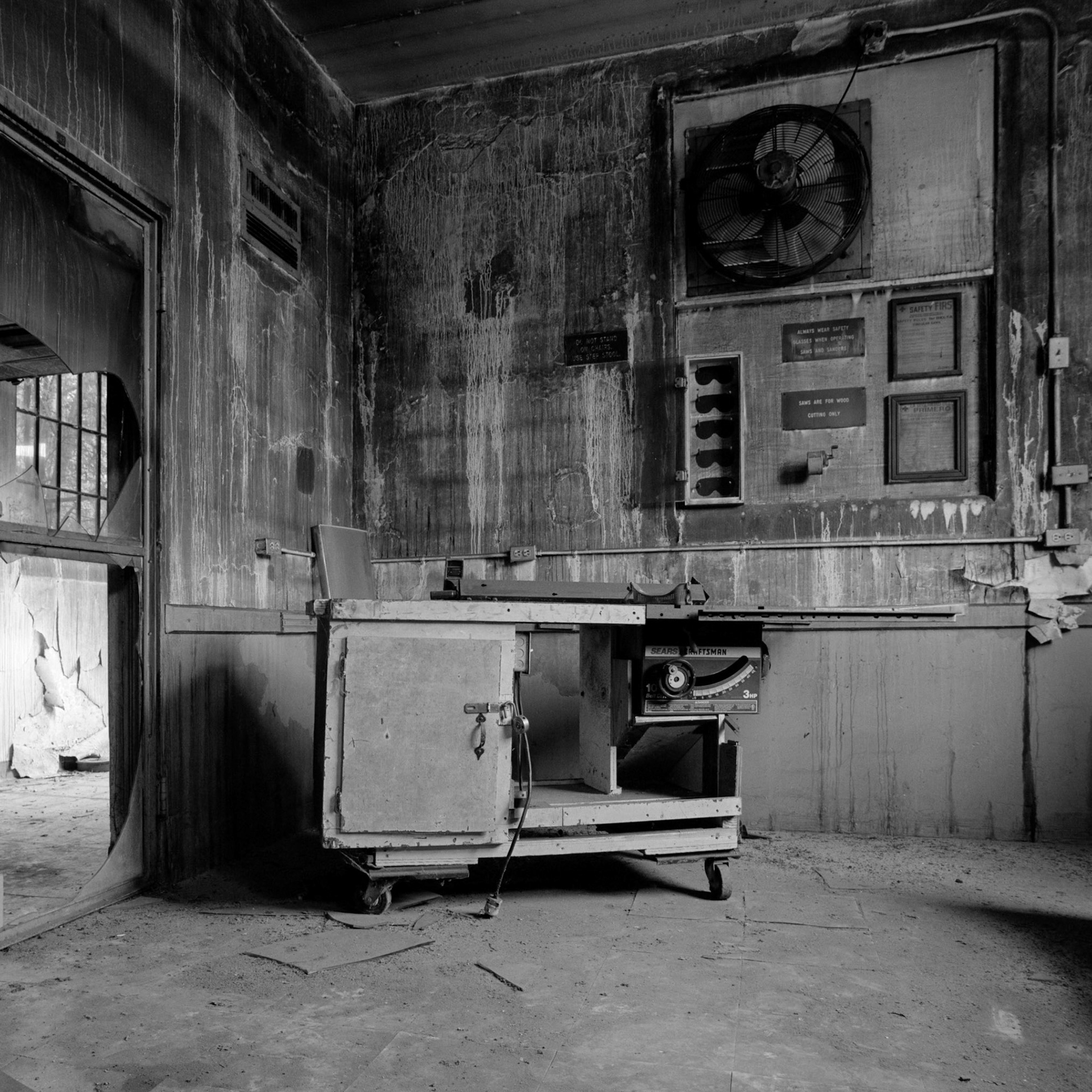
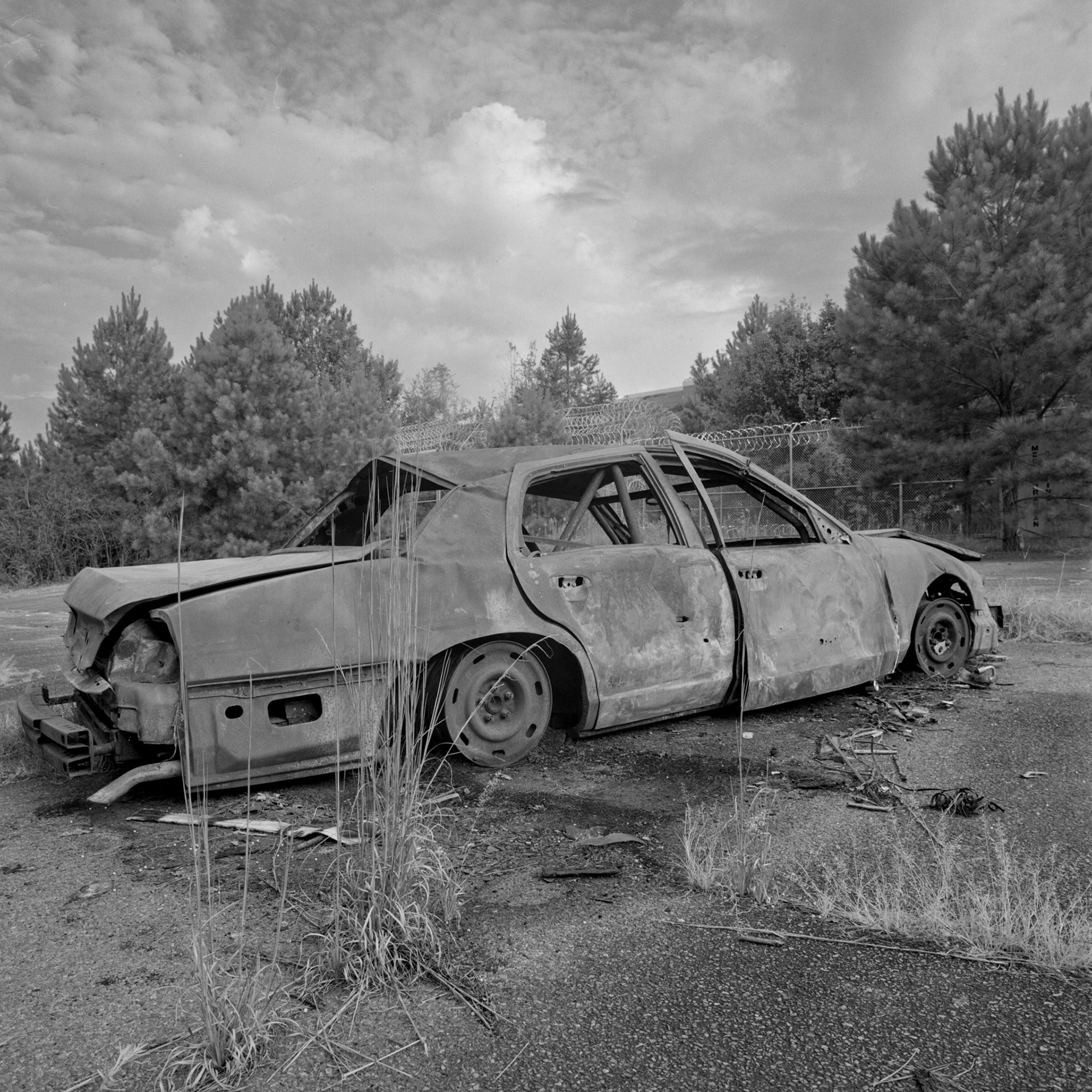
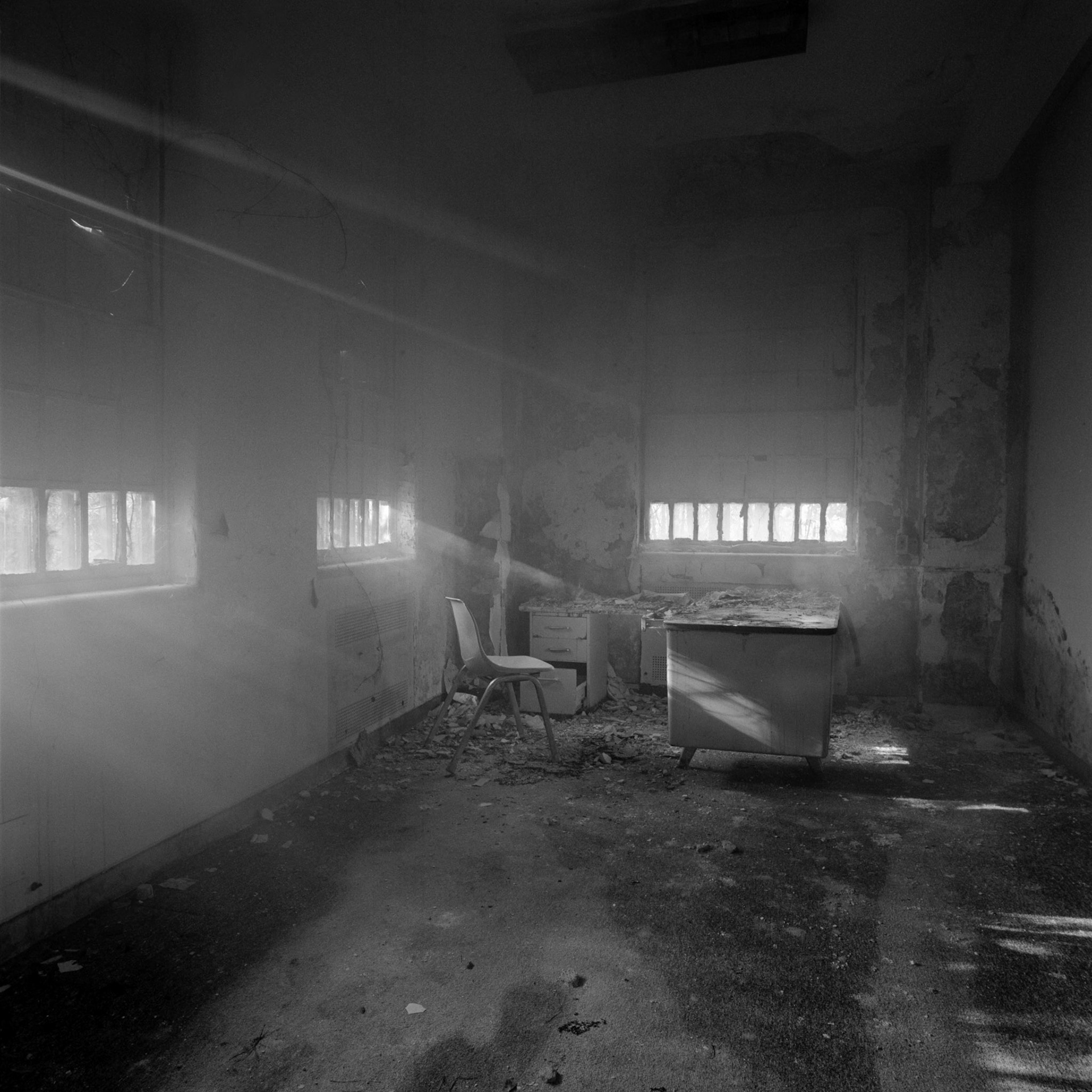
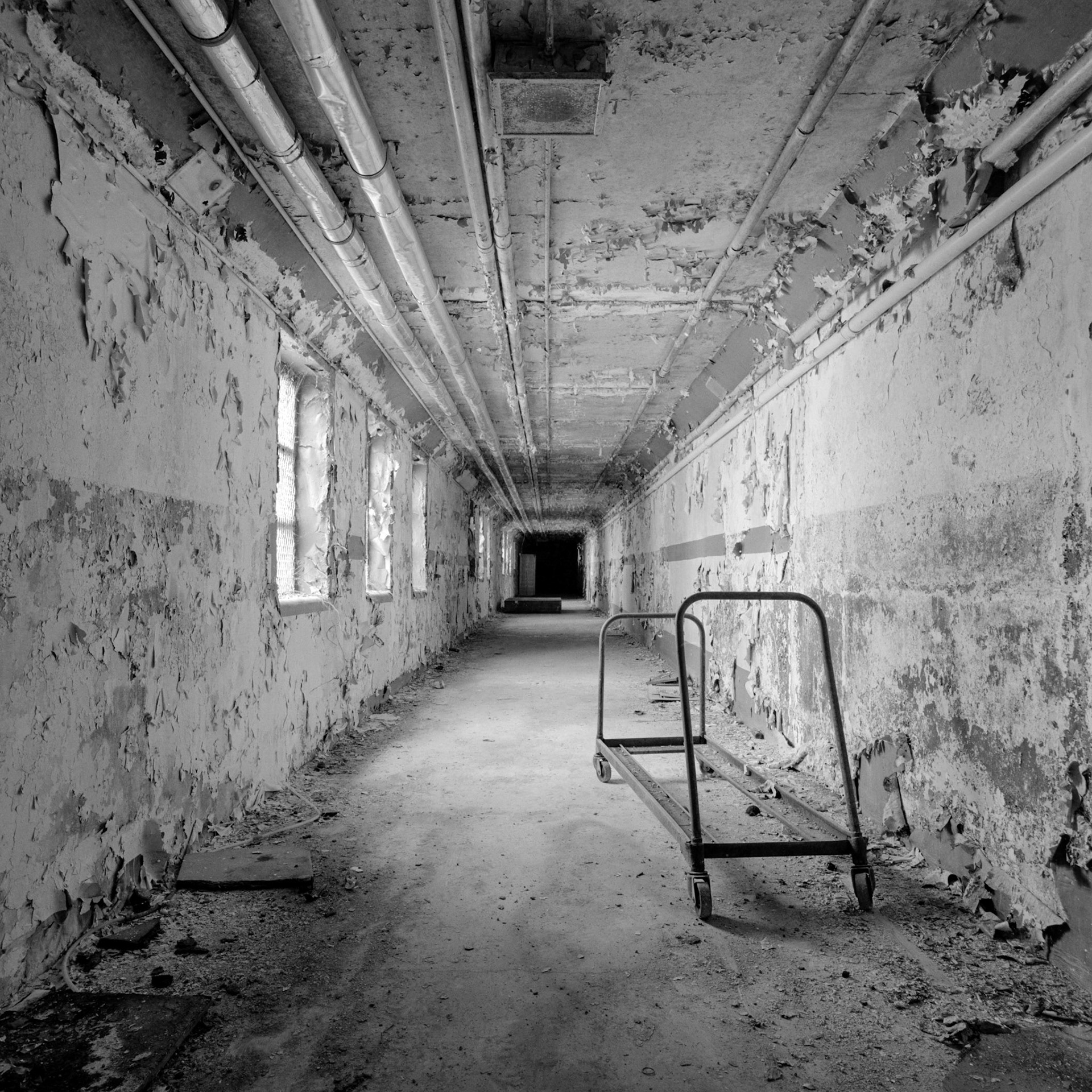
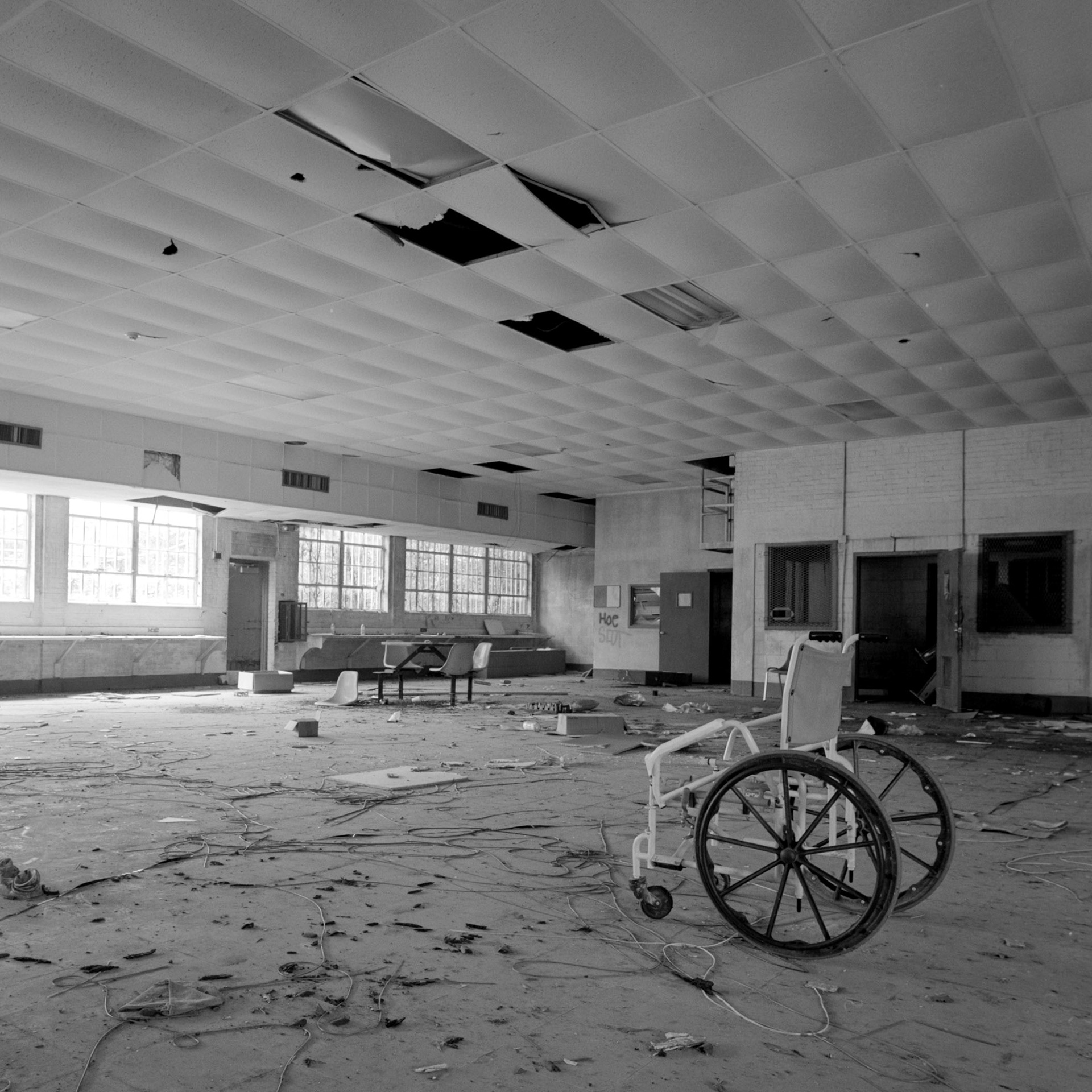
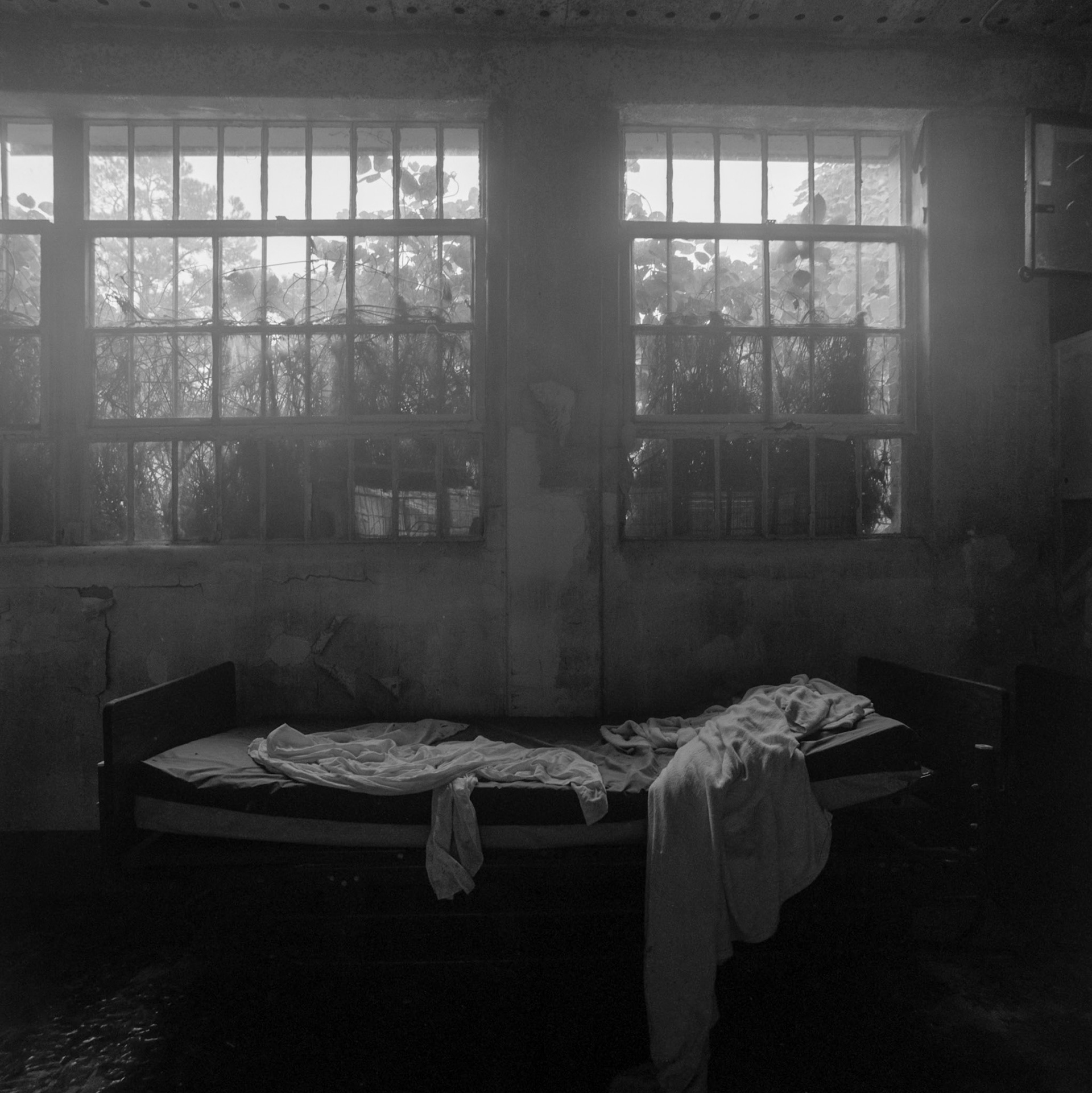
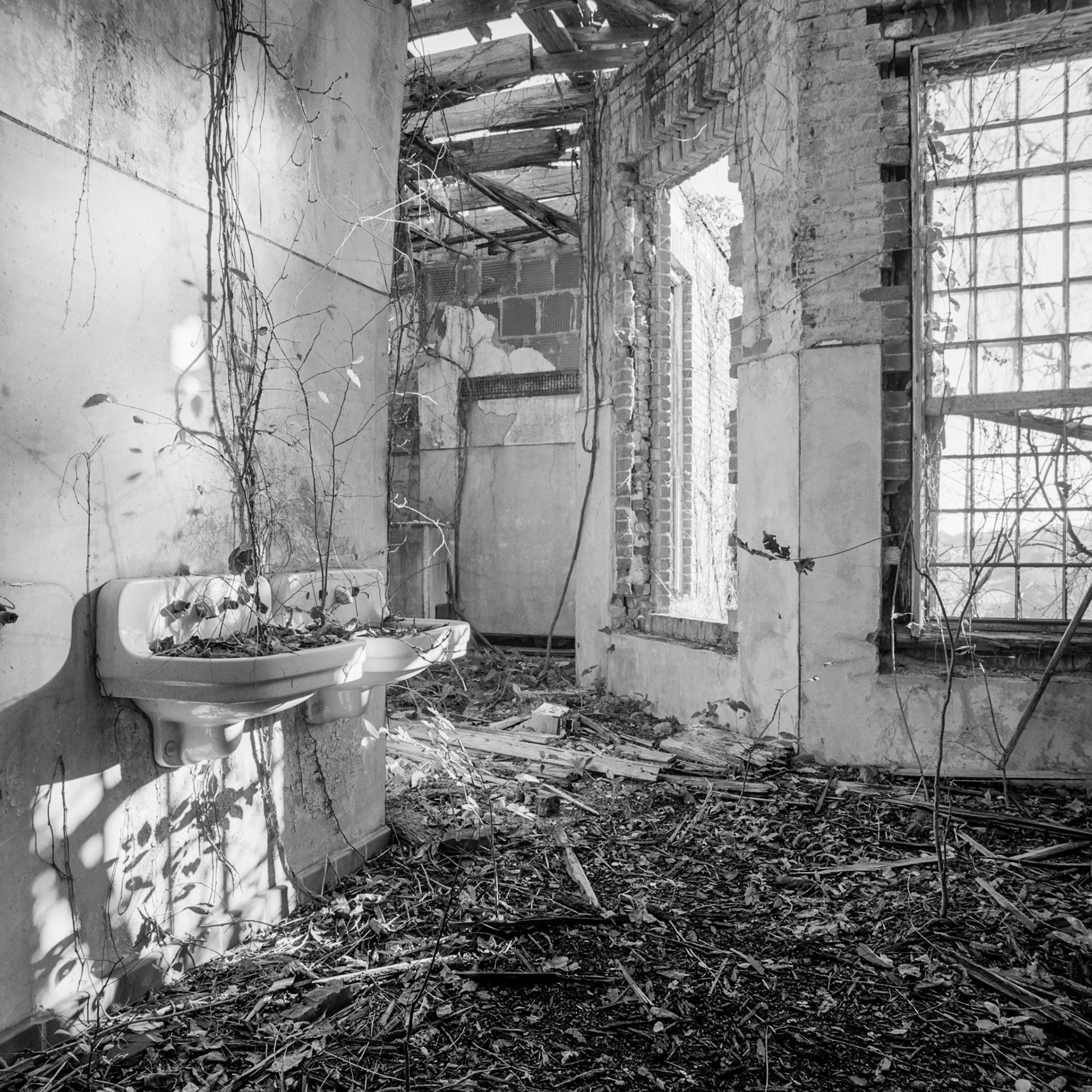
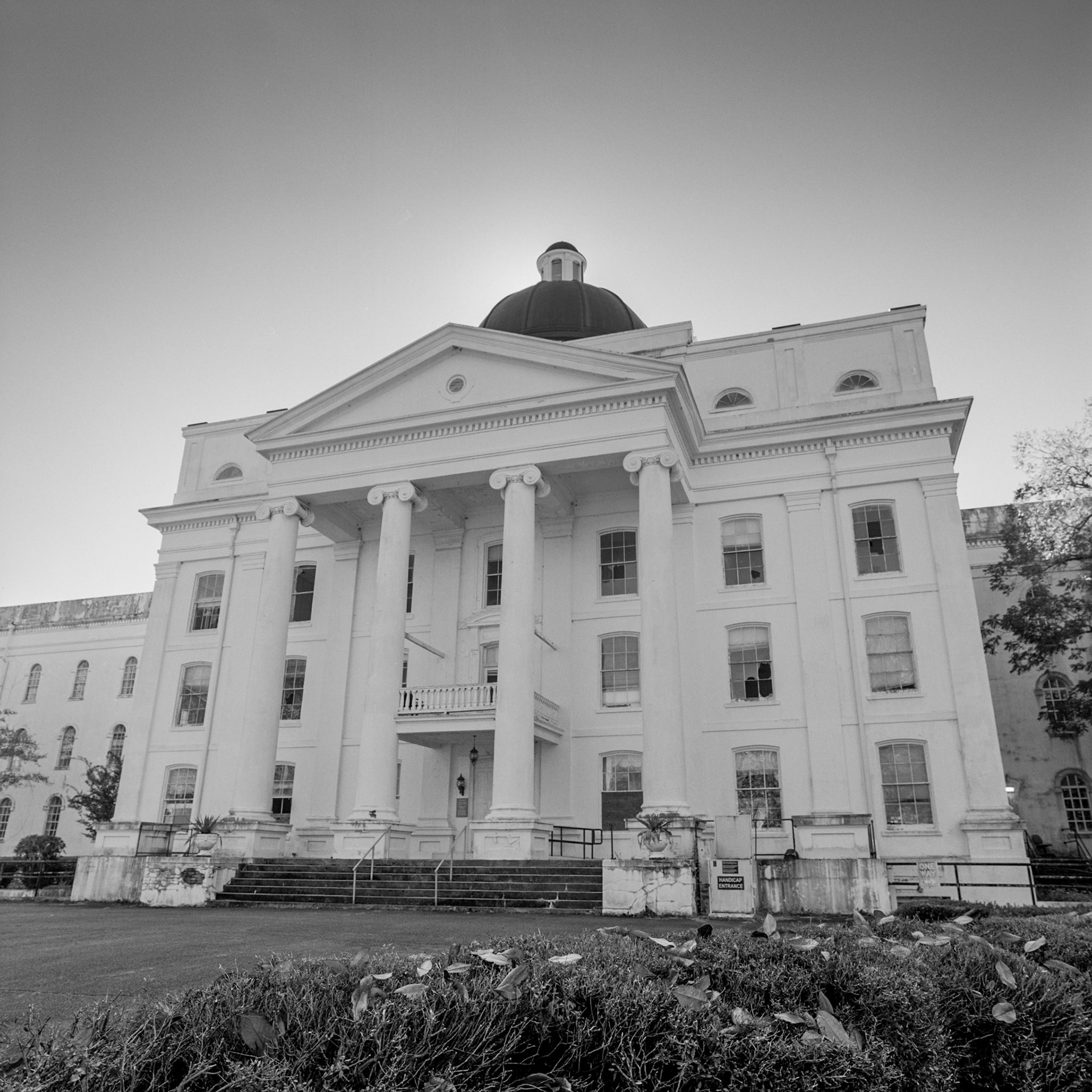
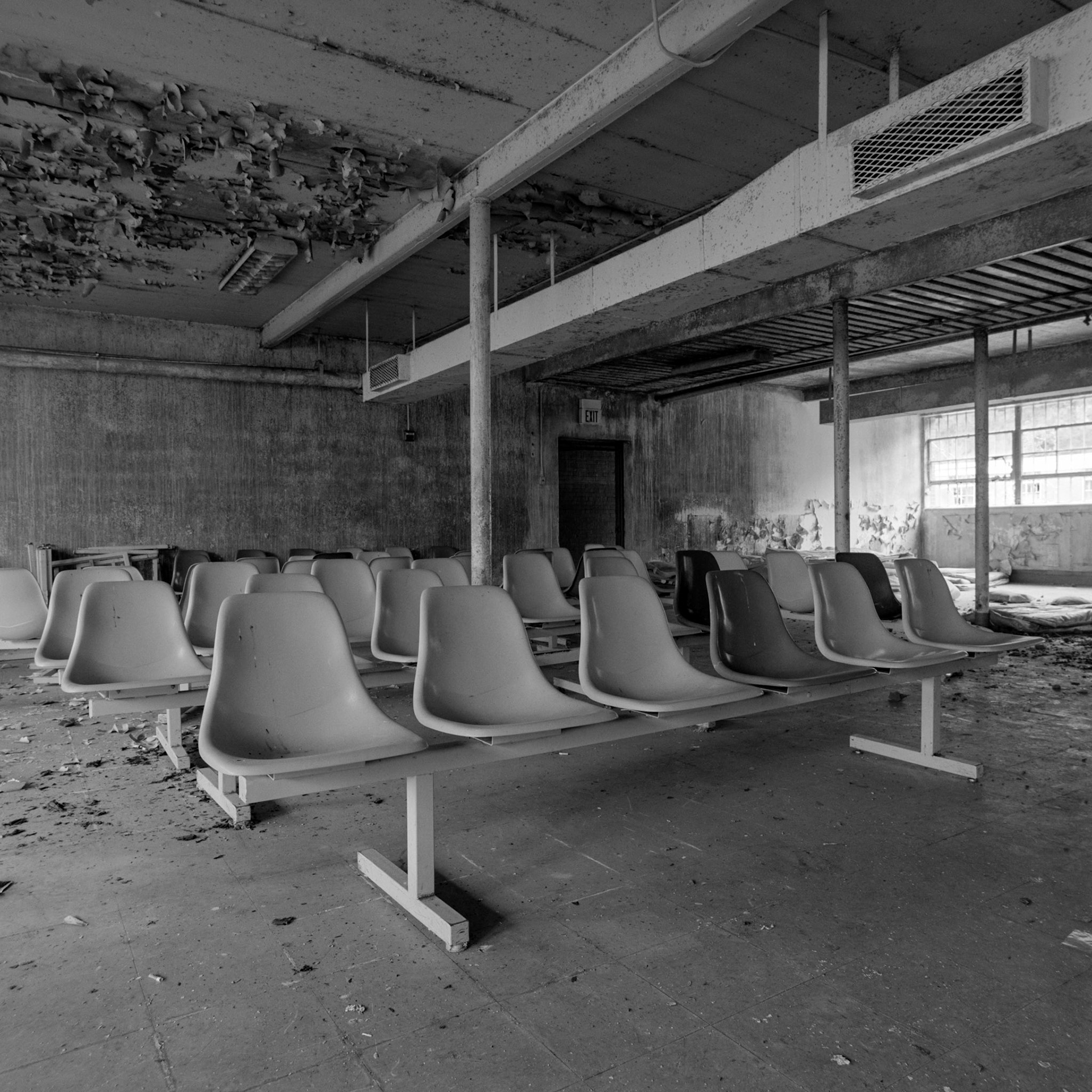
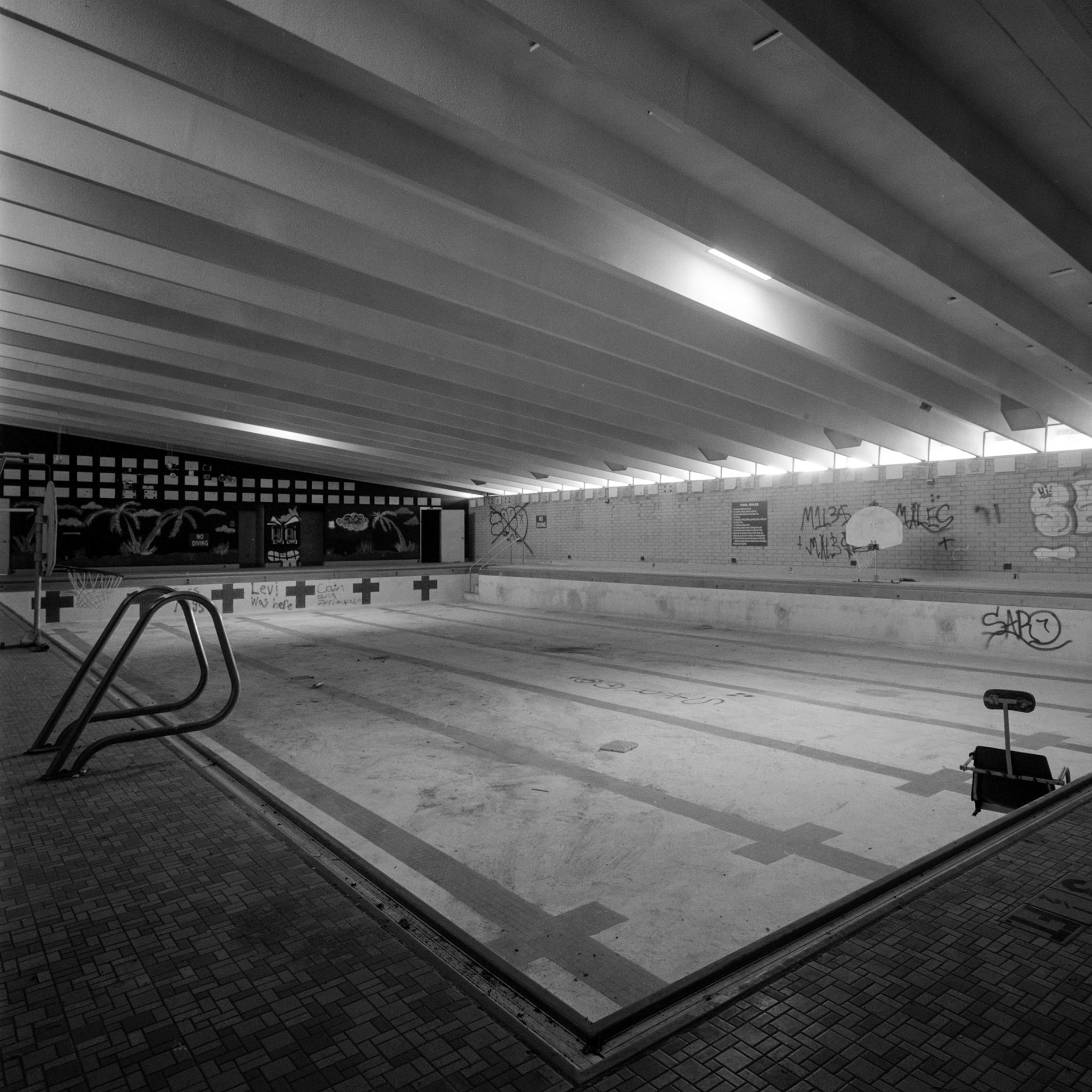
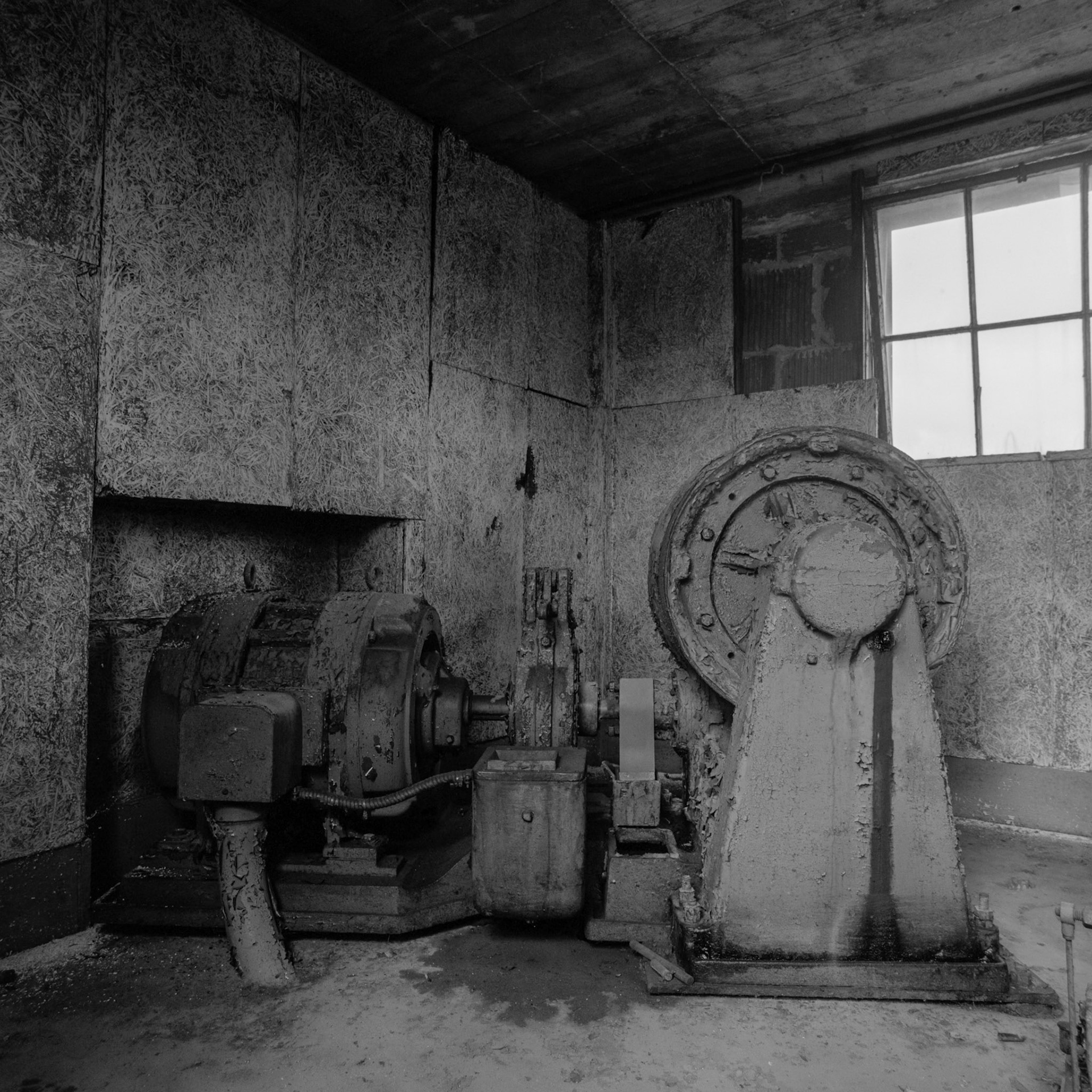
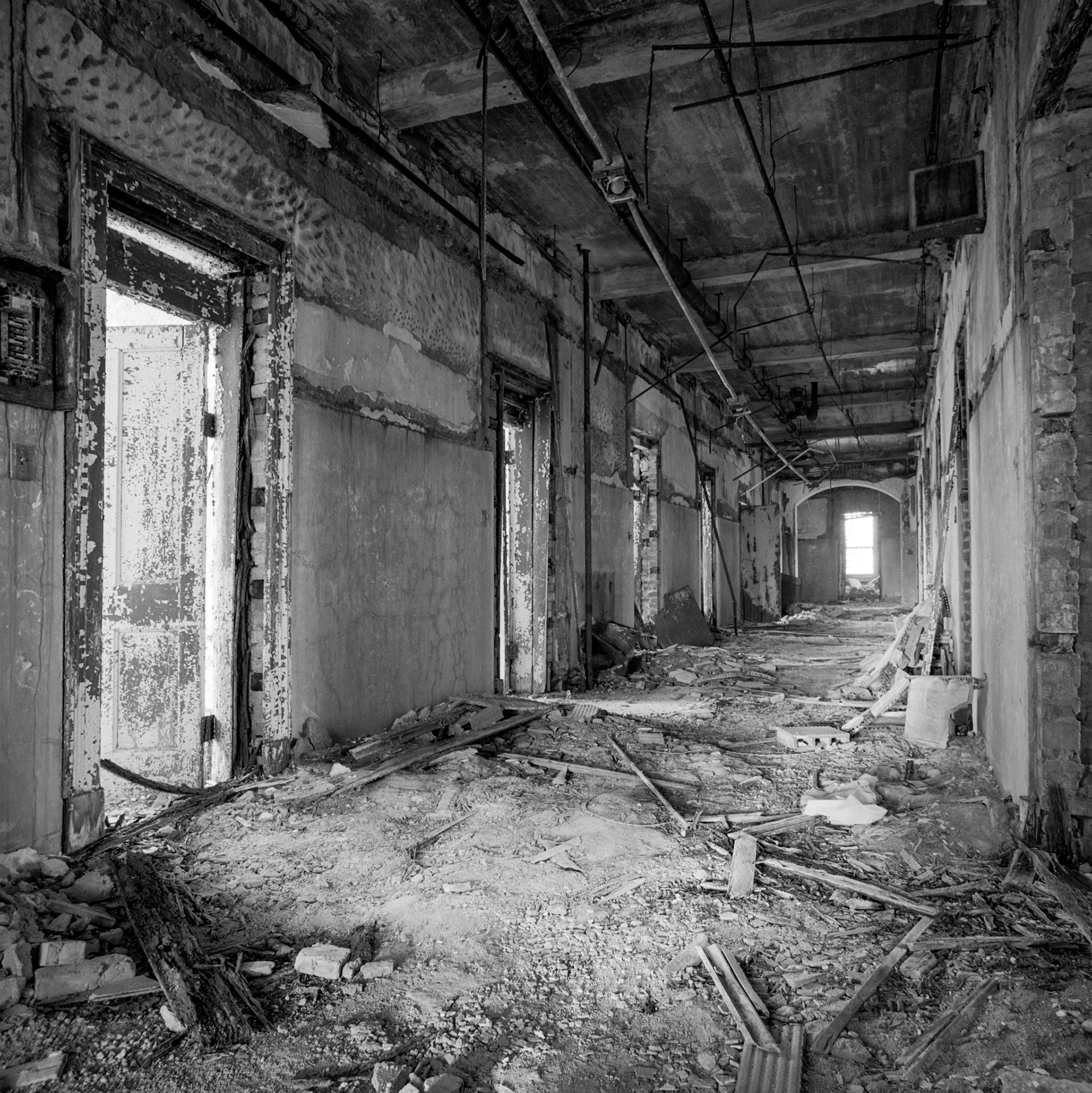
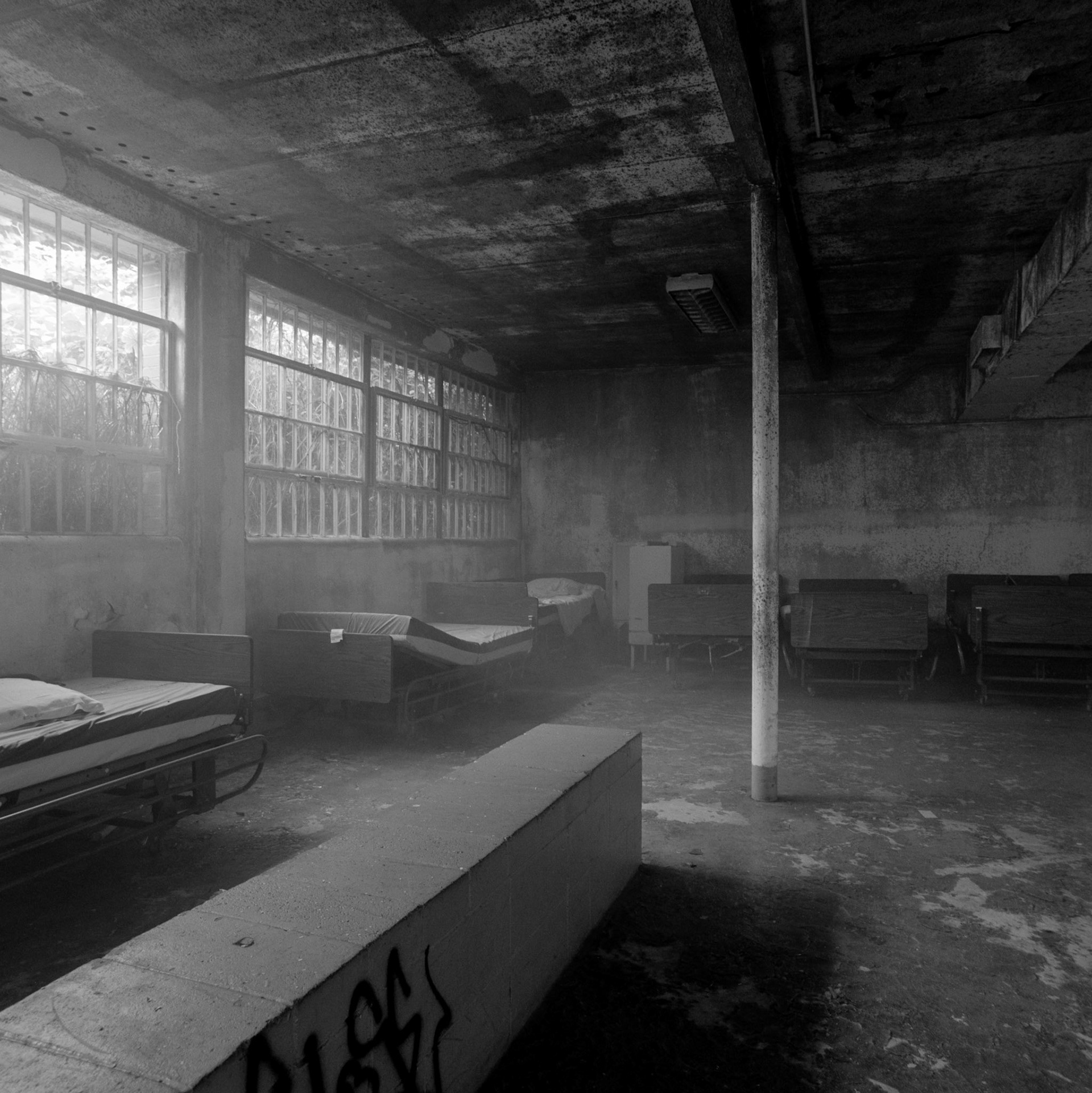
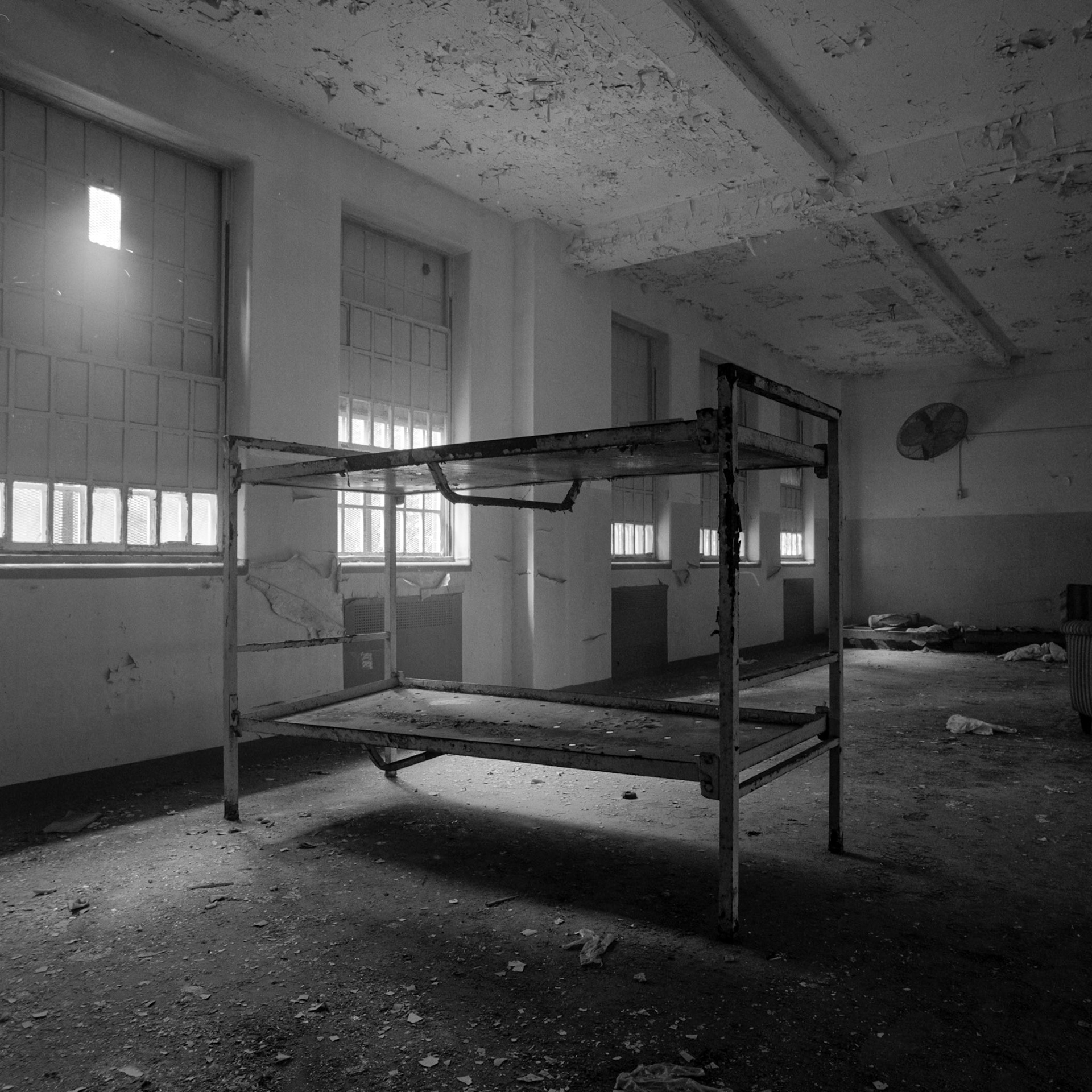
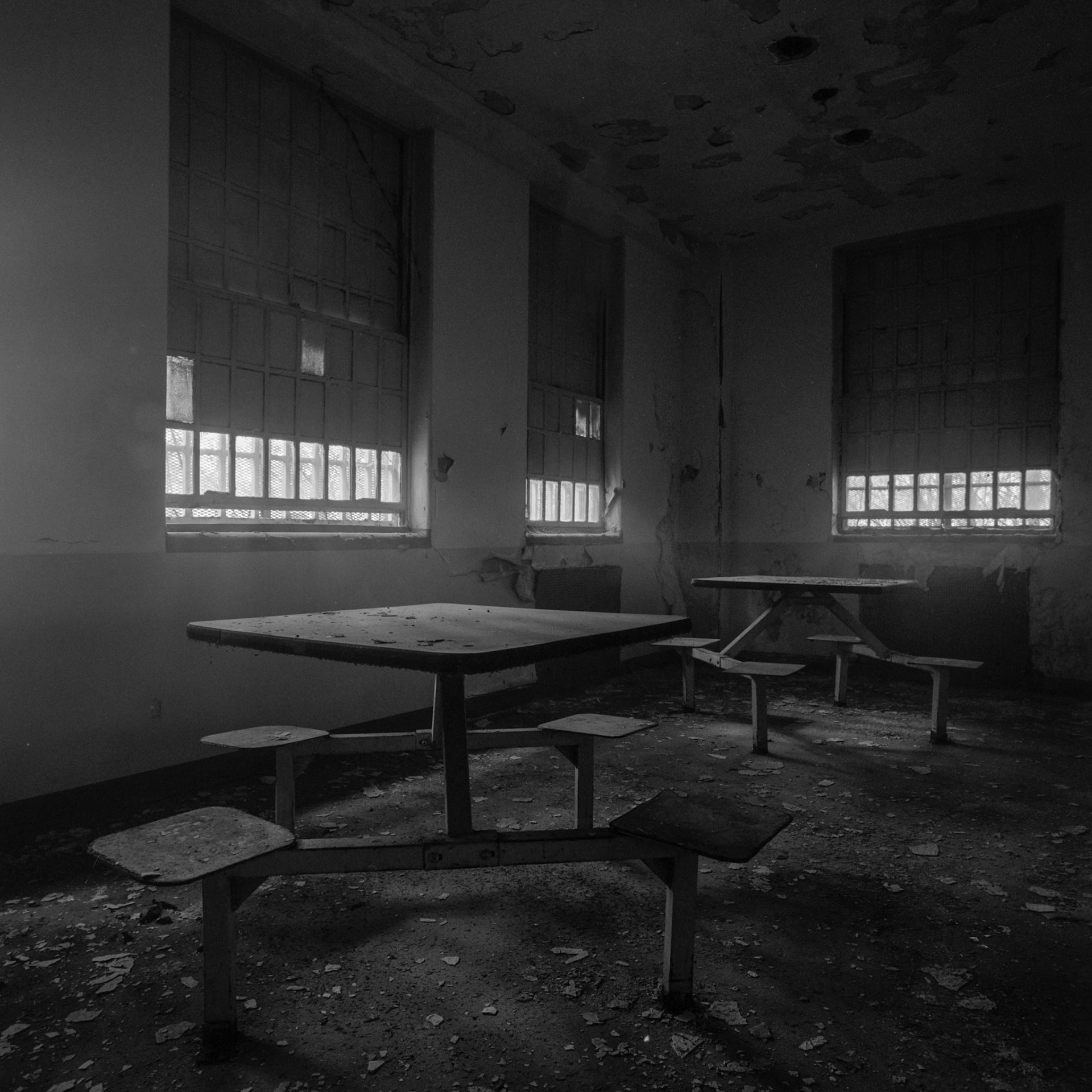
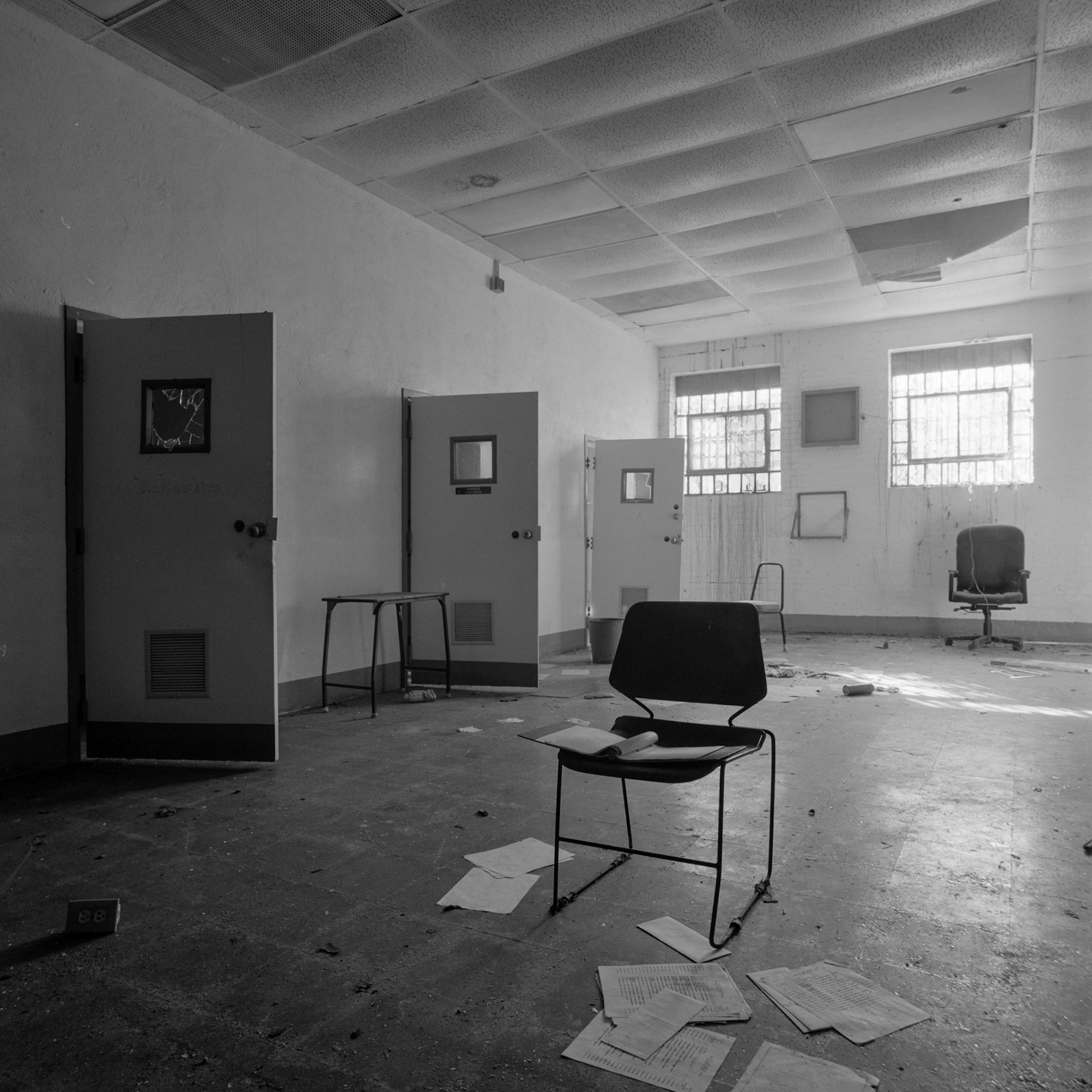
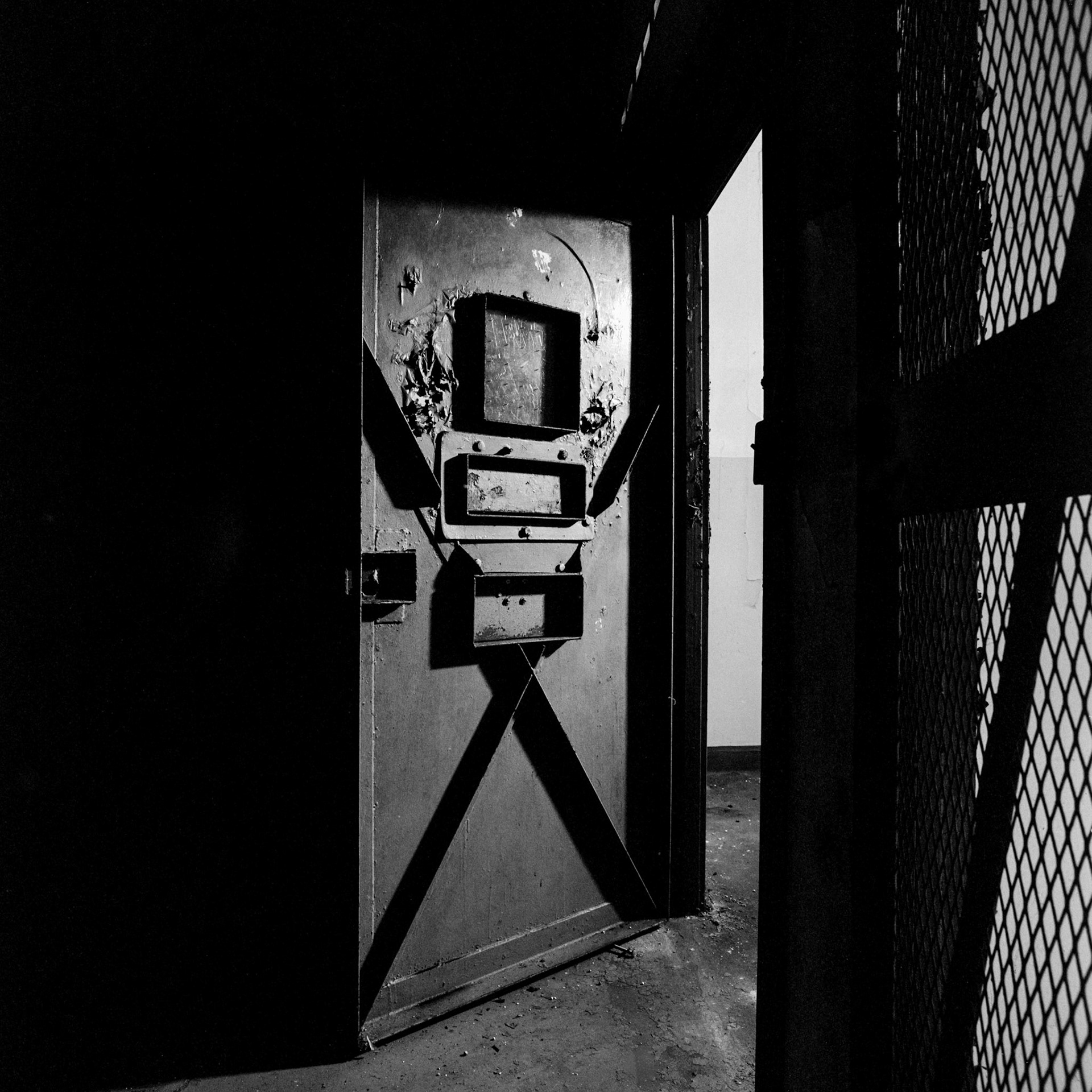
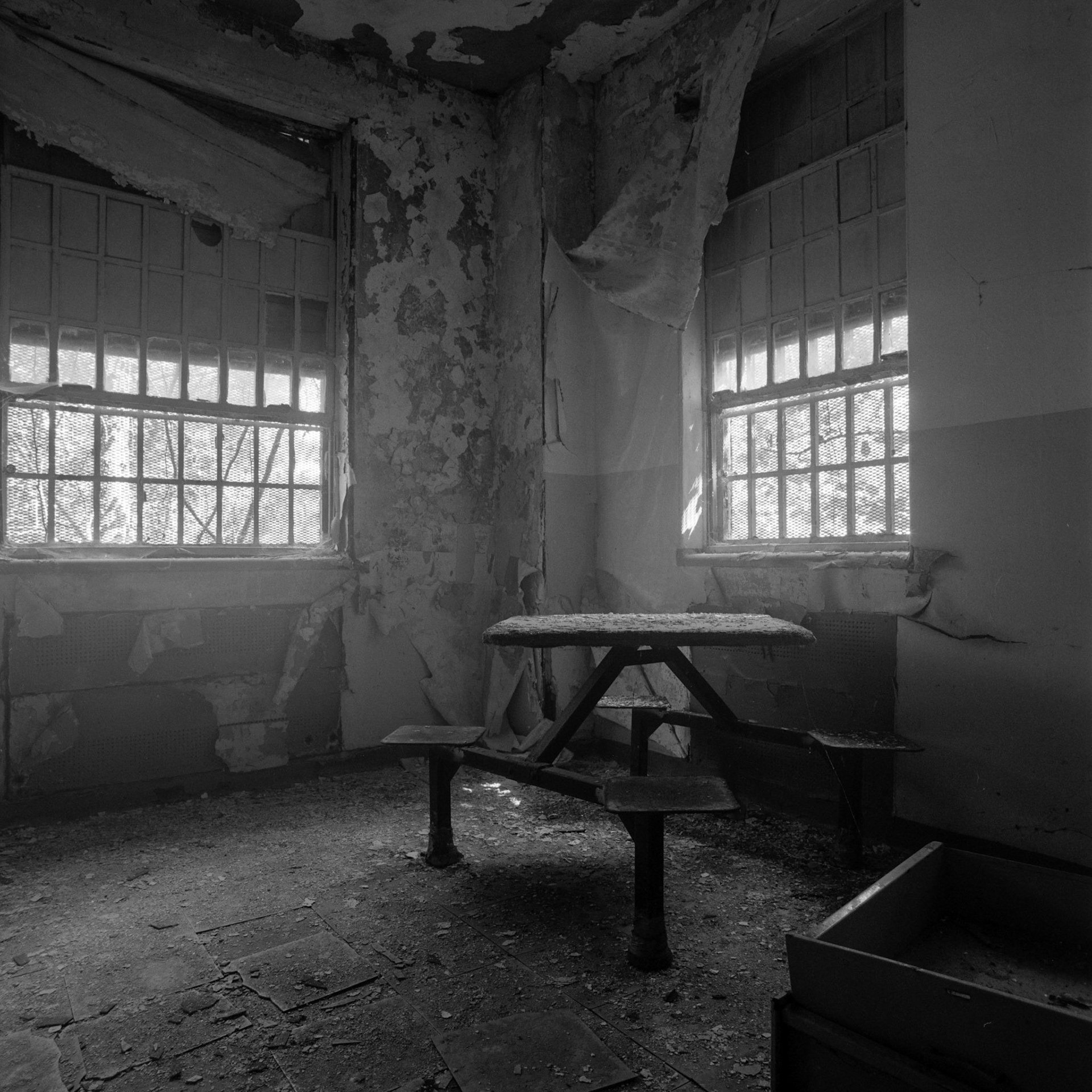
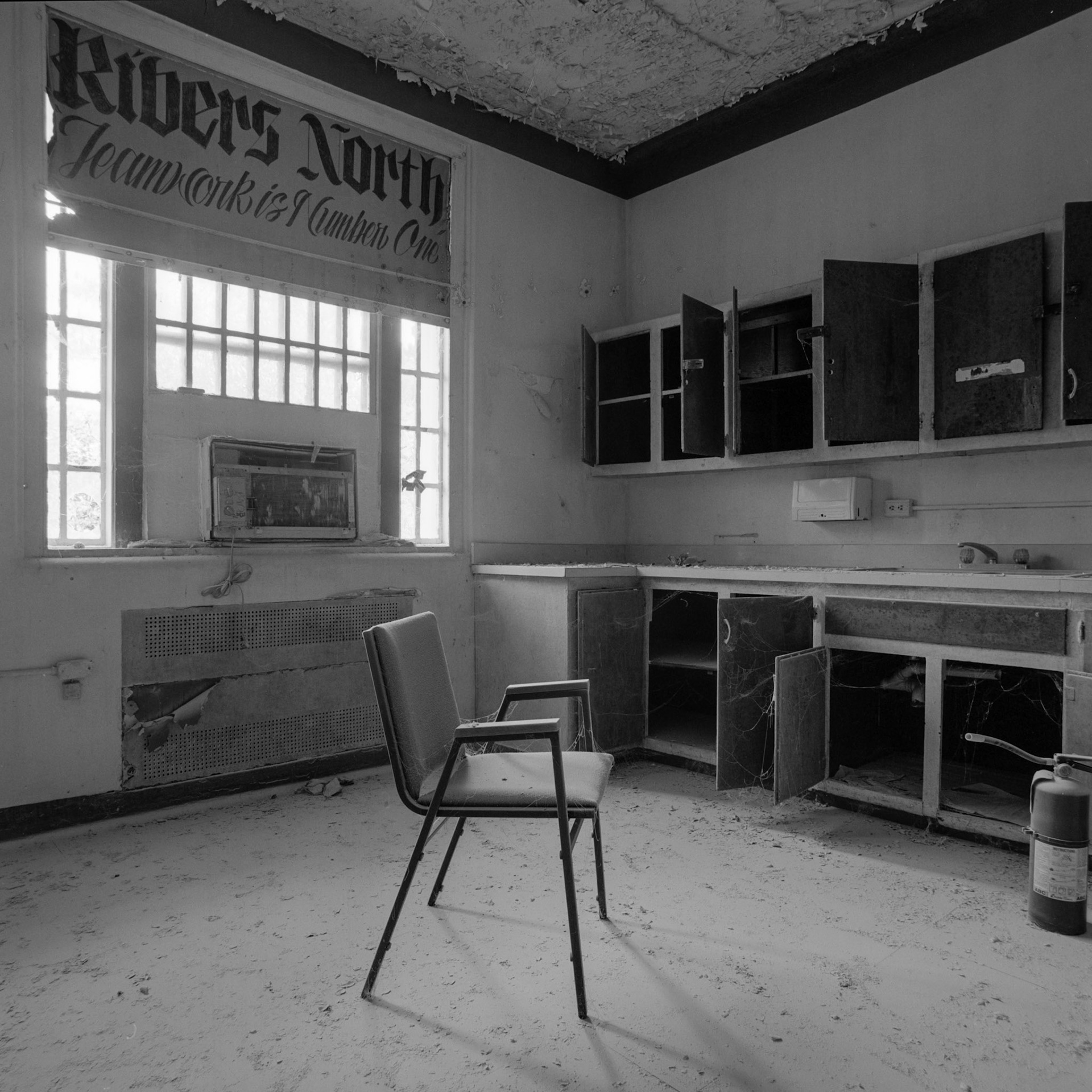
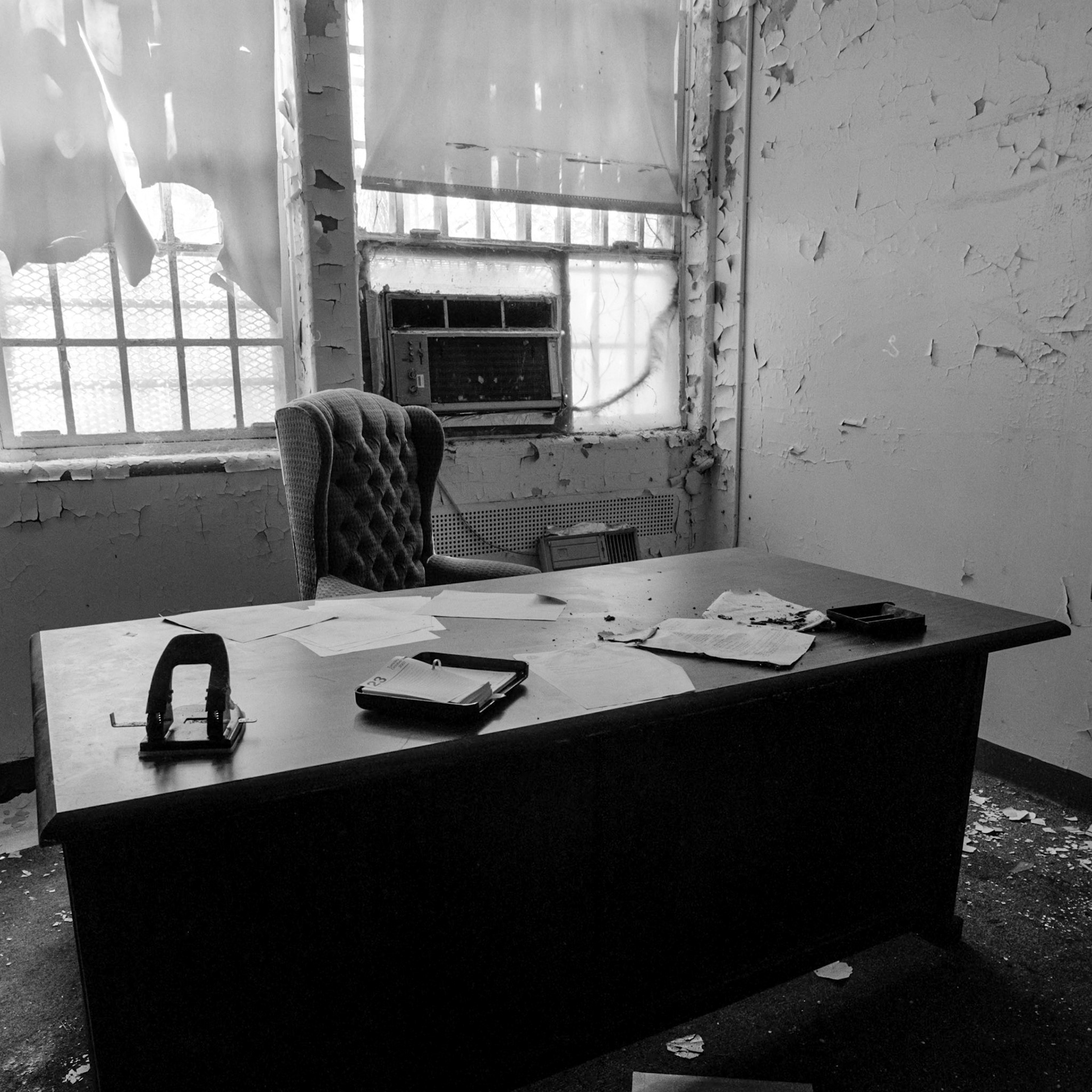
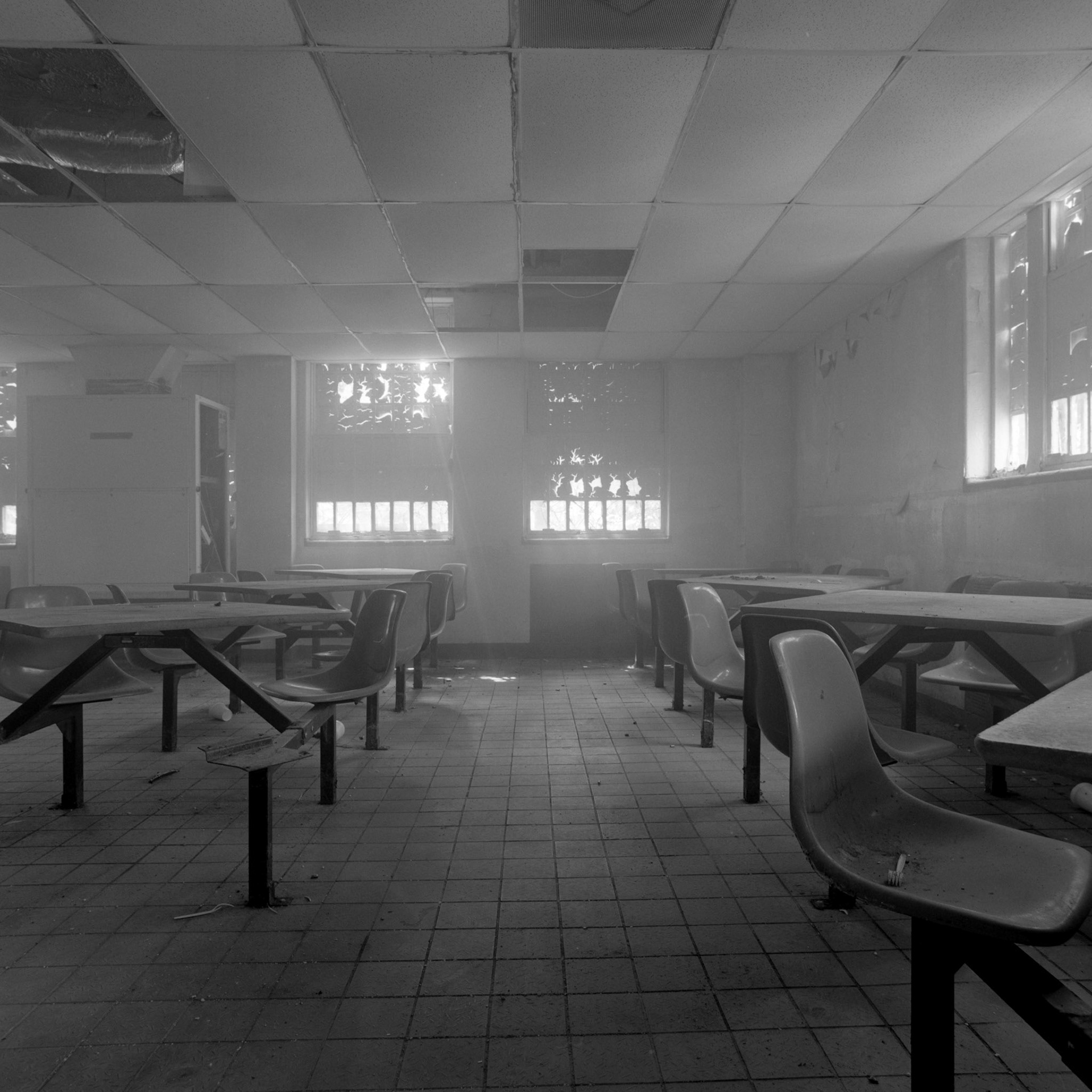
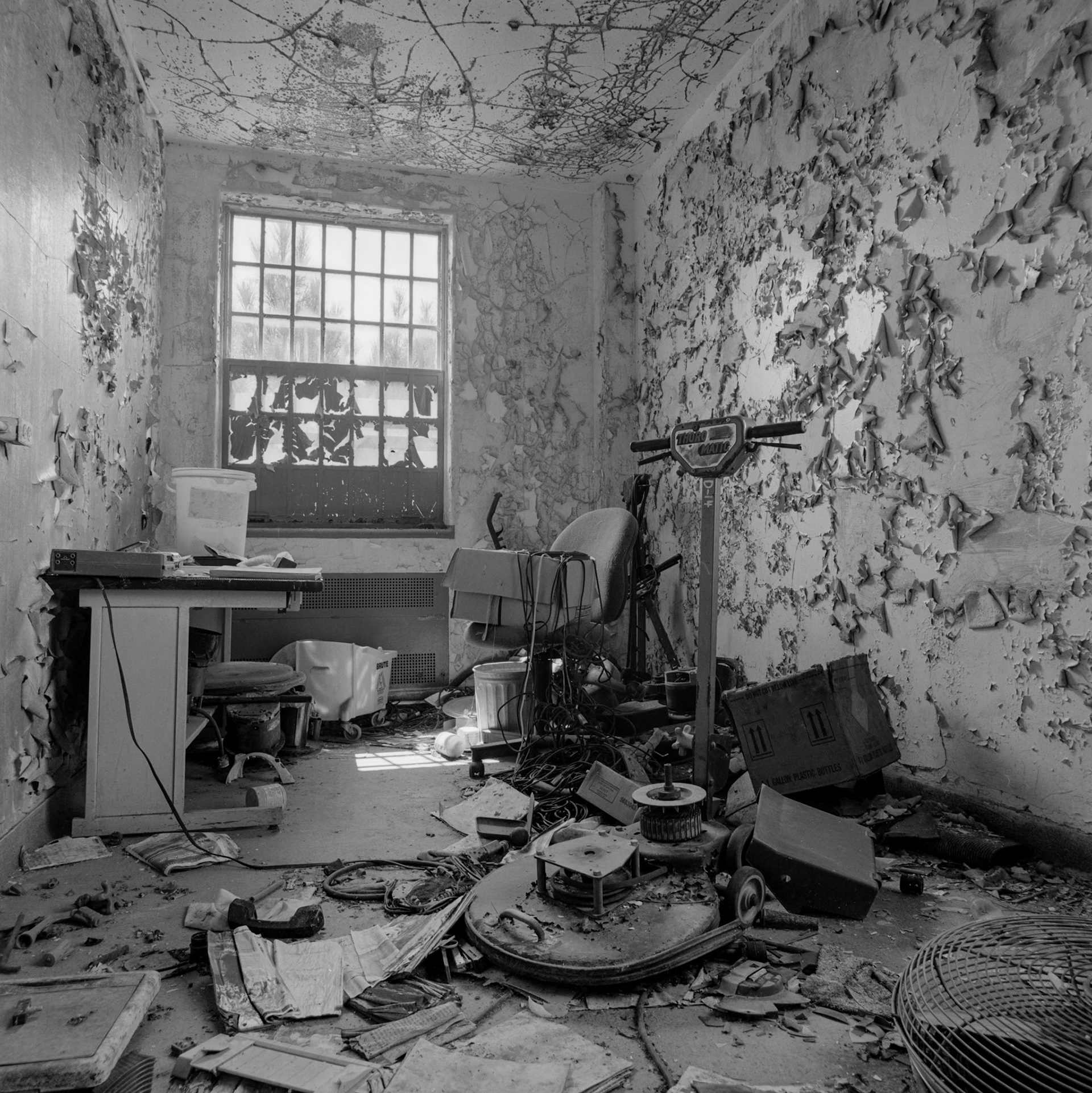
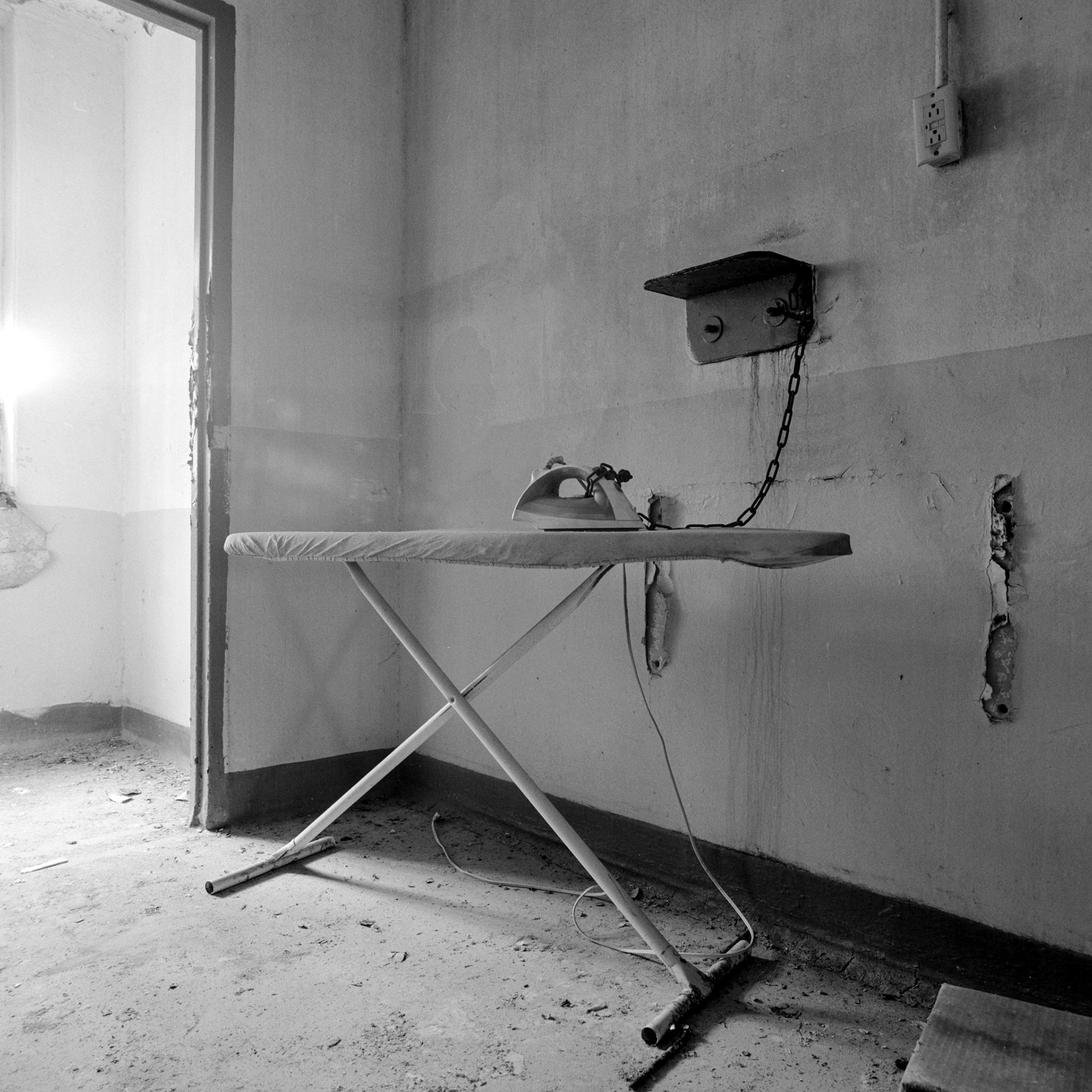
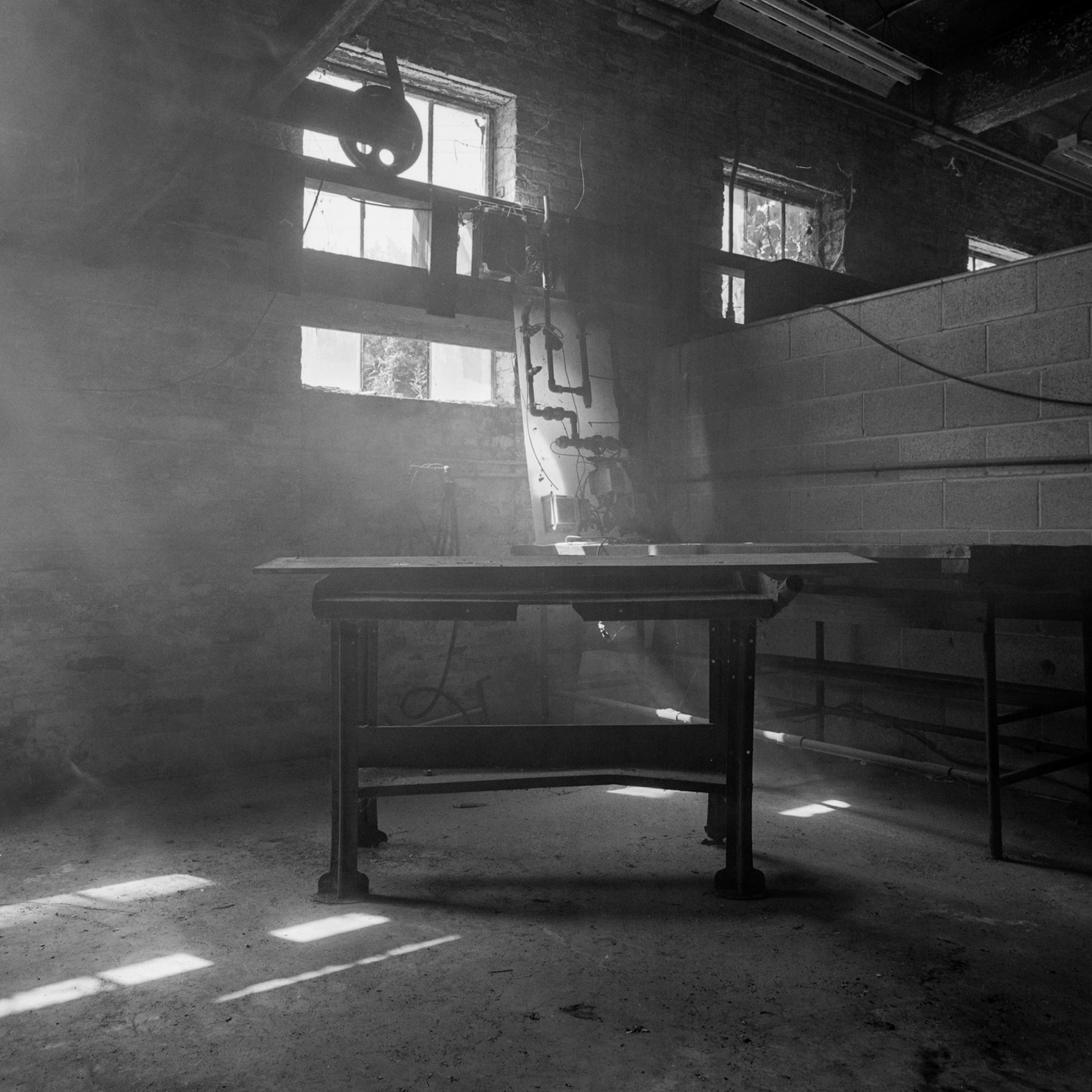
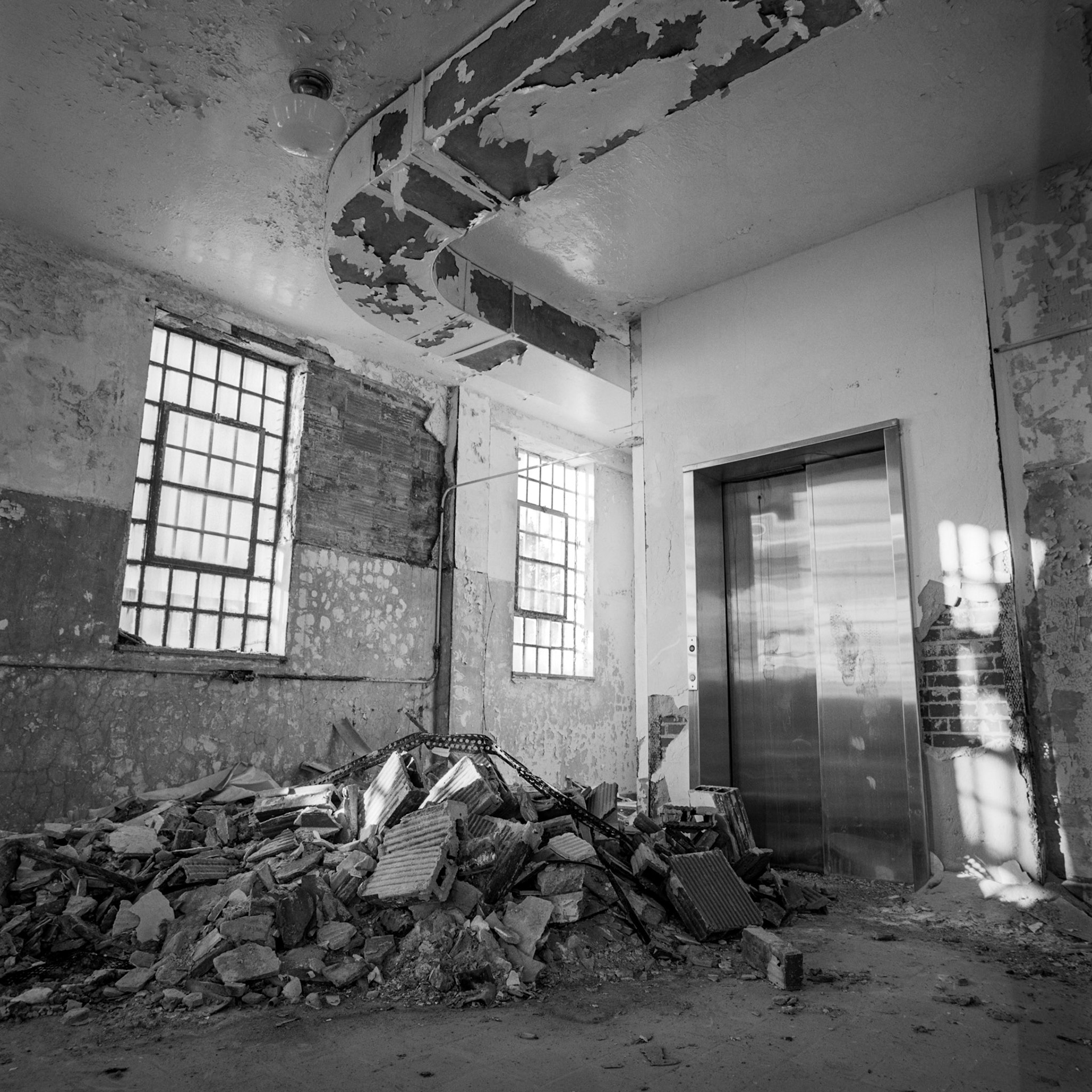
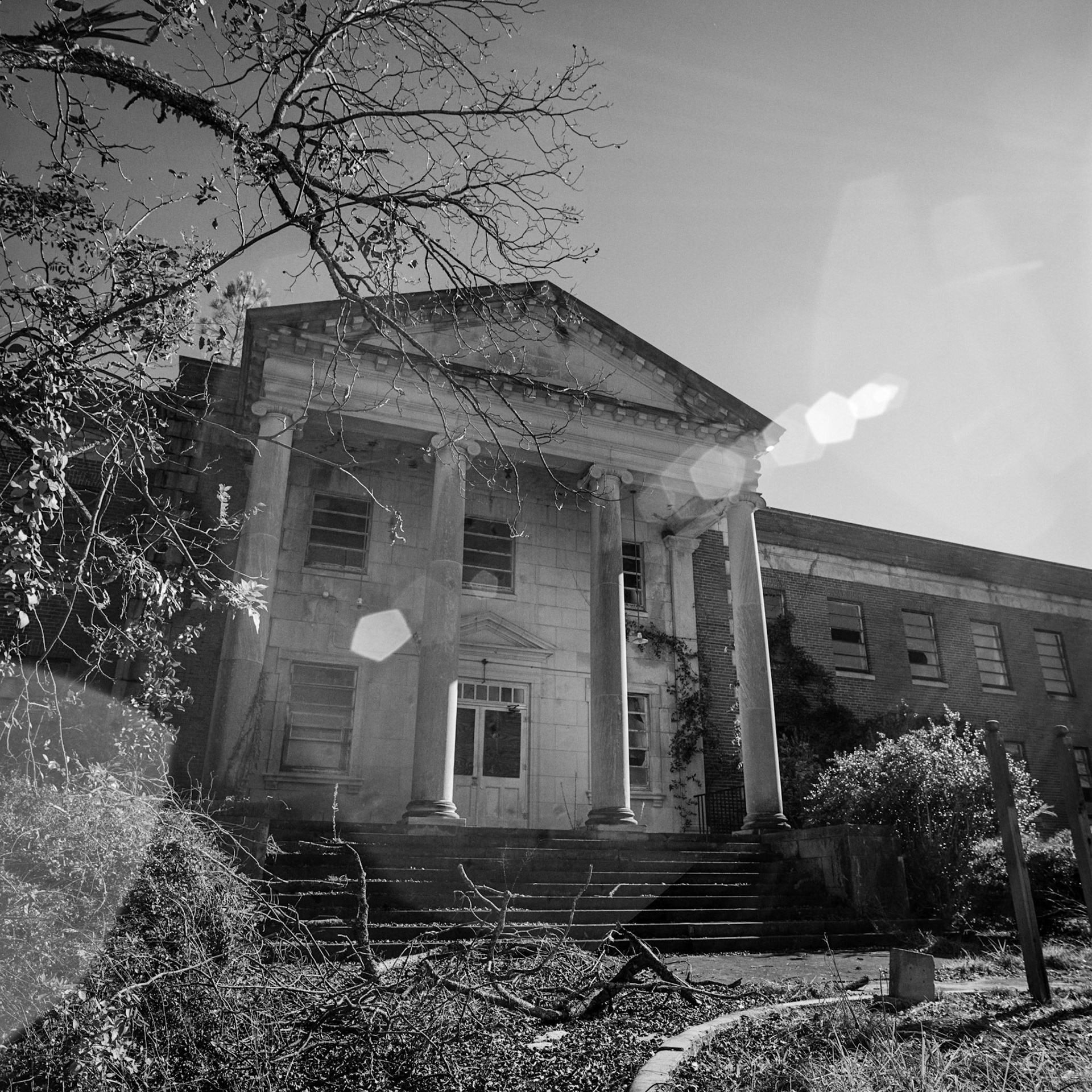
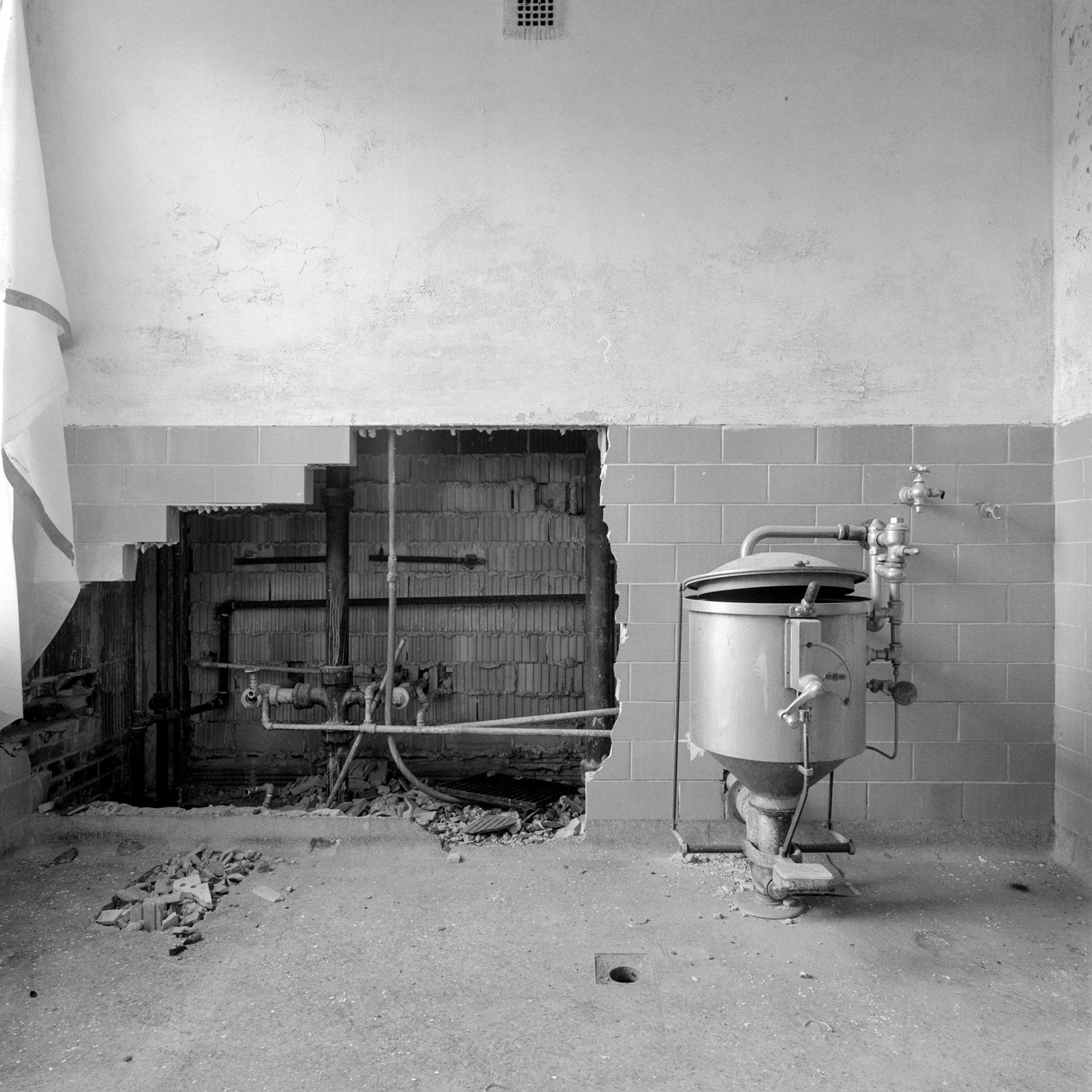
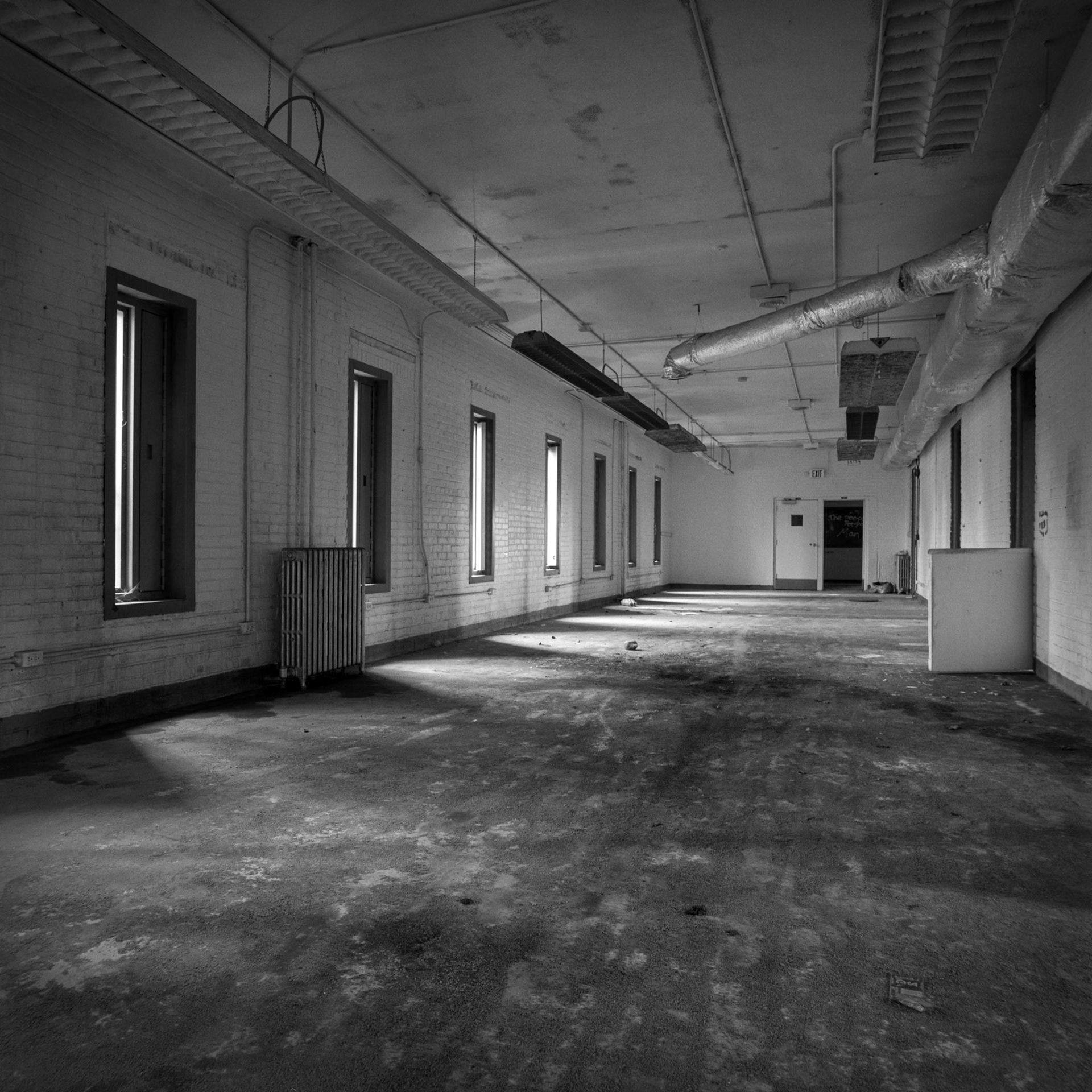
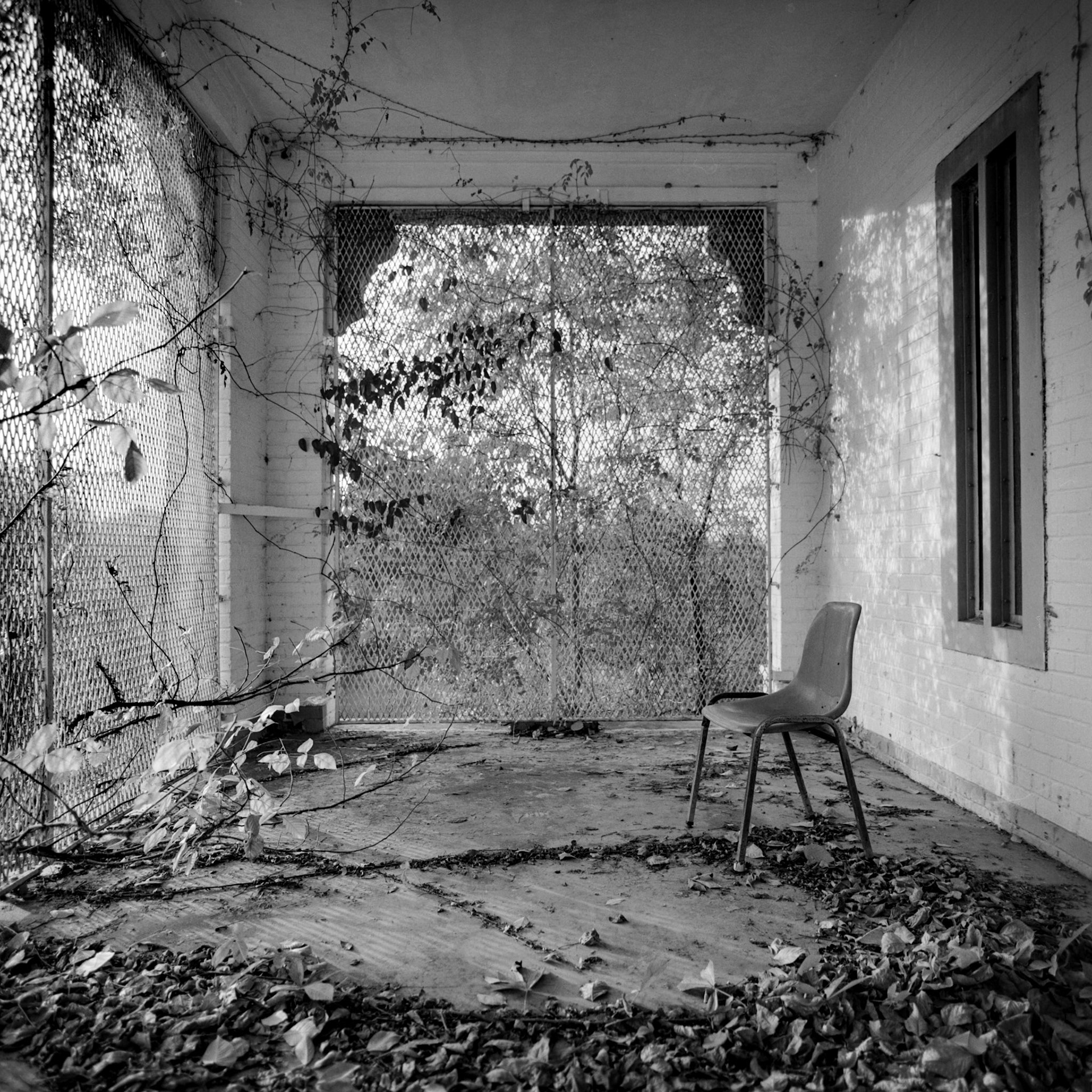
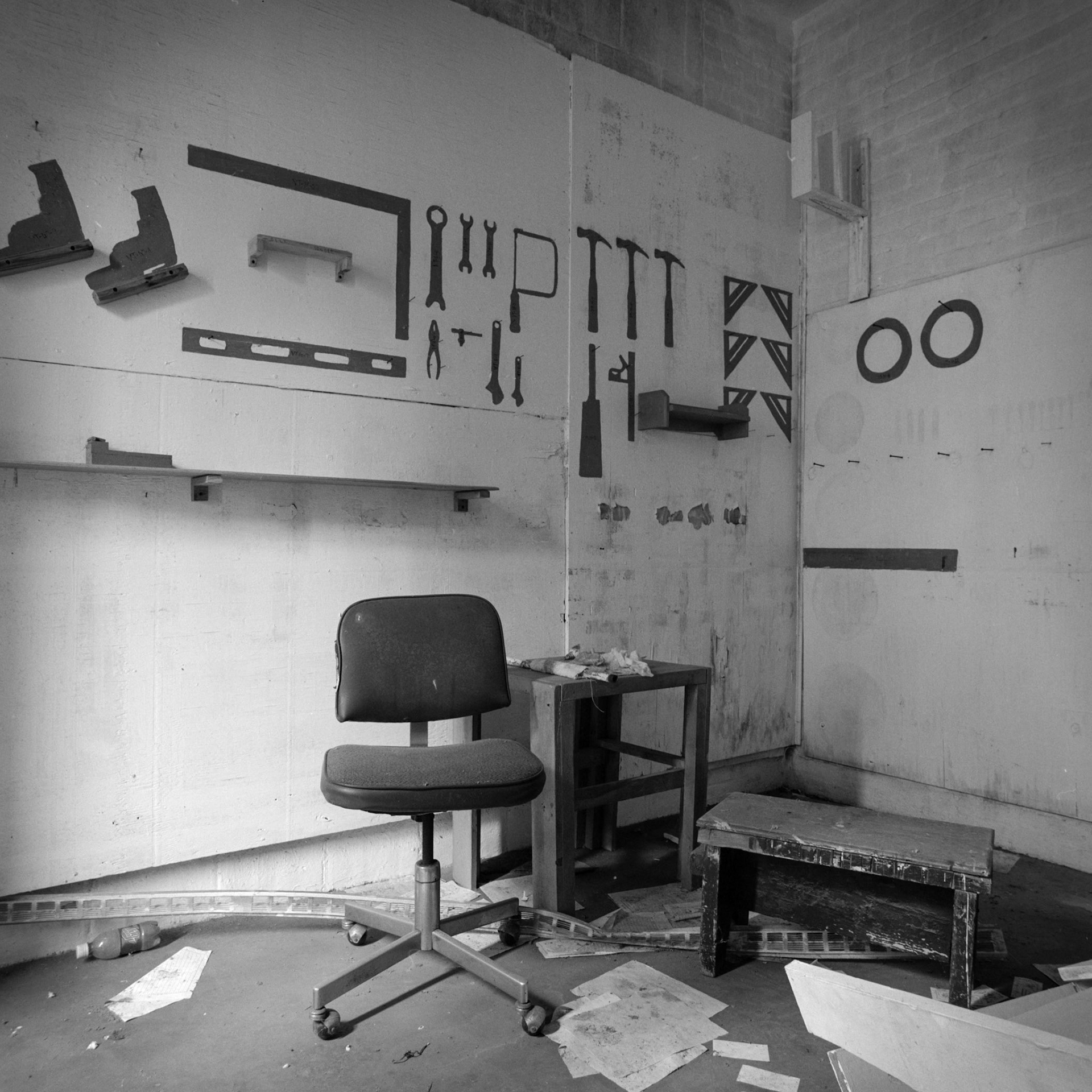
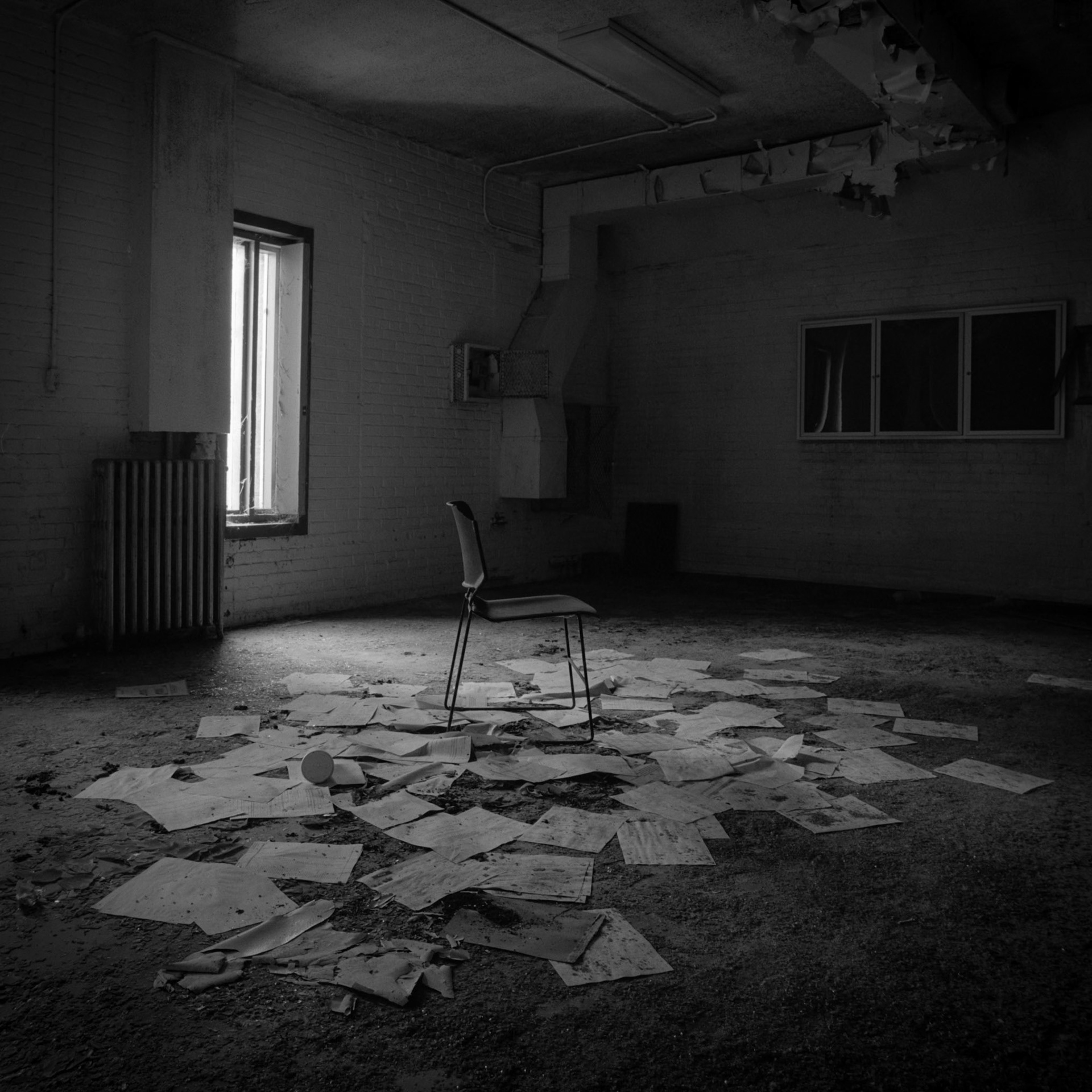
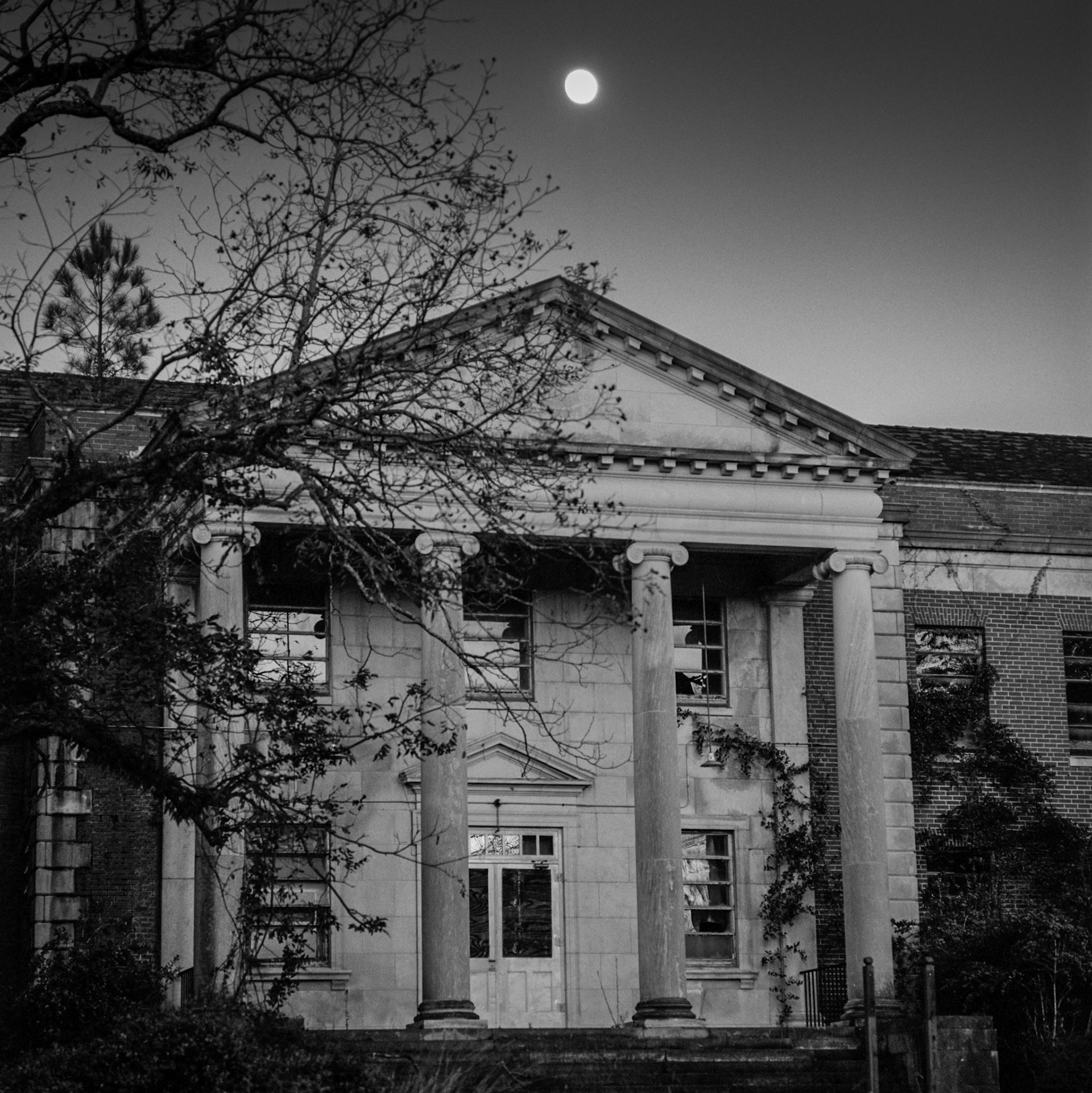
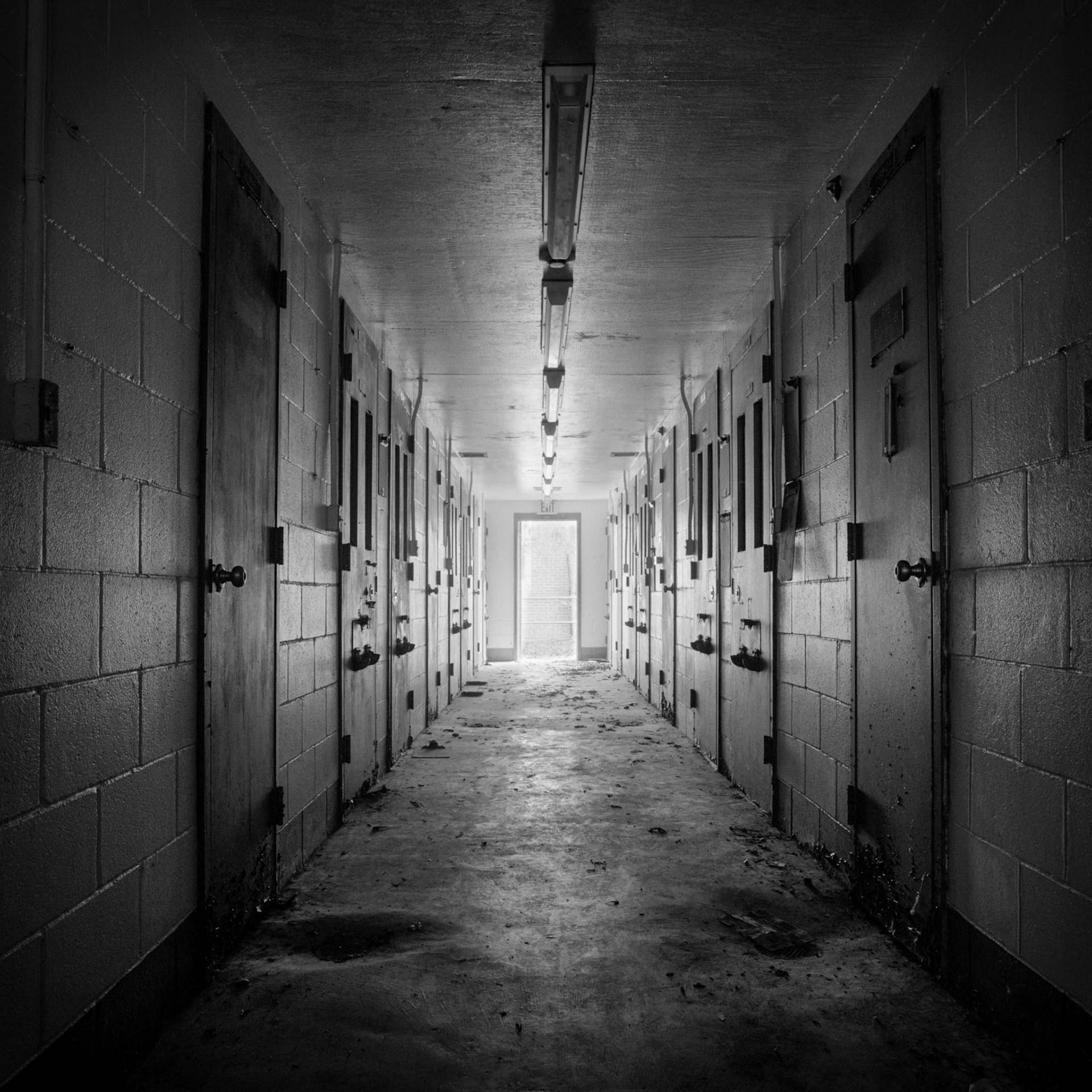
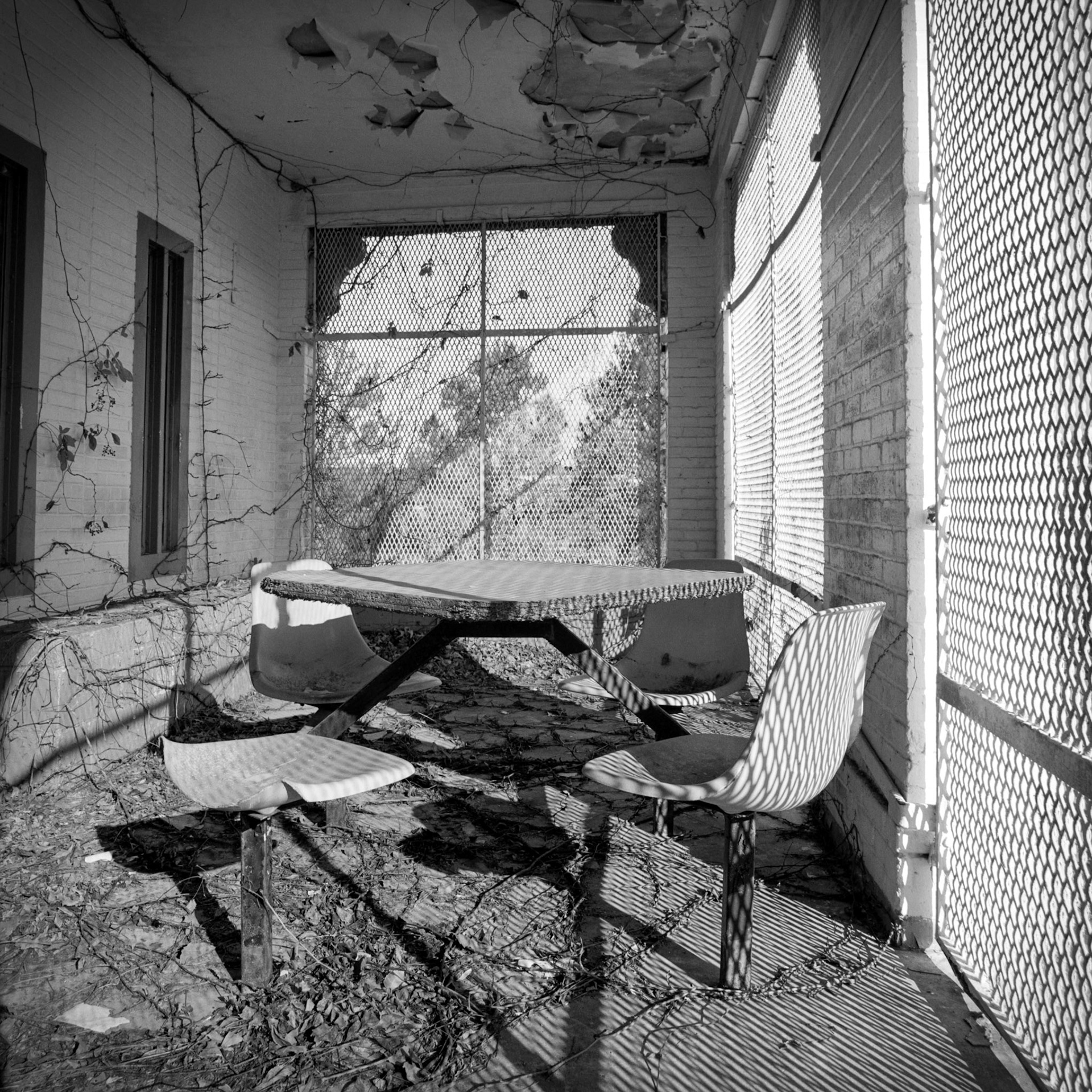
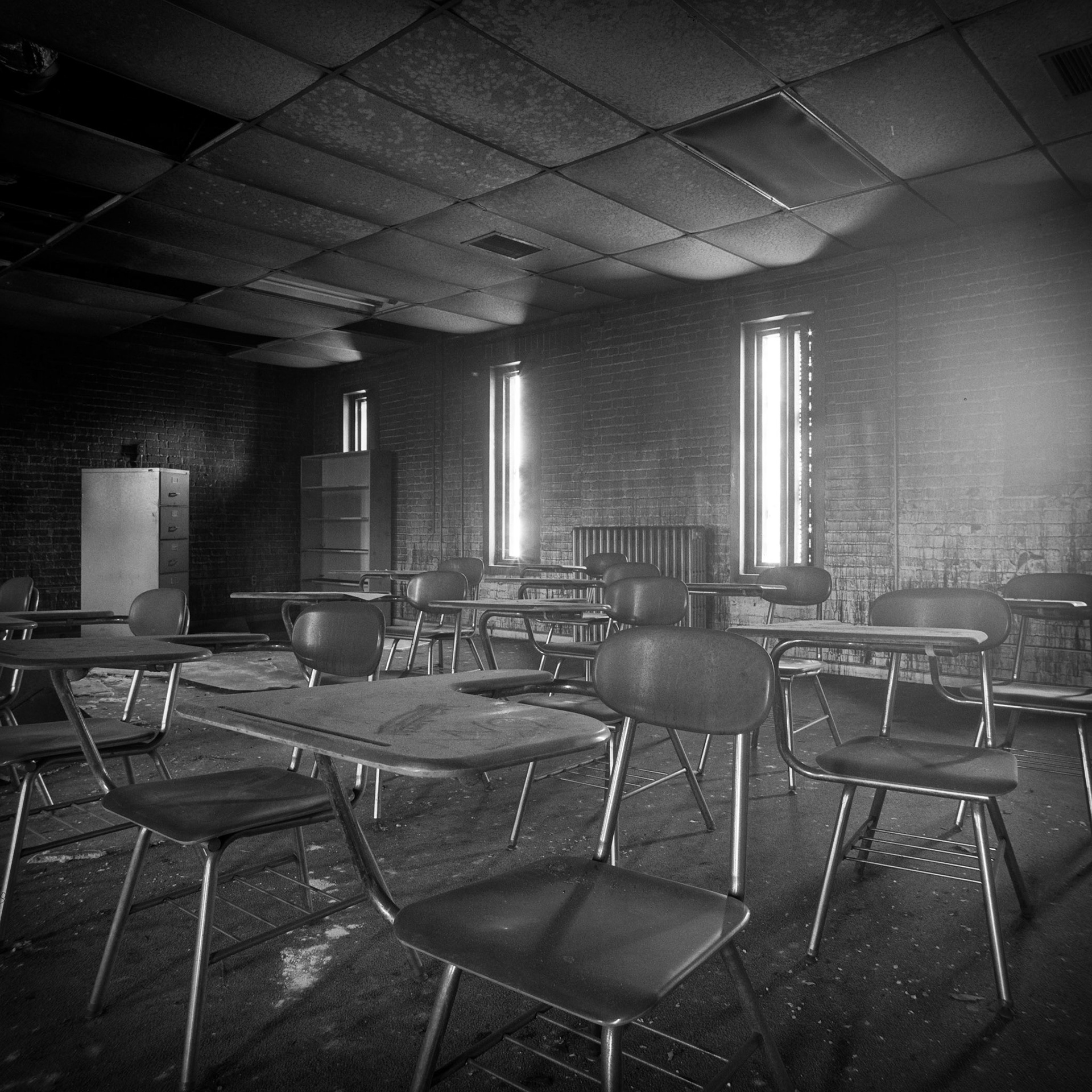
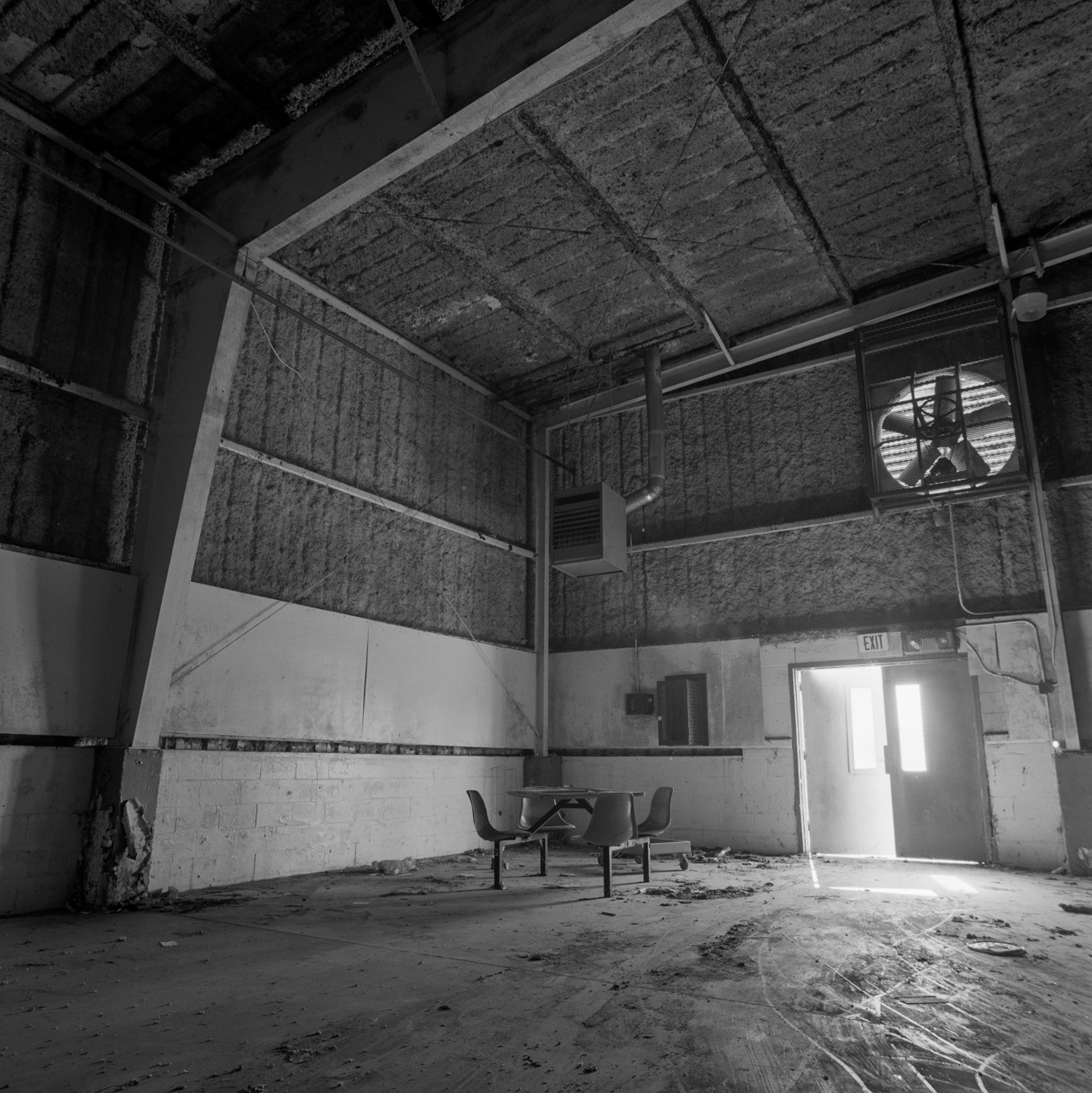
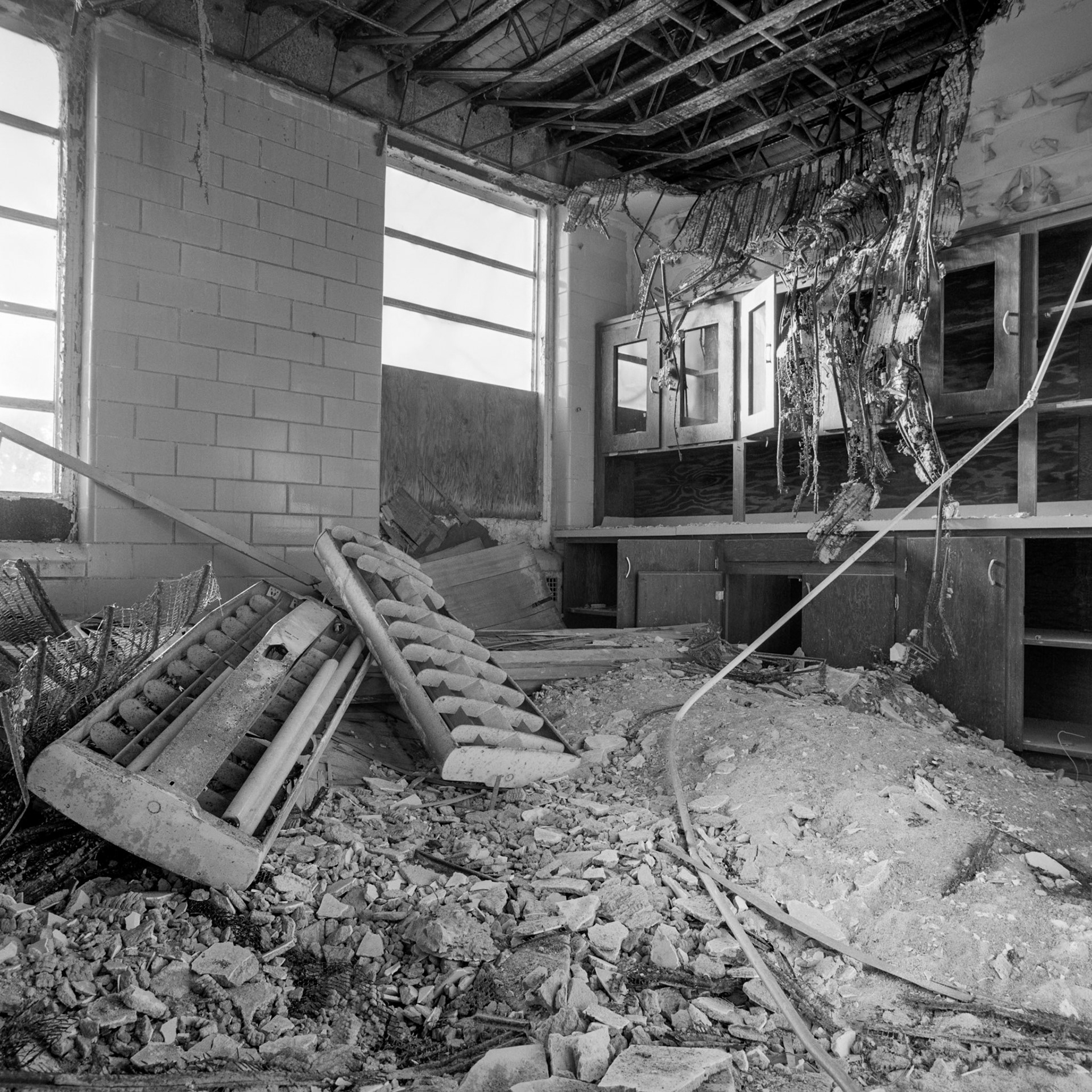
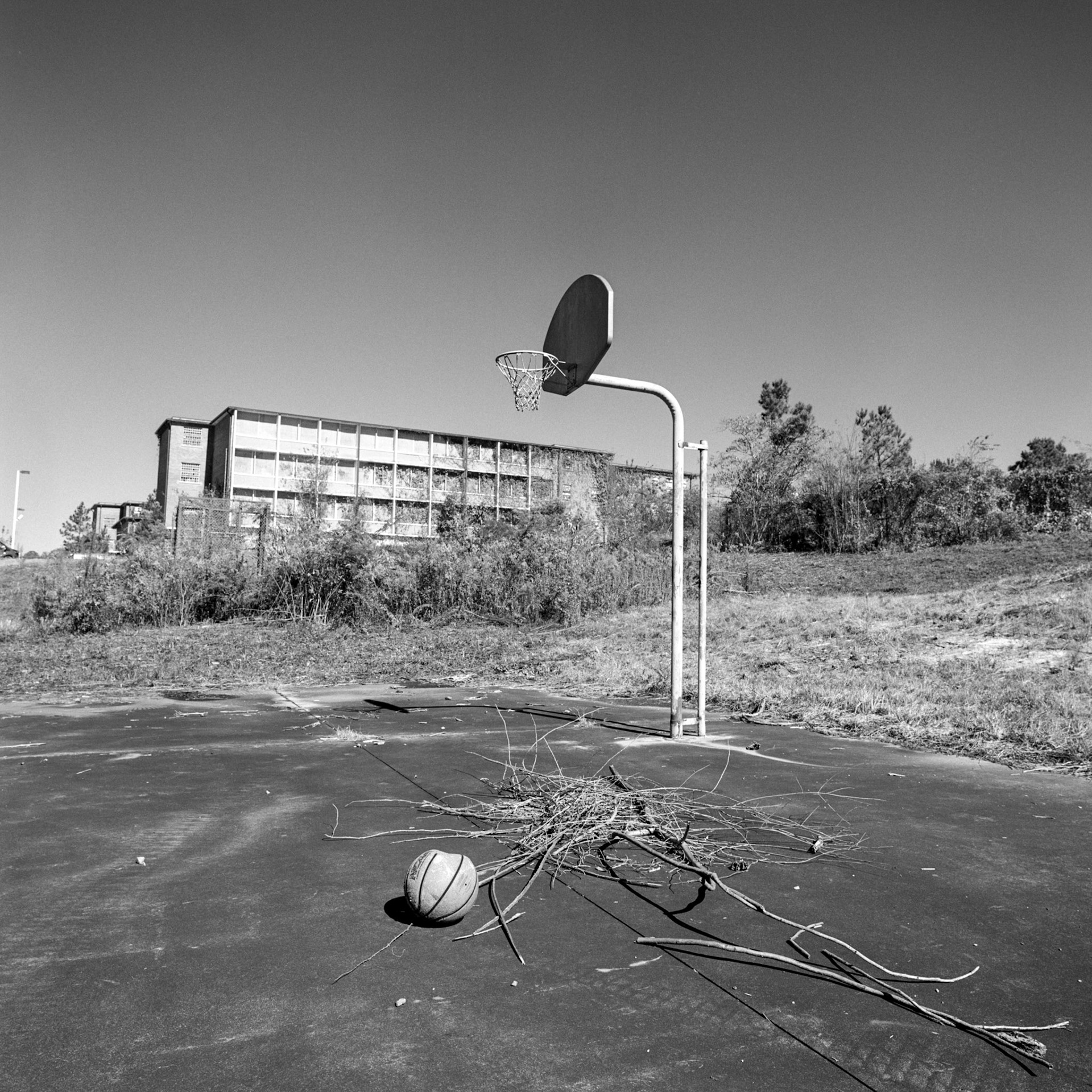
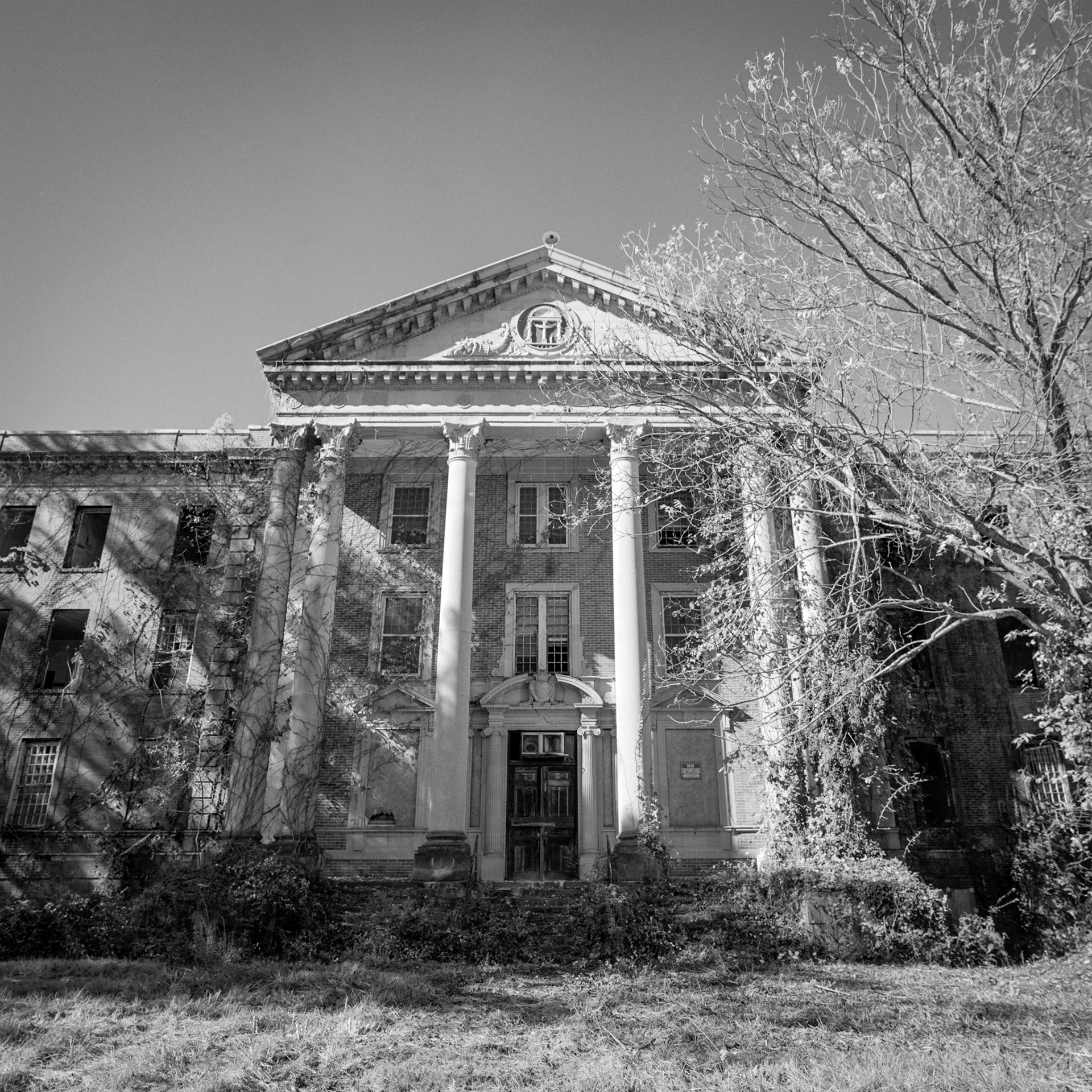
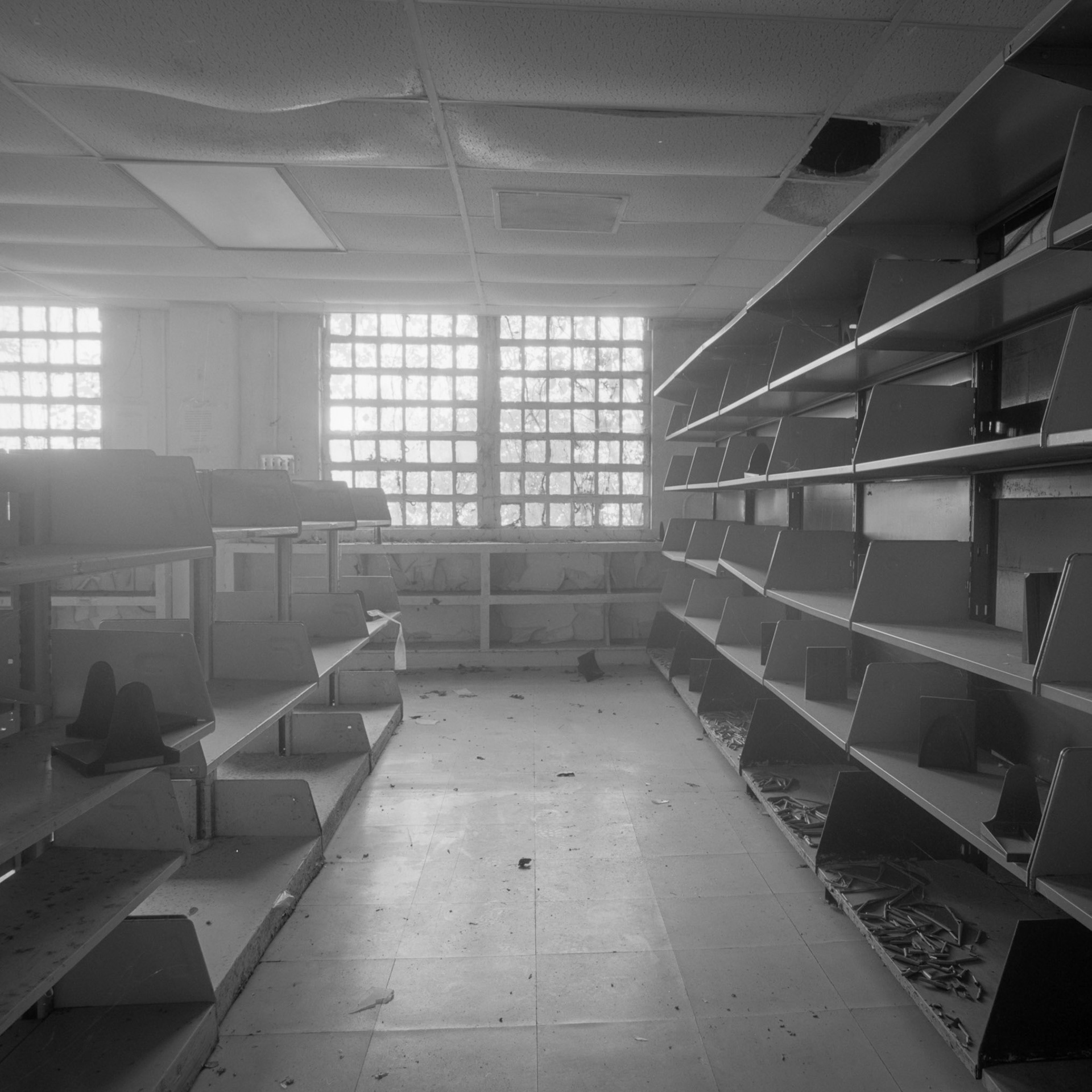
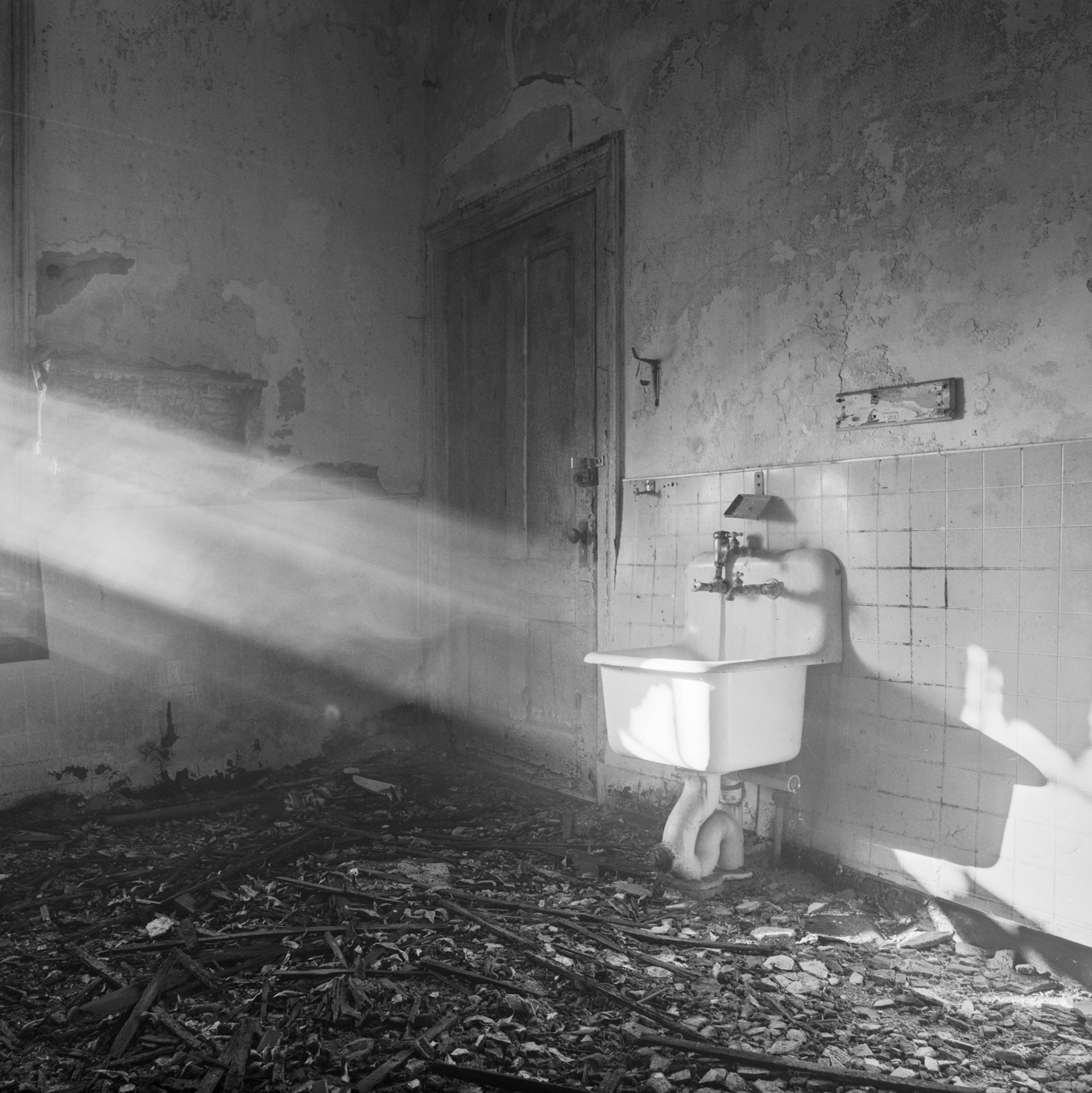
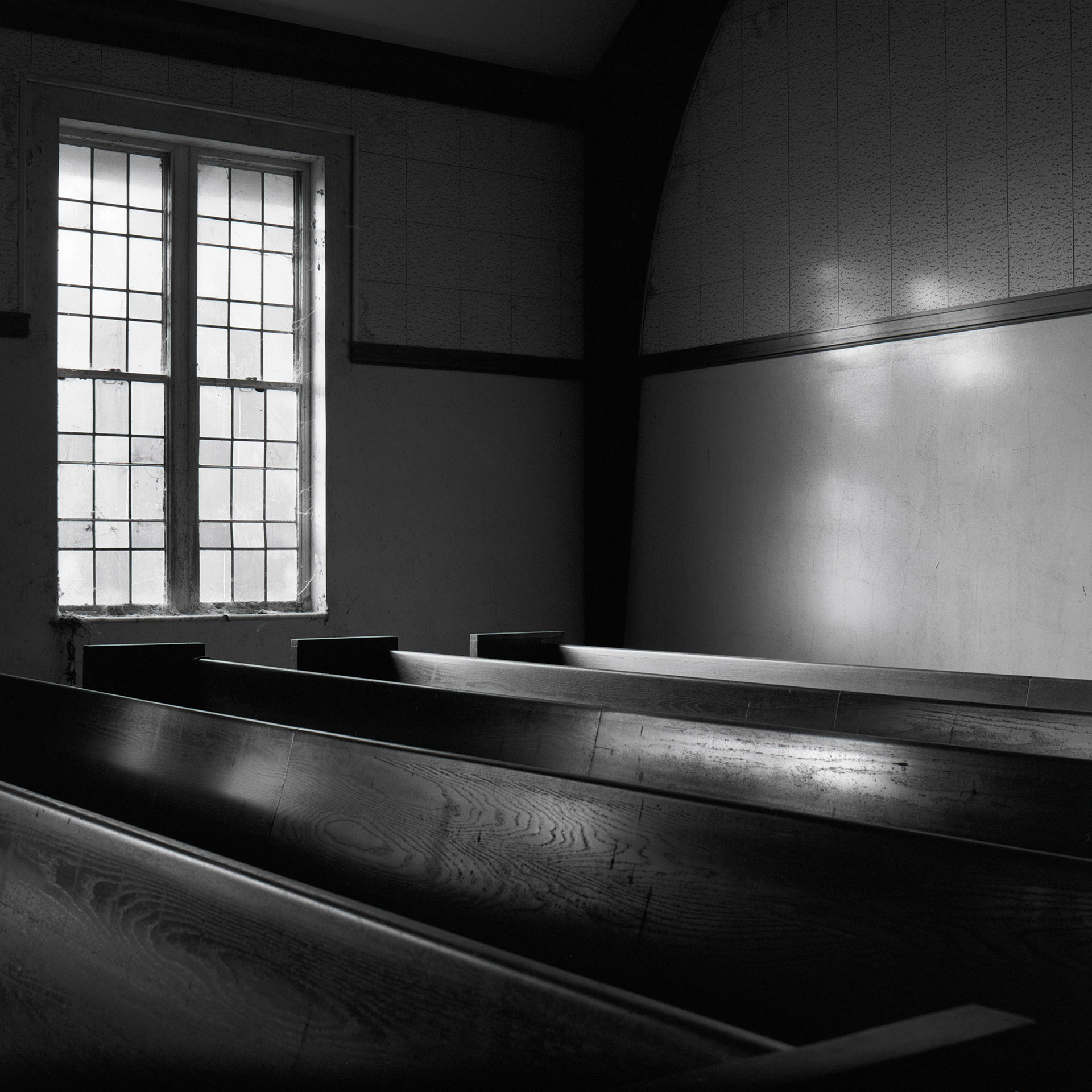
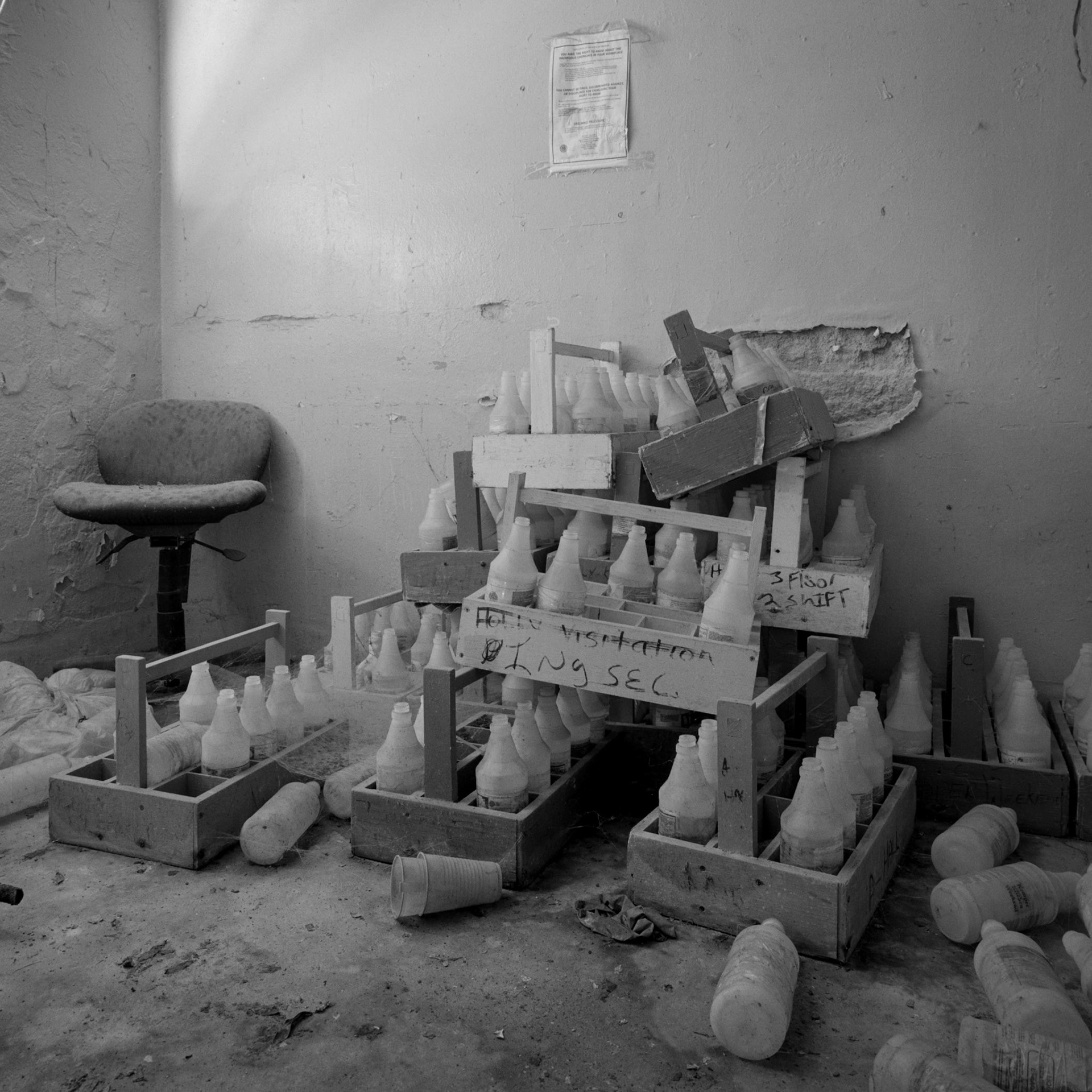
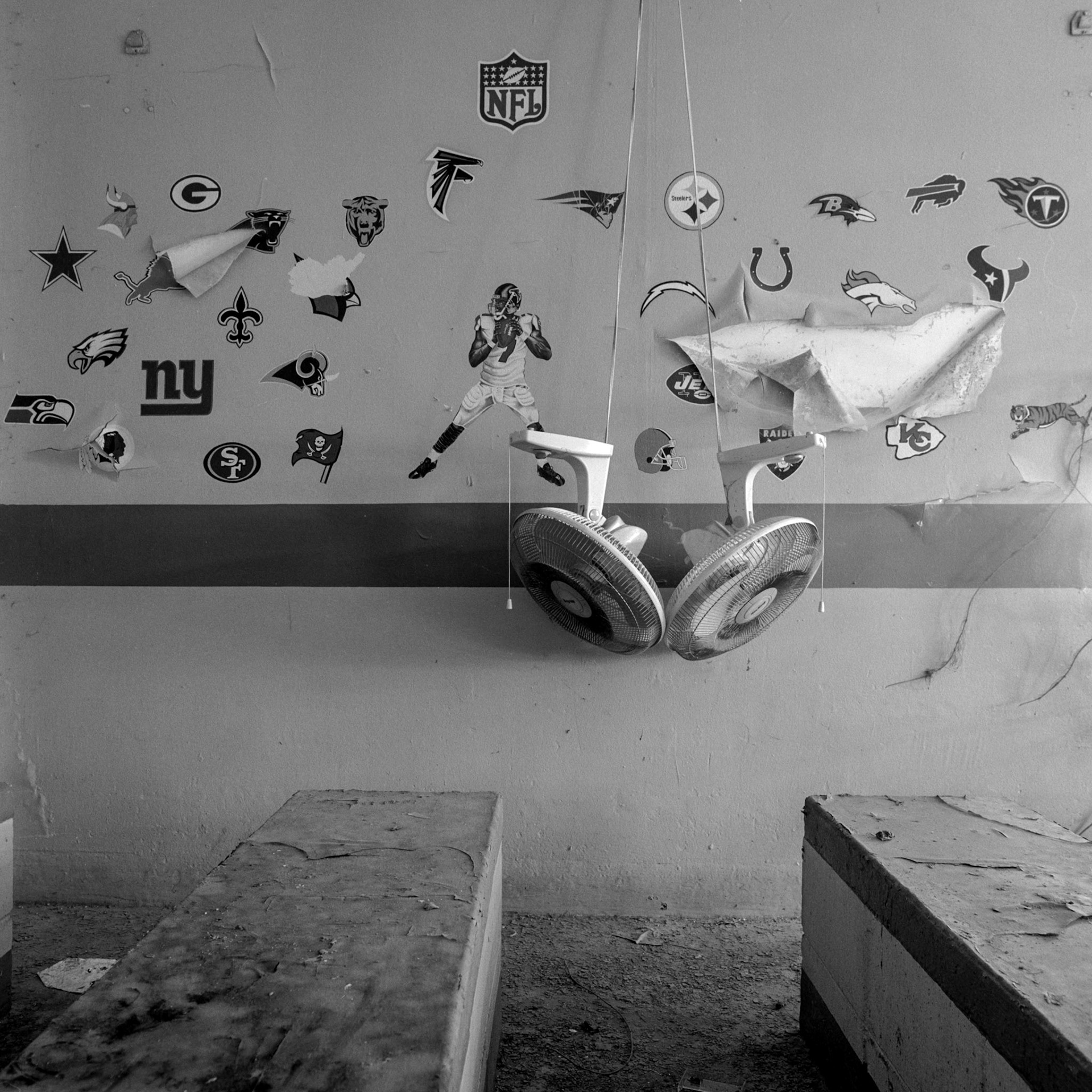
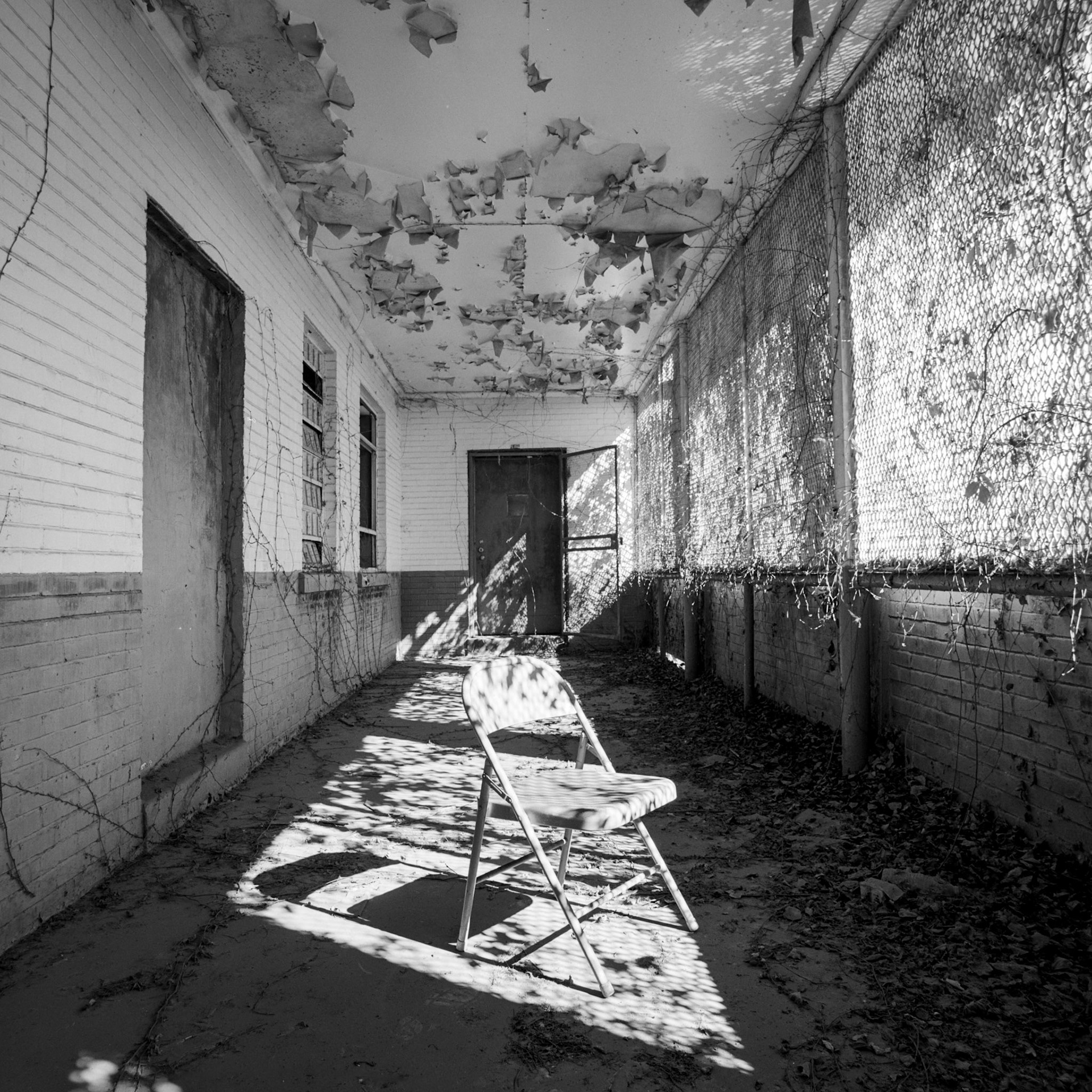
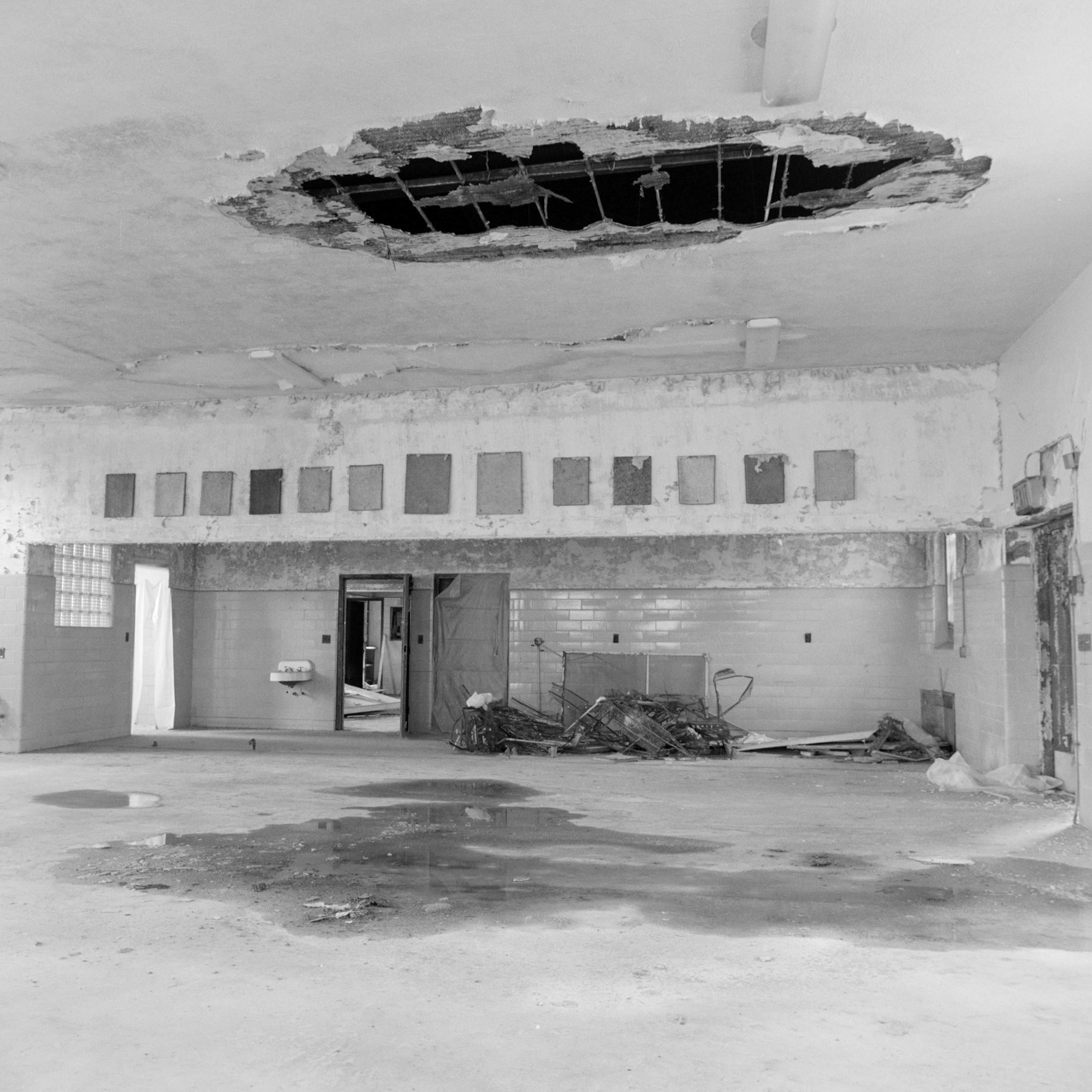
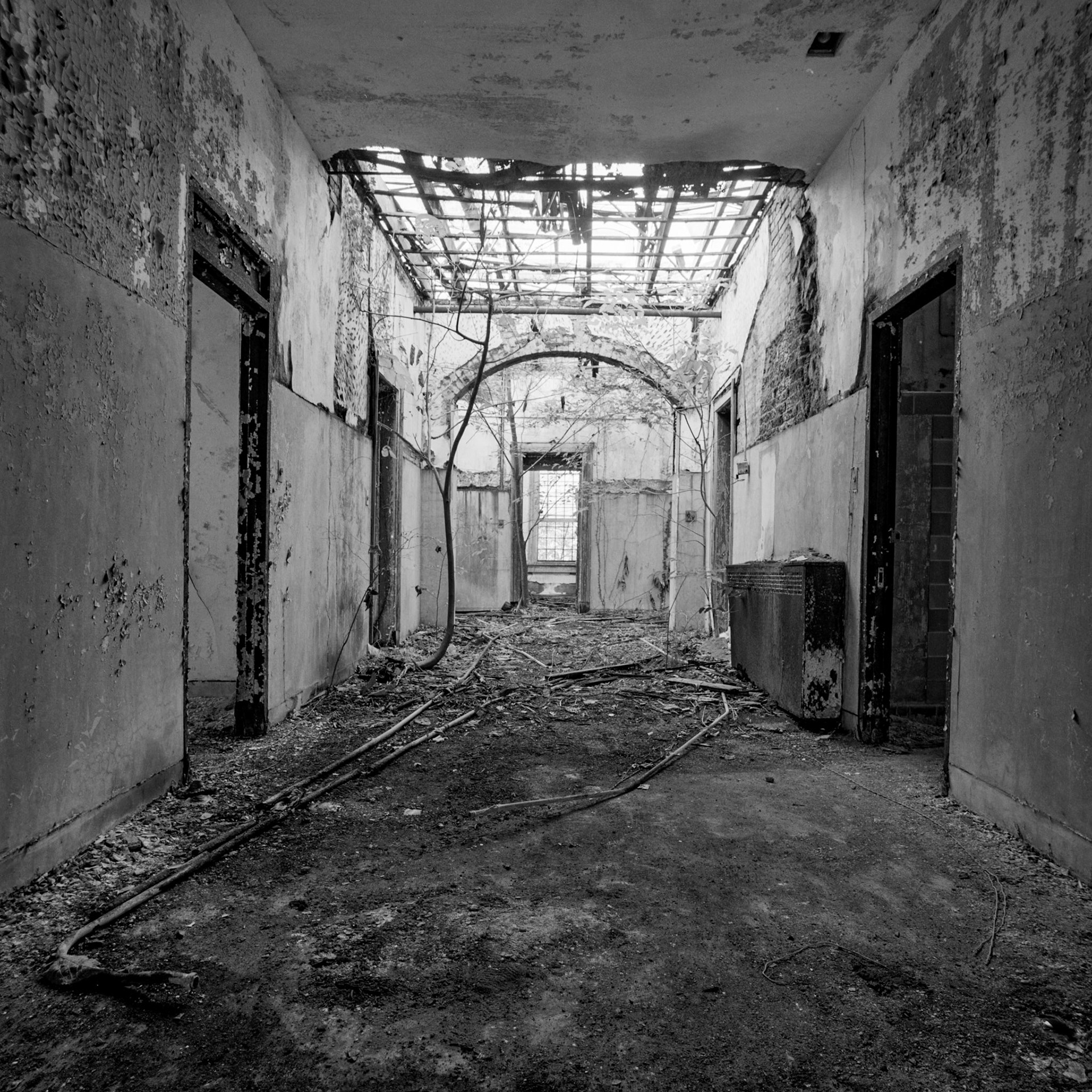
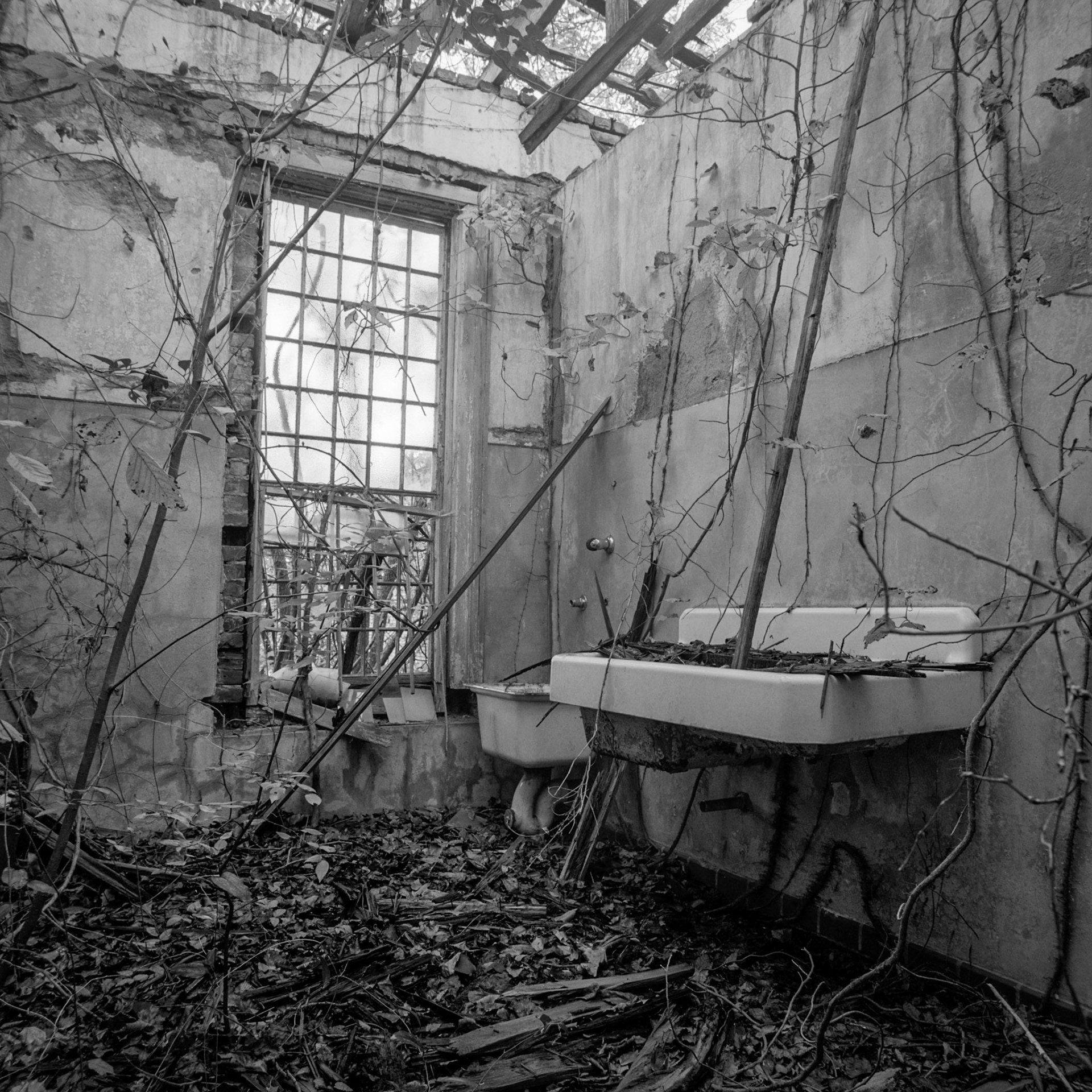
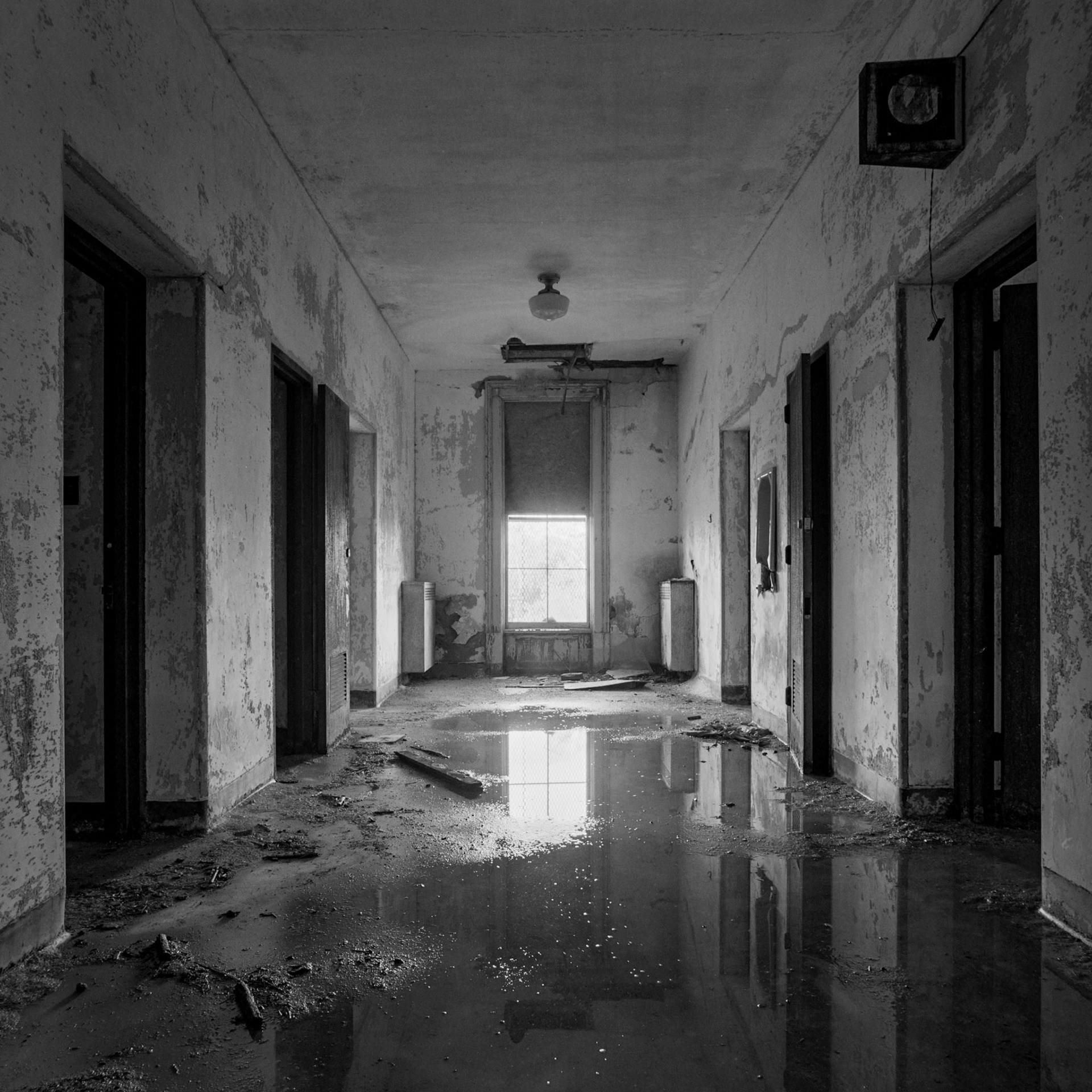
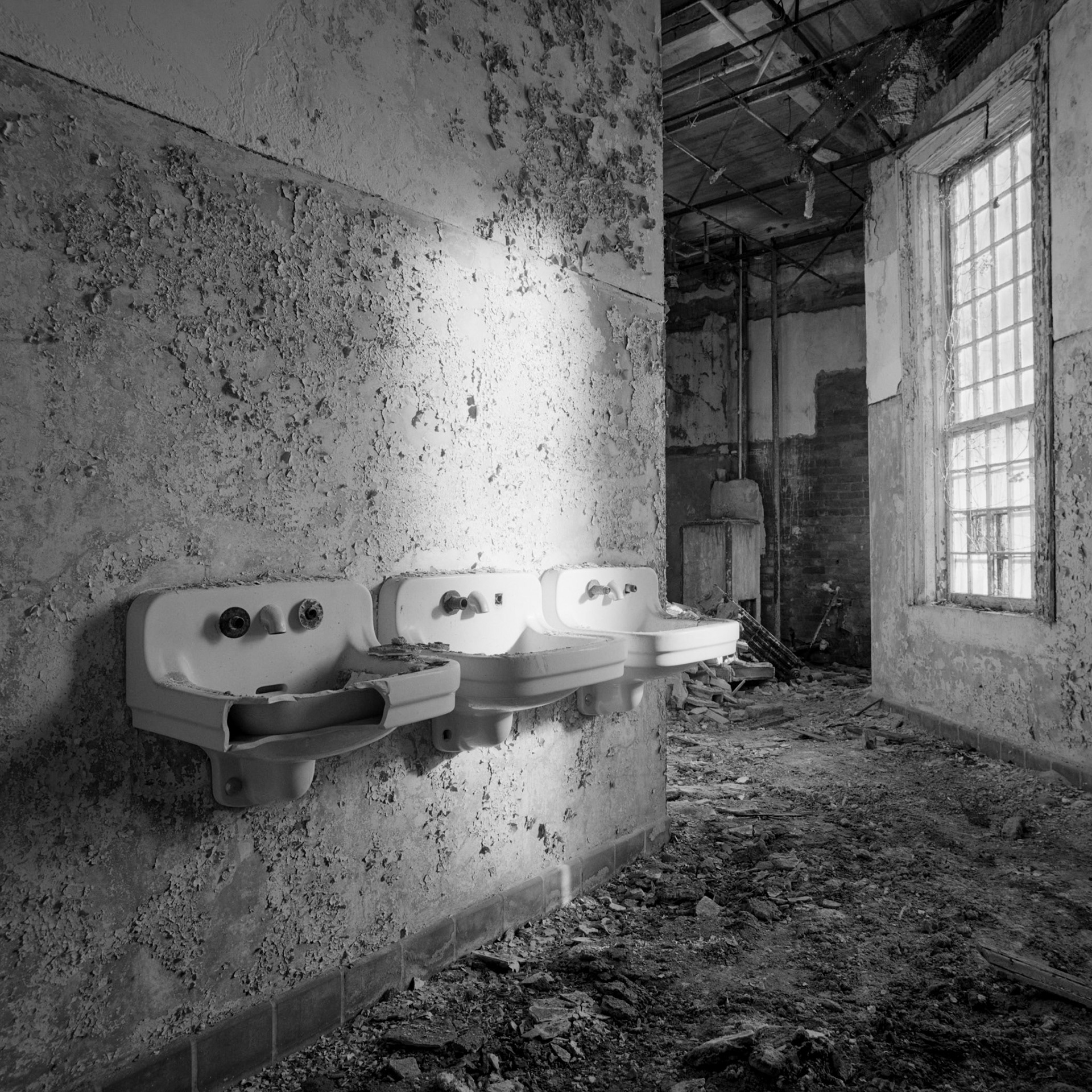
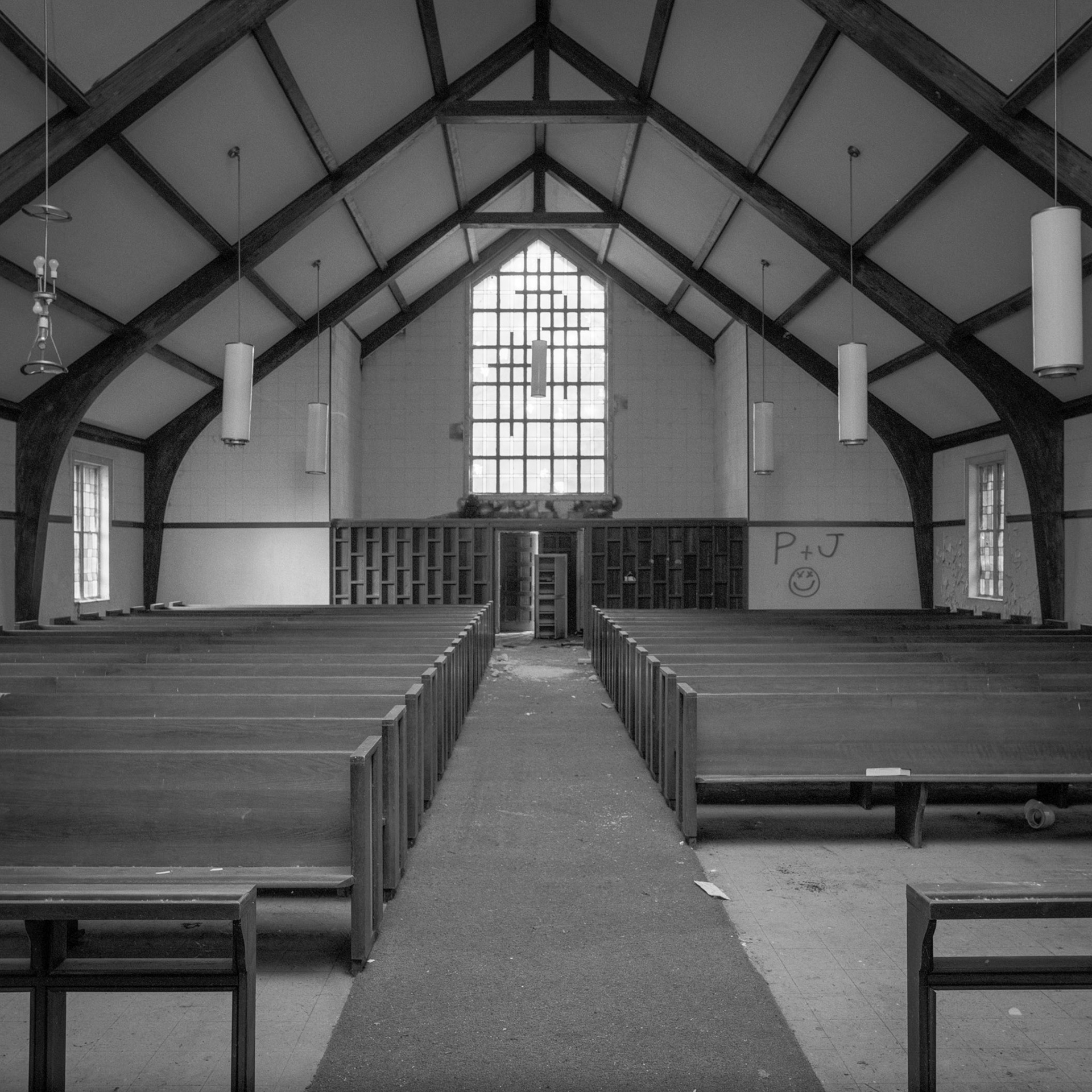
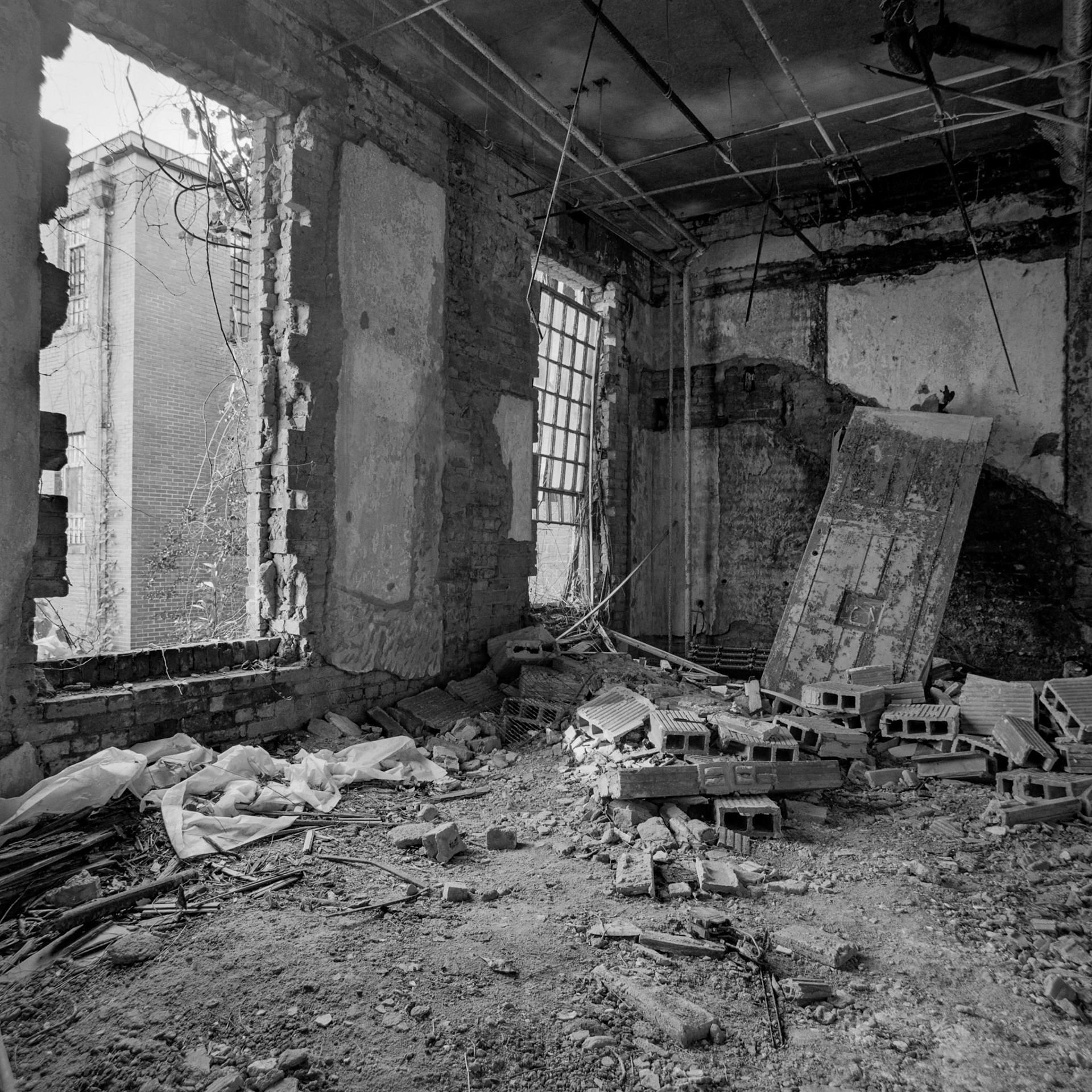
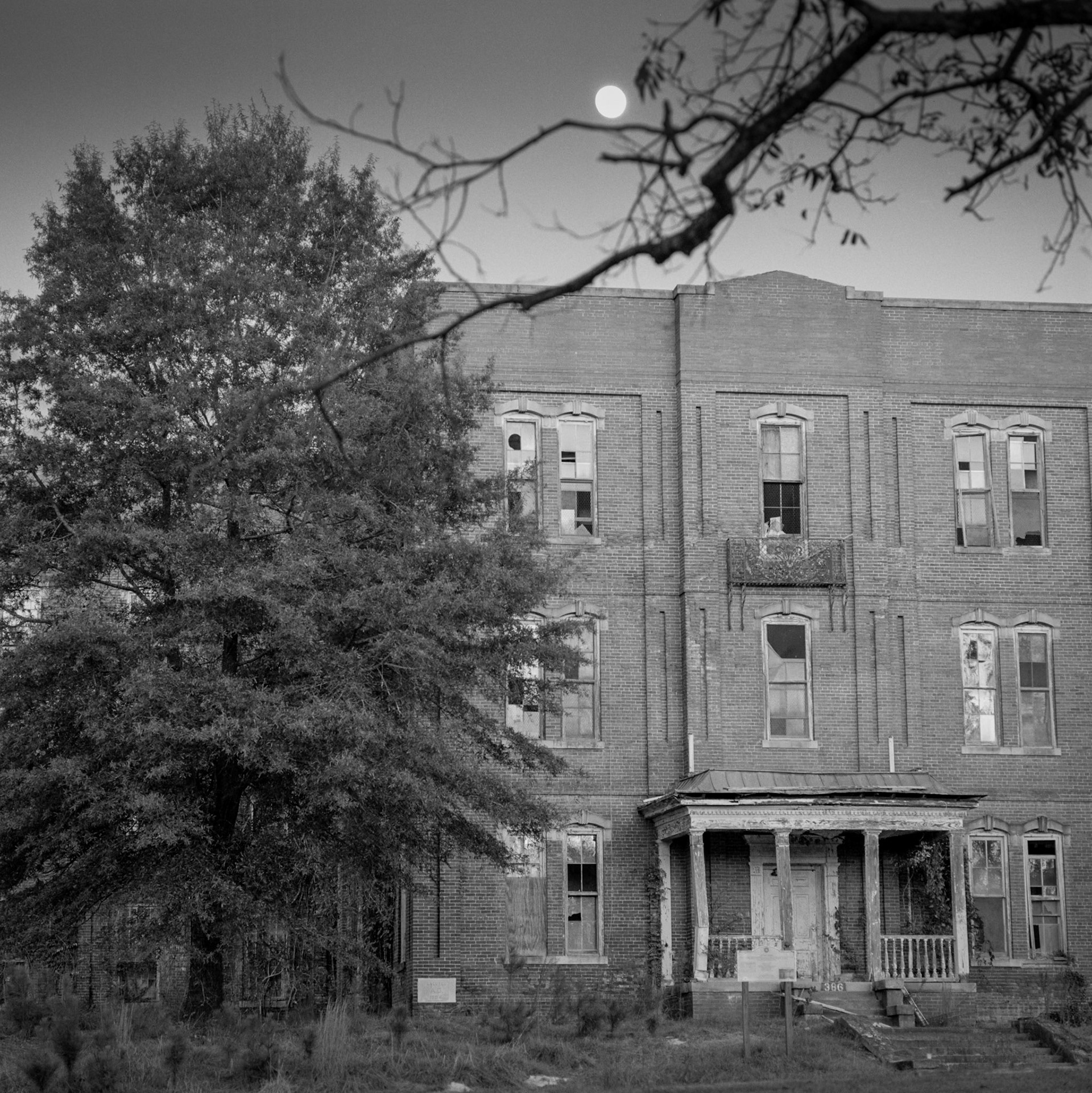
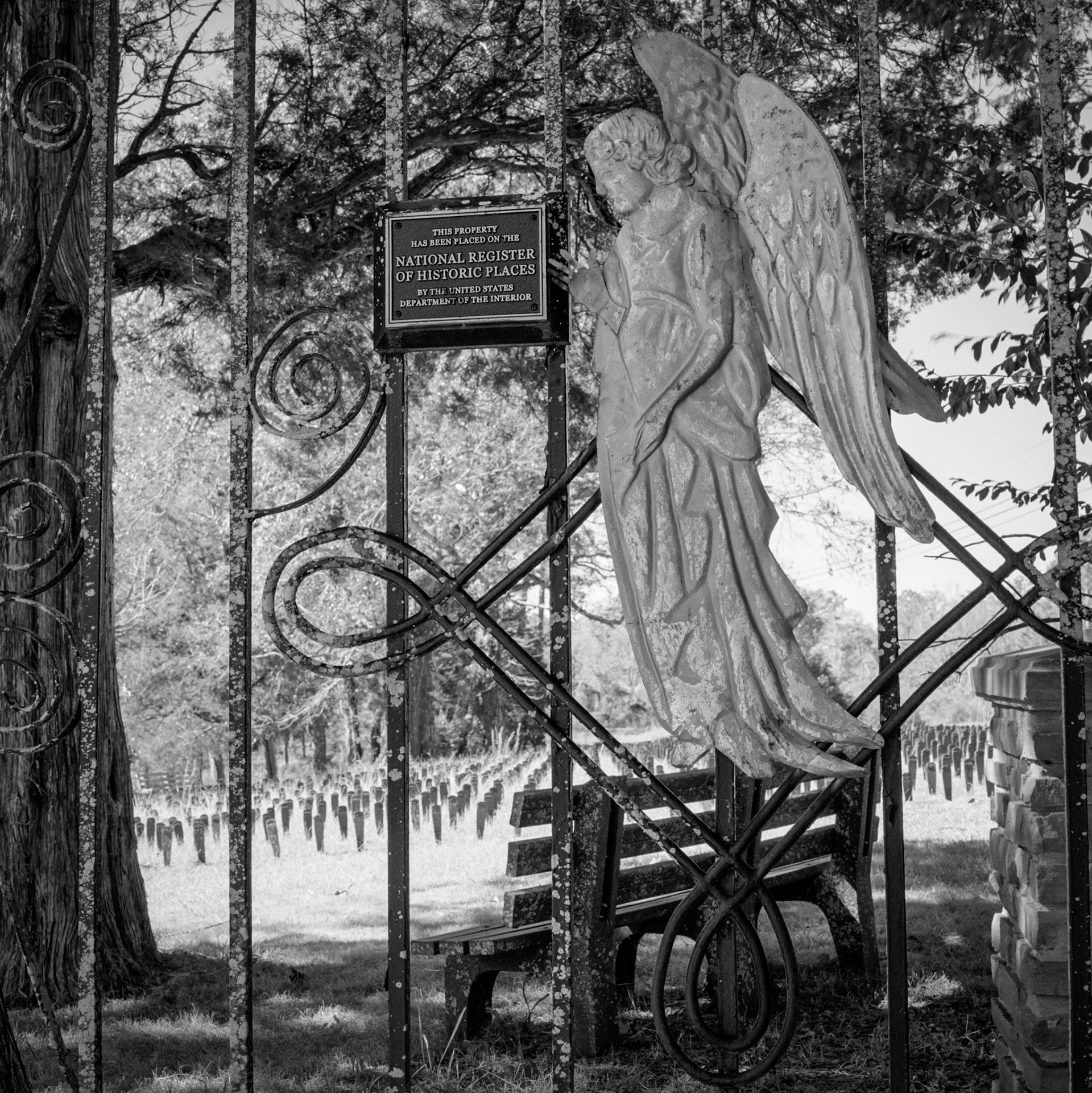
Central State Hospital in Milledgeville, Georgia, once sprawled across thousands of acres as one of the largest psychiatric institutions in the world, housing over 12,000 patients at its peak in the 1960s. Today, the complex stands largely abandoned, its buildings surrendering to kudzu and weather, its vast grounds returning to wilderness. With demolition and redevelopment plans looming, I worked to create a visual record before the physical evidence of what happened here disappeared.
This project connected directly to themes I've explored throughout my practice: what happens to places we abandon, what traces remain of lives lived in transition, how physical decay reflects larger patterns of neglect and forgetting. These weren't just empty buildings. They were spaces where thousands of mentally ill people were confined, often for life, where treatment philosophies ranged from progressive to cruel, where people worked, formed relationships, suffered, and died largely invisible to the outside world. The institution shaped Milledgeville's economy and identity for generations, then was largely abandoned as deinstitutionalization moved patients into communities often unprepared to support them.
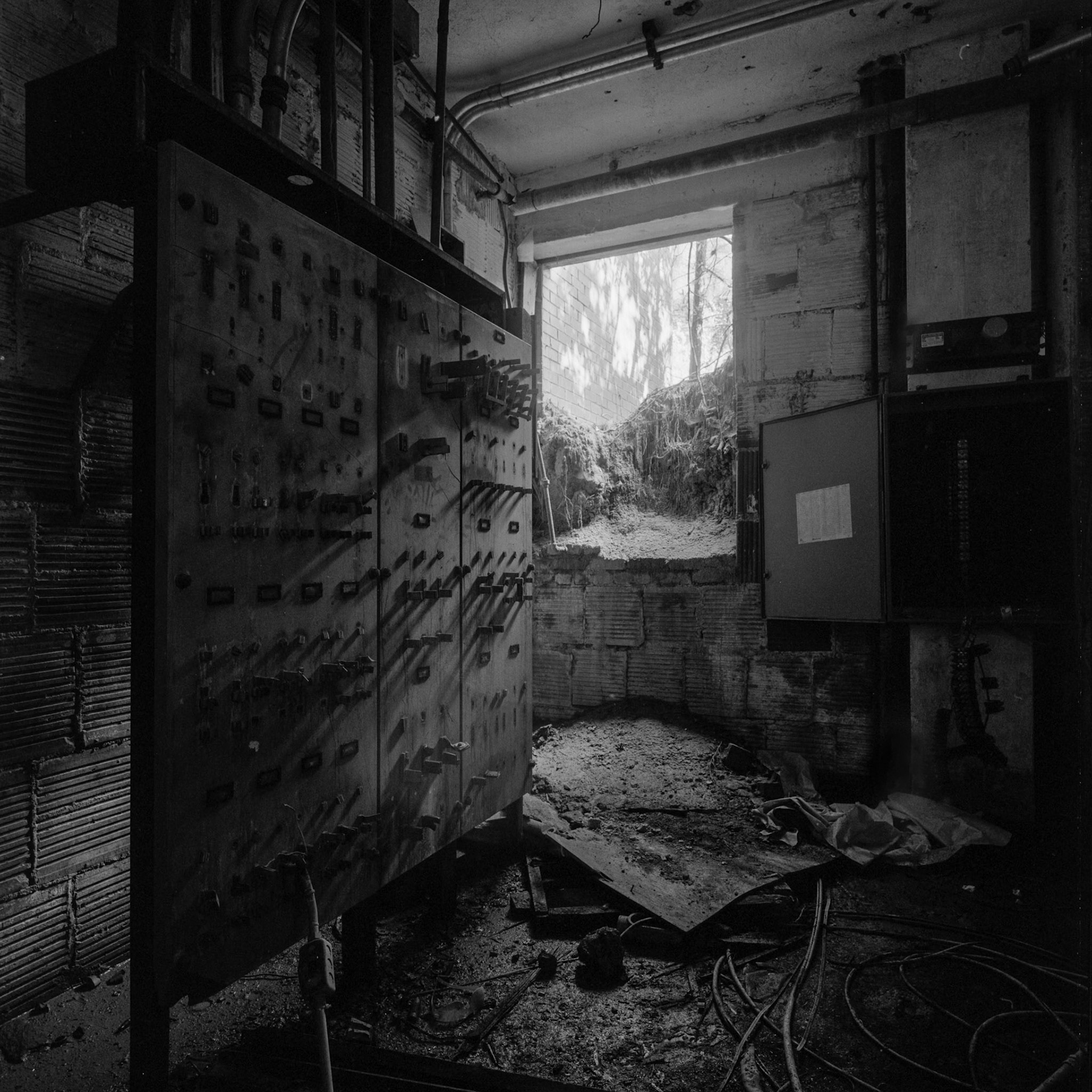
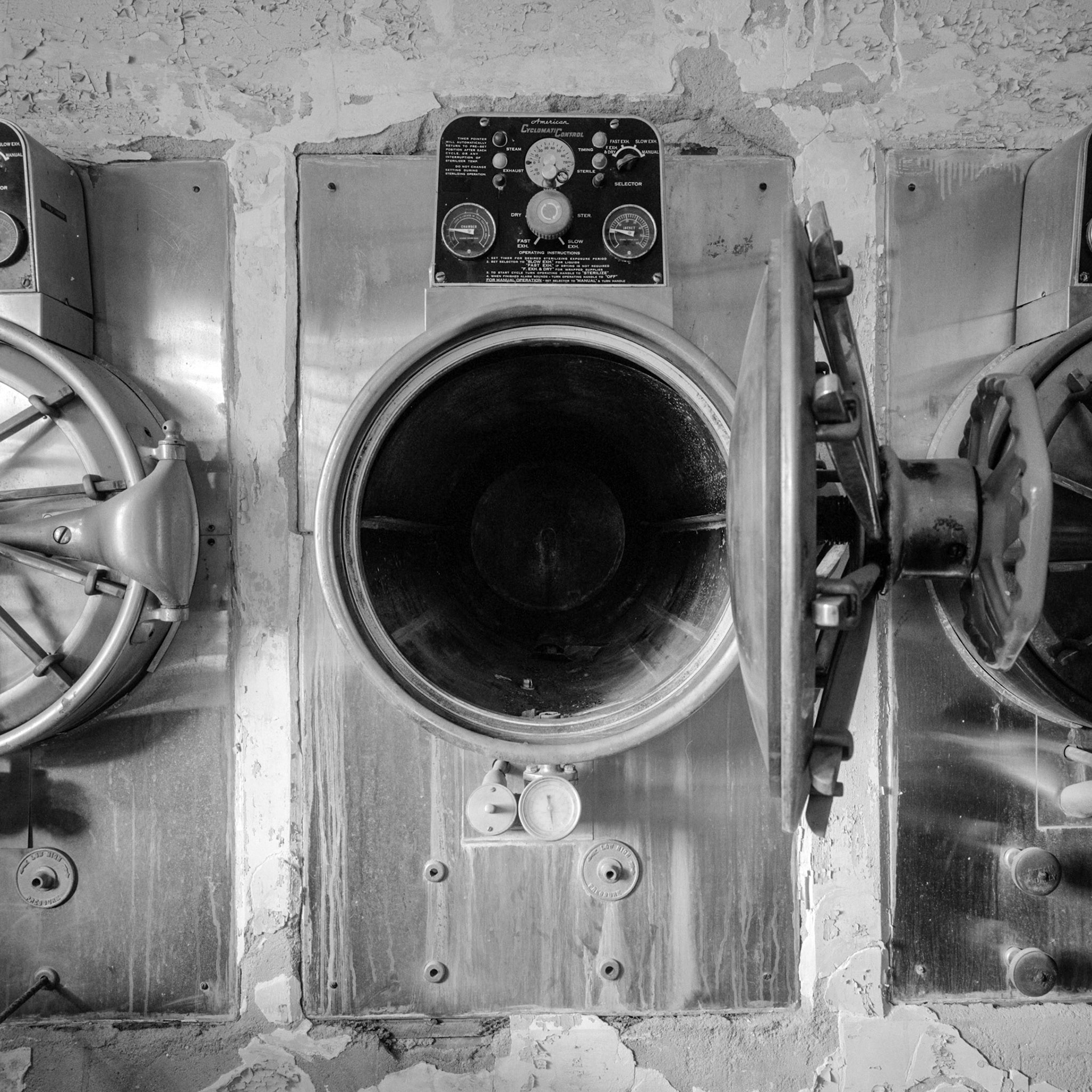
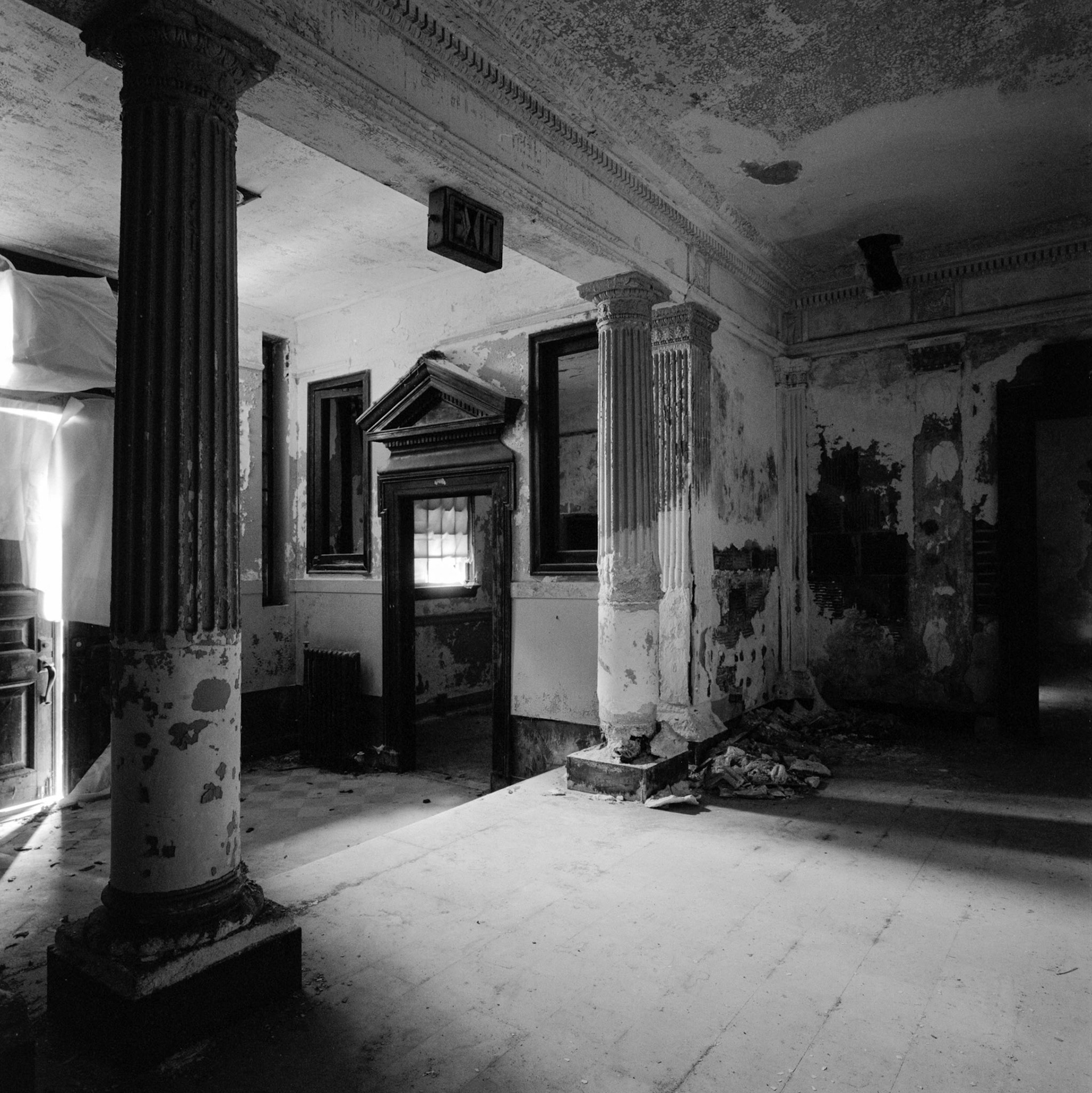
Shooting on black and white film for nearly two years, I documented patient wards, treatment facilities, and overgrown grounds where institutional infrastructure slowly disappeared. This work asked uncomfortable questions: What responsibility do we have to remember places associated with suffering? How do we document without sensationalizing? What can photographs of empty rooms convey about the lives lived within them? Creating this archive insisted that these spaces and the people who inhabited them deserved to be remembered.